
A capacitor must be safely discharged before testing or handling to avoid shock, damage, or incorrect measurements. A multimeter helps verify charge levels, but controlled discharge requires proper steps and the right tools.
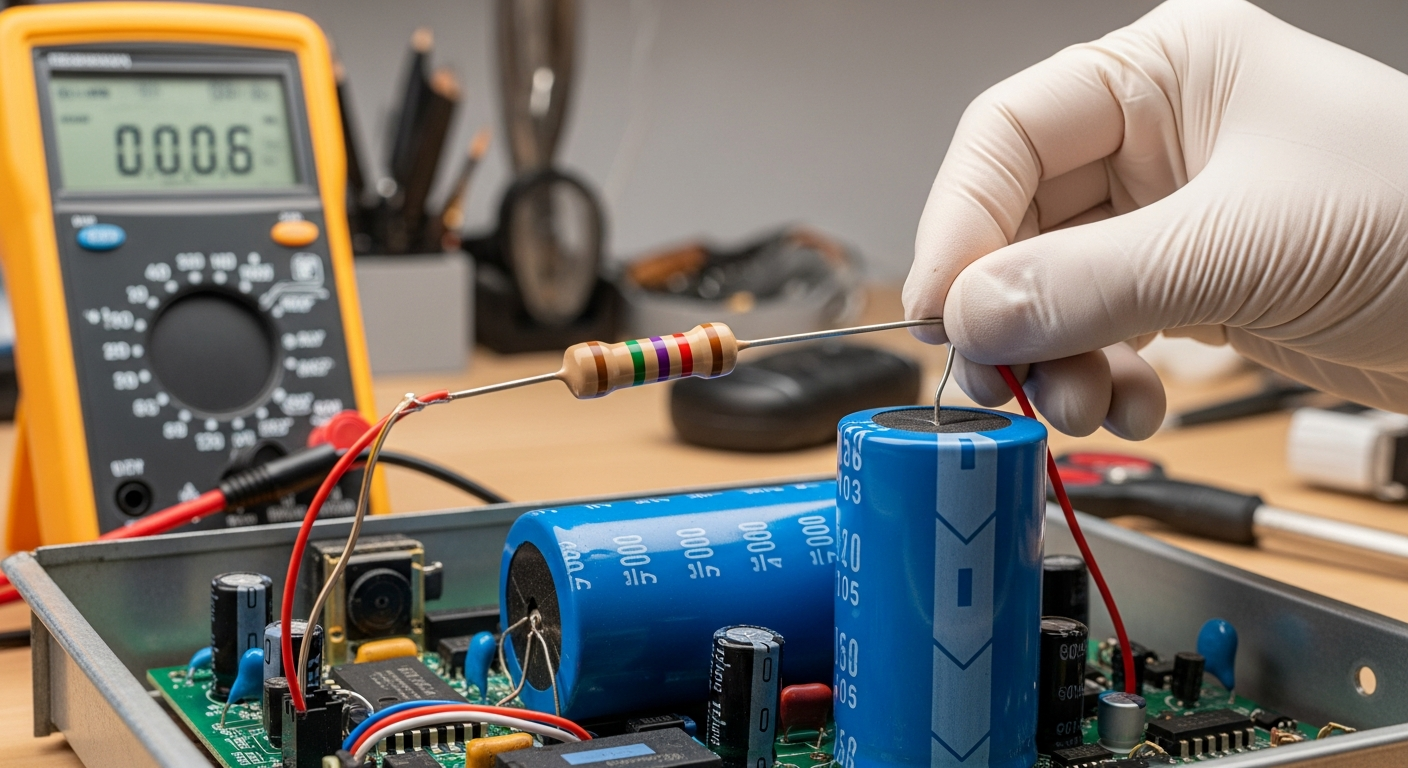
Safe discharge practices connect basic electronics knowledge with real factory experience, helping engineering teams reduce risks during troubleshooting, repair, and prototype validation.
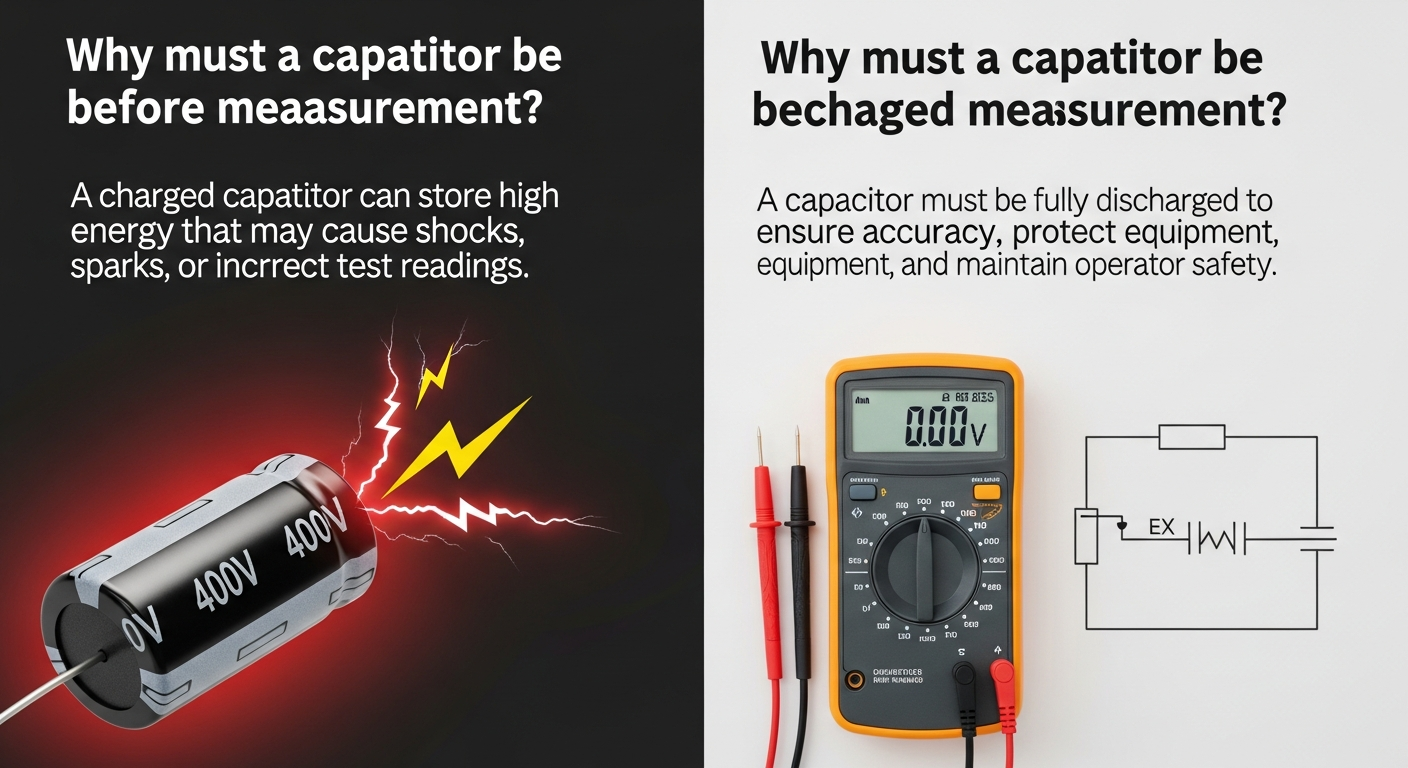
Why must a capacitor be discharged before measurement?
A charged capacitor can store high energy that may cause shocks, sparks, or incorrect test readings.
A capacitor must be fully discharged to ensure accuracy, protect equipment, and maintain operator safety.
Deeper Explanation and Industry Insights
How Capacitors Store Energy
Capacitors hold electrical charge between conductive plates separated by a dielectric layer. This charge remains even when power is removed. The stored energy depends on capacitance and voltage. High-voltage capacitors in power supplies and motor drives can hold dangerous energy long after shutdown.
Why Safe Discharge Matters
Residual charge can damage test equipment, trigger accidental sparks, or cause personal injury. In PCBA manufacturing lines, charged capacitors may interfere with ICT or FCT results. Uncontrolled discharge may also damage sensitive components due to sudden current flow.
Factory-Level Best Practices
Controlled discharge uses resistors, insulated tools, grounding straps, and verification steps. Professional factories include discharge procedures in their debugging, repair, and test workflows. Automated test stations often include built-in discharge circuits to protect operators. These controlled steps improve consistency, reduce field failure risks, and protect assembled PCBAs during diagnostics.
What tools are required to discharge a capacitor safely?
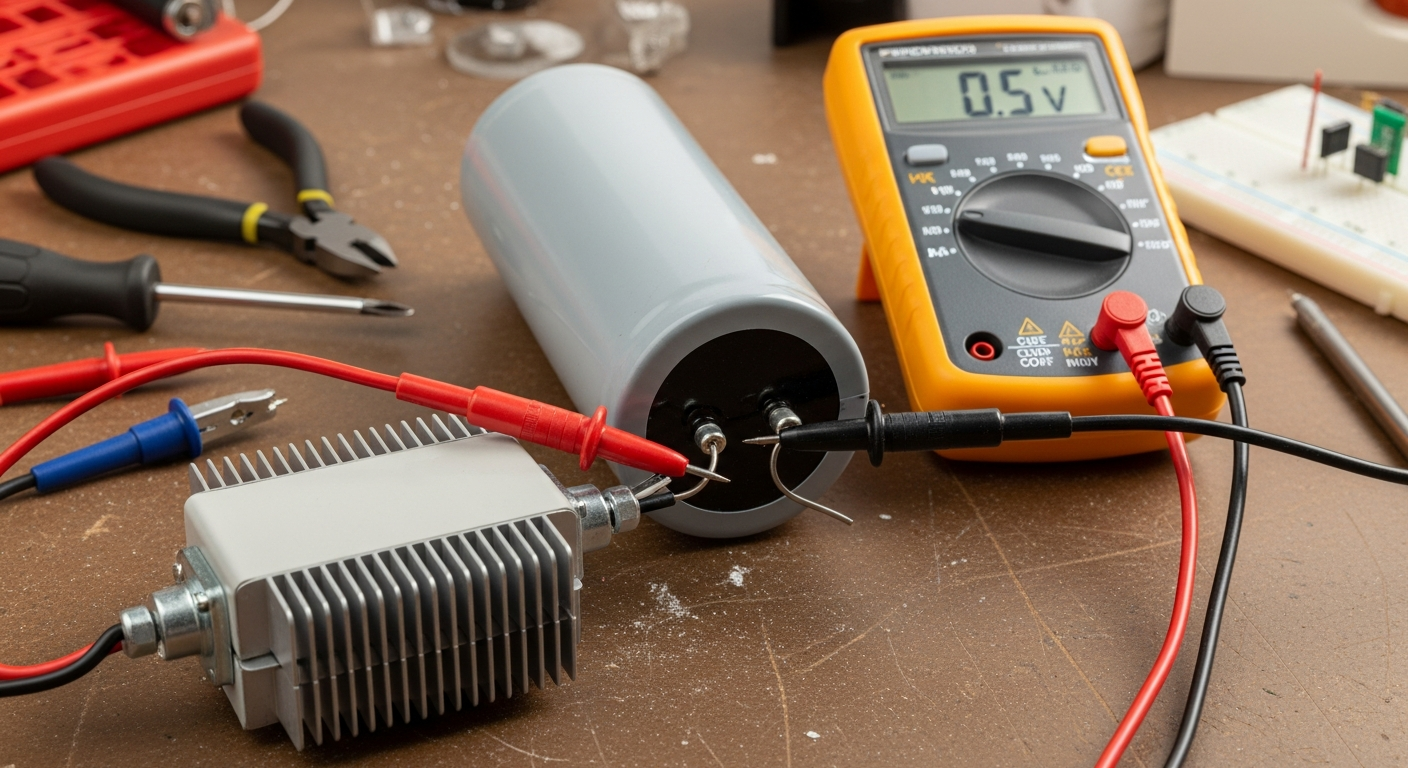
A safe discharge process requires a resistor, insulated probes, and a multimeter for verification.
A resistor-based discharge tool ensures gradual current release without sparks or damage.
Deeper Explanation and Industry Insights
Essential Tools
- Multimeter: Used to verify voltage before and after discharge.
- Resistor: Typically 1 kΩ–10 kΩ, rated for appropriate power. Avoid screwdrivers or metal tools.
- Insulated Leads: Prevent accidental shorts and reduce shock risk.
- Clip Wires: Provide stable contact for steady discharge.
Why These Tools Matter
Using a resistor controls the discharge current. Direct shorting creates a high current spike that can burn pads, damage traces, or stress components on a PCBA. In industrial environments, unregulated discharges may lead to hidden damage not visible during visual inspection.
Factory Perspective
Manufacturing lines use resistor networks or built-in discharge blocks in test fixtures. This approach prevents copper overheating, protects adjacent components, and ensures safety of SMT operators and repair technicians. Selecting proper resistor wattage and maintaining consistent handling procedures supports safe diagnostics across various capacitor types.
How to check if a capacitor is charged using a multimeter?
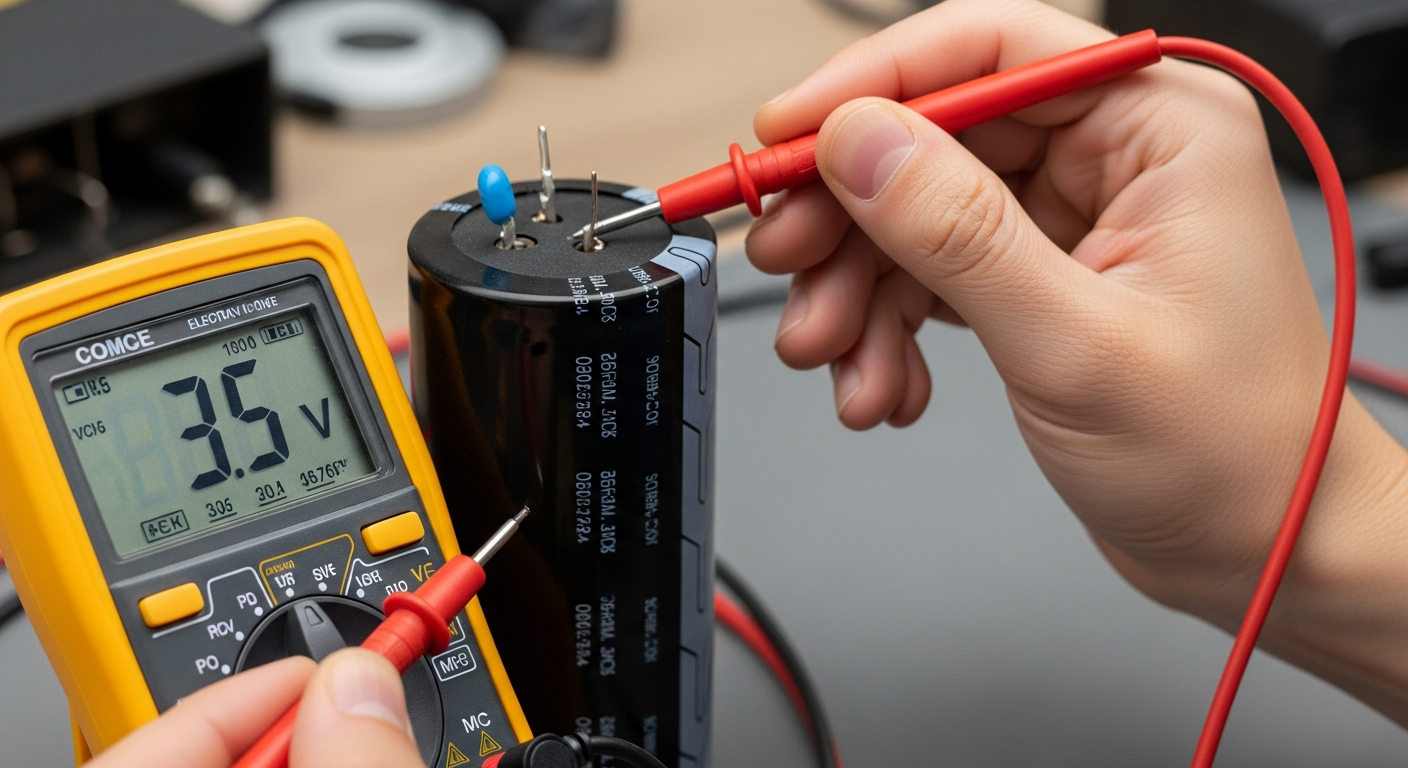
A multimeter can read residual voltage to determine whether a capacitor still holds charge.
A voltage test reveals if discharge steps are required before handling or repair.
Deeper Explanation and Industry Insights
Measuring Voltage
Set the multimeter to DC voltage mode. Connect probes across the capacitor leads. Any reading above 0 V indicates stored charge. Electrolytic capacitors often retain significant voltage, especially in power-supply designs.
Understanding Readings
- High voltage: Immediate discharge required.
- Low but non-zero voltage: Still potentially dangerous in large capacitors.
- 0 V: Safe for handling.
Factory Insight
In PCBA repair stations, technicians verify voltage before heating or reworking components. Residual charge can damage soldering equipment or cause sudden arcing. Standardized voltage checks prevent operator injury and protect sensitive ICs in mixed-signal or power designs.
What is the safest method to discharge a capacitor?
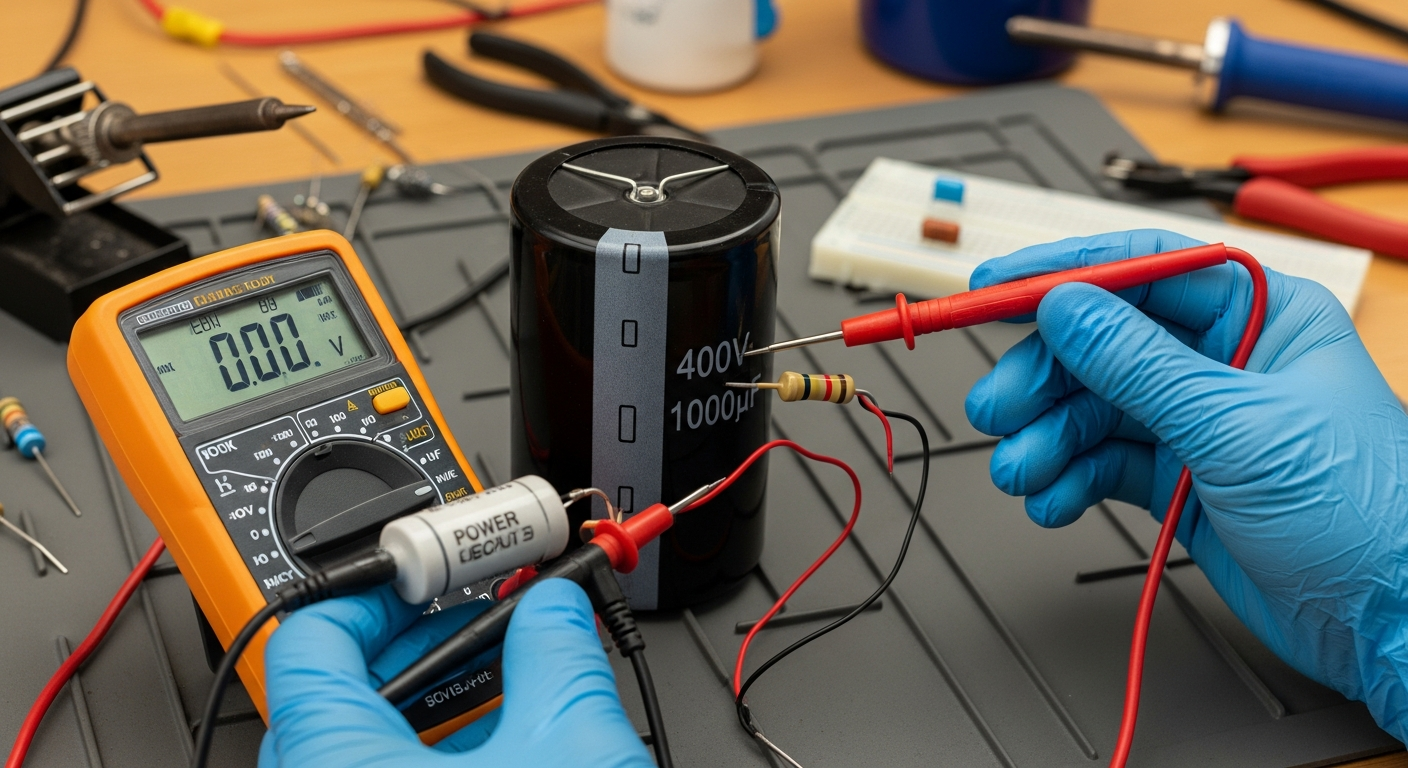
The safest discharge method is using a resistor to release energy slowly and predictably.
A resistor reduces current spikes and protects both the capacitor and surrounding circuitry.
Deeper Explanation and Industry Insights
Step-by-Step Safe Discharge
- Confirm voltage using a multimeter.
- Connect a resistor between the capacitor leads.
- Hold the connection until voltage reaches 0 V.
- Recheck voltage to confirm complete discharge.
Why Controlled Discharge Is Important
Direct shorting can leave burn marks, damage PCB pads, or cause explosive capacitor failures. Controlled resistance limits current flow and heat buildup. This method is required in factory environments where quality and safety are critical.
B2B and Manufacturing Context
During prototype validation or system debugging, discharge errors may cause scrap or downtime. Using proper methods ensures reliability in IoT modules, industrial controllers, and power-supply boards. Manufacturing teams rely on consistent procedures to maintain stable output across hundreds of daily diagnostic operations.
Can a multimeter be used to discharge a capacitor directly?
A multimeter should not be used to discharge a capacitor because its internal circuits cannot handle high current.
A multimeter can verify voltage but cannot safely dissipate stored energy.
Deeper Explanation and Industry Insights
Why Discharge Through a Multimeter Is Unsafe
Multimeter input circuits are designed for measurement, not power dissipation. Flowing discharge current through the meter can damage internal fuses, reduce accuracy, or destroy measurement ICs.
Correct Role of a Multimeter
The multimeter’s job is verification. It confirms initial voltage and checks final zero voltage after resistor discharge.
Factory-Level Practice
Electronics factories never use multimeters as discharge tools in debugging or PCBA testing. Instead, resistor blocks, automated discharge modules, or controlled fixtures are used. This preserves equipment accuracy and prevents delays caused by damaged meters.
What precautions must be taken when discharging a capacitor?
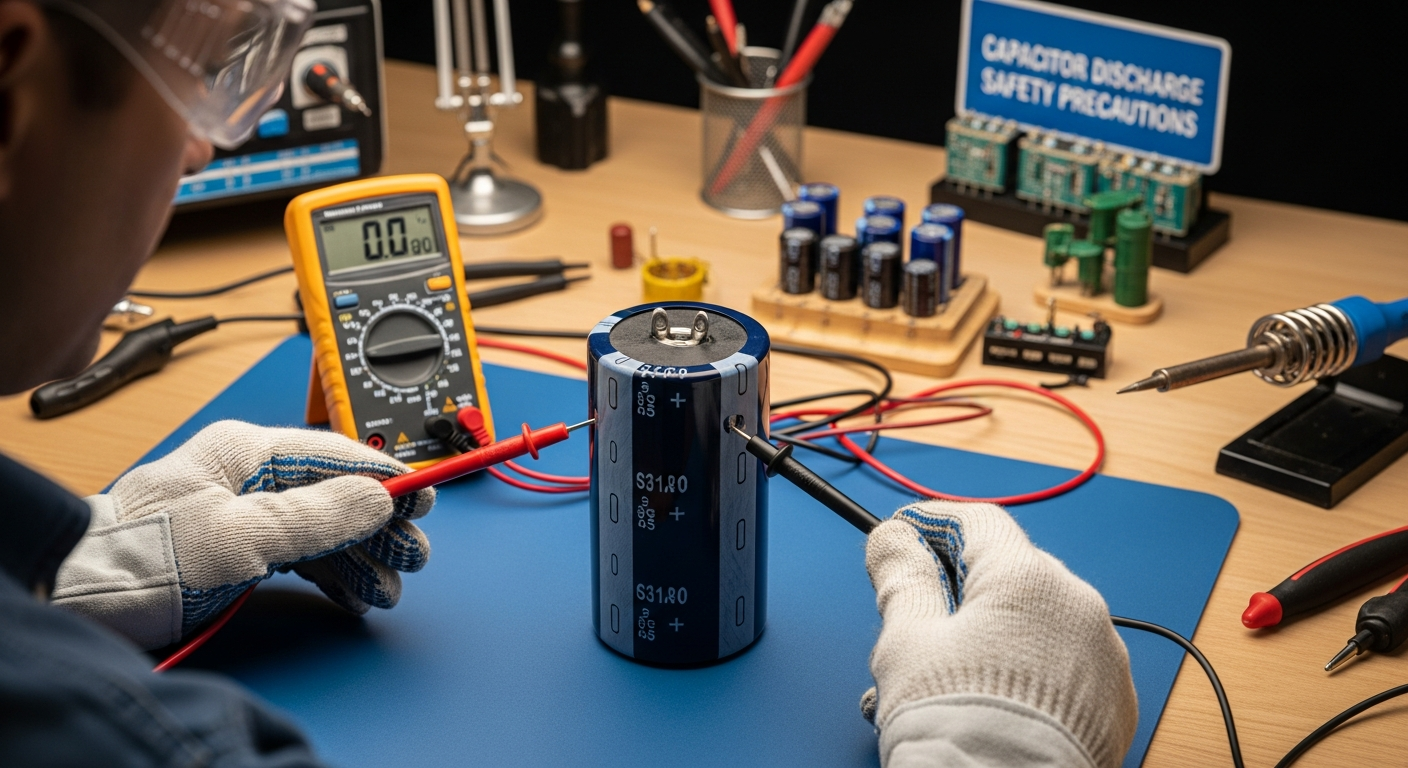
Proper precautions prevent injury, equipment failure, and PCB damage during discharge.
Protective steps ensure safe handling and consistent results.
Deeper Explanation and Industry Insights
Key Precautions
- Always verify voltage before touching terminals.
- Use resistors, not metal tools, for discharge.
- Wear insulated gloves when dealing with high-voltage circuits.
- Avoid working on powered systems.
- Use one hand only when handling high-energy capacitors to reduce current path risk.
Why Precautions Matter
Capacitors in motor drives, inverters, or power modules can produce dangerous arcs if discharged incorrectly. SMT-level capacitors may be small, but large electrolytics and energy-storage units pose significant hazards.
Factory Guidance
Manufacturing and repair teams follow IPC-ESD and electrical safety guidelines. Controlled environments, insulated tools, and consistent workflows prevent accidents. Documentation and training maintain predictable outcomes across projects and ensure stable, traceable operations during PCBA diagnostics and RMA processes.
Conclusion
Safe capacitor discharge combines correct tools, proper verification, and controlled steps. A multimeter confirms voltage but does not handle discharge itself. A resistor provides predictable, safe current reduction that protects PCB pads, surrounding components, test fixtures, and equipment. Safe handling prevents shock risks, avoids costly PCBA damage, and supports reliable diagnostics during prototype debugging, maintenance, or troubleshooting. Standardized discharge practices also provide consistency in professional manufacturing environments, protecting operators and sustaining product quality across diverse electronic applications.
