
Solder is typically made from metal alloys that melt at low temperatures to join electronic components. Lead-free alloys are now the global standard due to safety, reliability, and environmental regulations.
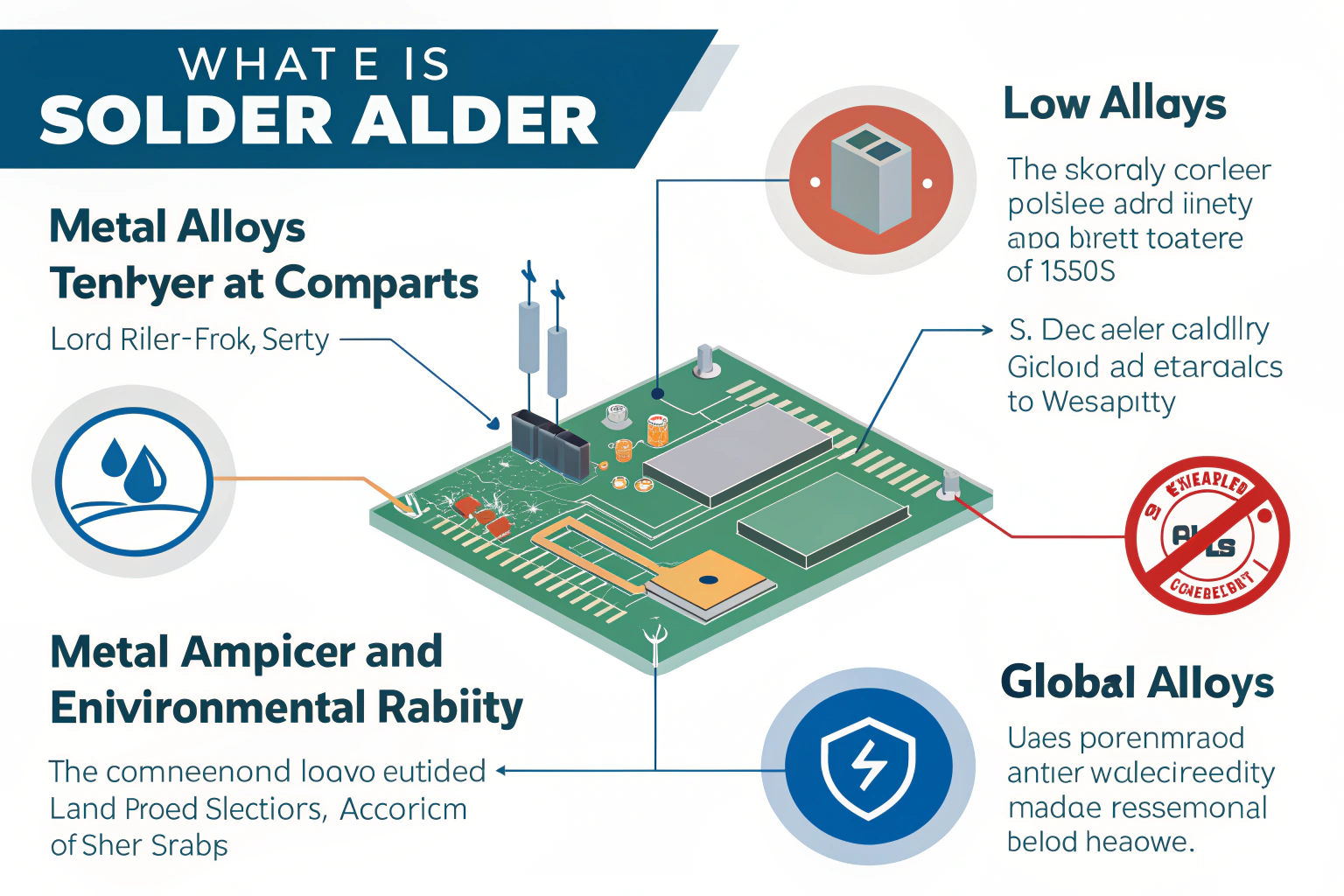
Modern electronics rely on stable, predictable solder joints. Understanding solder composition helps engineers choose the right alloy for performance, temperature cycling, and long-term reliability. This overview explains how solder is made, how its properties affect manufacturing, and why lead-free alloys continue to grow worldwide.
What is solder made of?
Solder is a metal alloy that melts at a low temperature to form electrical and mechanical connections.
Most solder consists of tin combined with metals such as lead, silver, copper, bismuth, or antimony. Each element changes melting point, strength, and reliability.
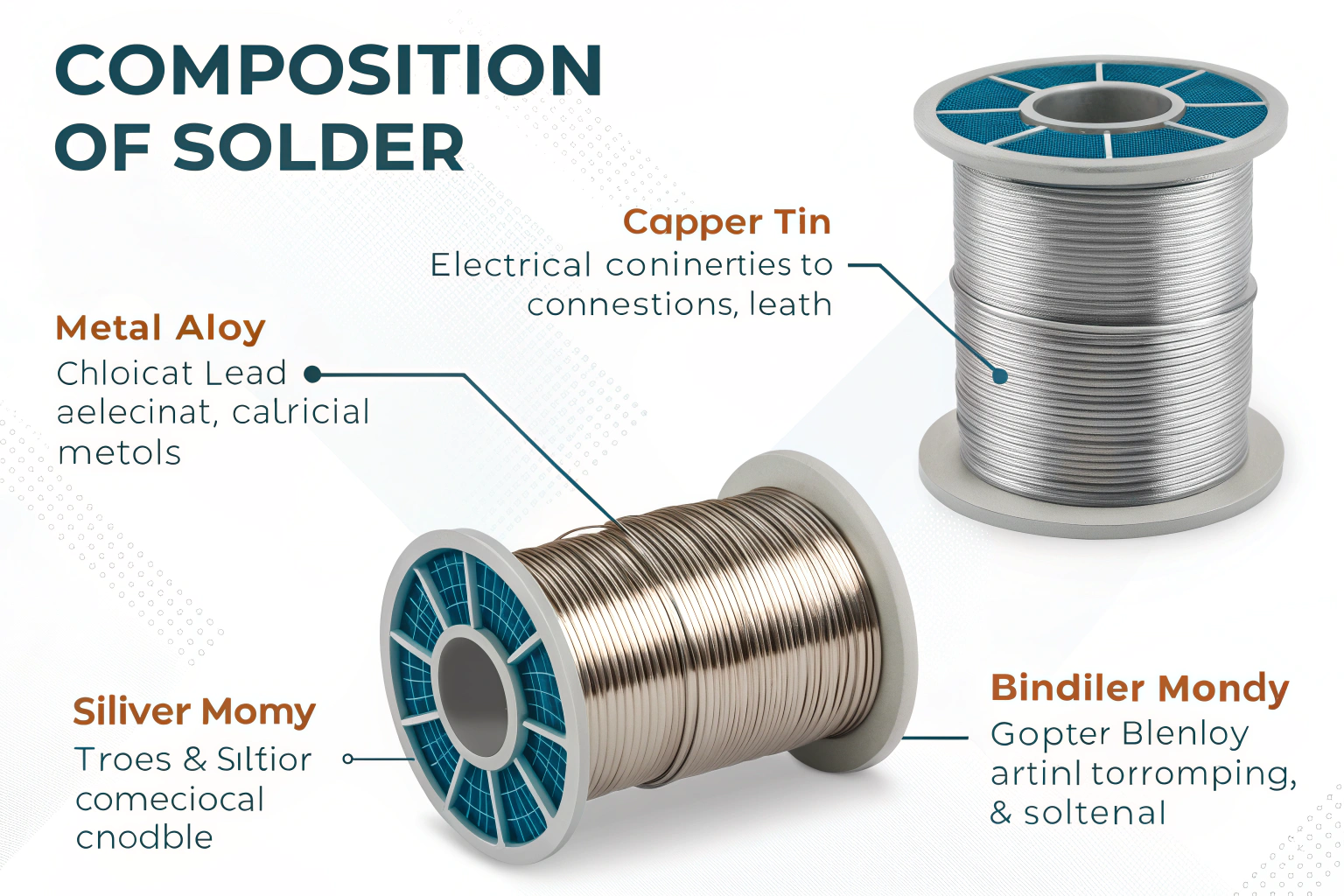
Solder formulas evolved over decades. Traditional leaded solder used a tin-lead mixture that melted easily and produced highly reliable joints. As environmental expectations increased, new alloys emerged based on pure tin systems. These alloys handle higher temperatures and comply with global safety standards.
Common alloy categories
| Alloy Type | Typical Composition | Properties |
|---|---|---|
| Leaded solder (Sn63/Pb37) | 63% tin, 37% lead | Low melting point, easy flow |
| SAC solder | Tin + silver + copper | High reliability, RoHS-compliant |
| Tin-copper | Tin + 0.7% copper | Low-cost, widely used in wave solder |
| Tin-bismuth | Tin + bismuth | Low-temperature soldering |
| Specialty alloys | Tin + antimony, indium | High-stress or niche applications |
Alloy choices depend on thermal load, joint strength requirements, and cost targets across industrial, consumer, and IoT electronics.
How does leaded solder differ from lead-free solder?
Both solder families behave differently during melting, wetting, and cooling.
Leaded solder melts at lower temperatures and flows smoothly, while lead-free solder demands higher heat but offers safer, RoHS-compliant performance.
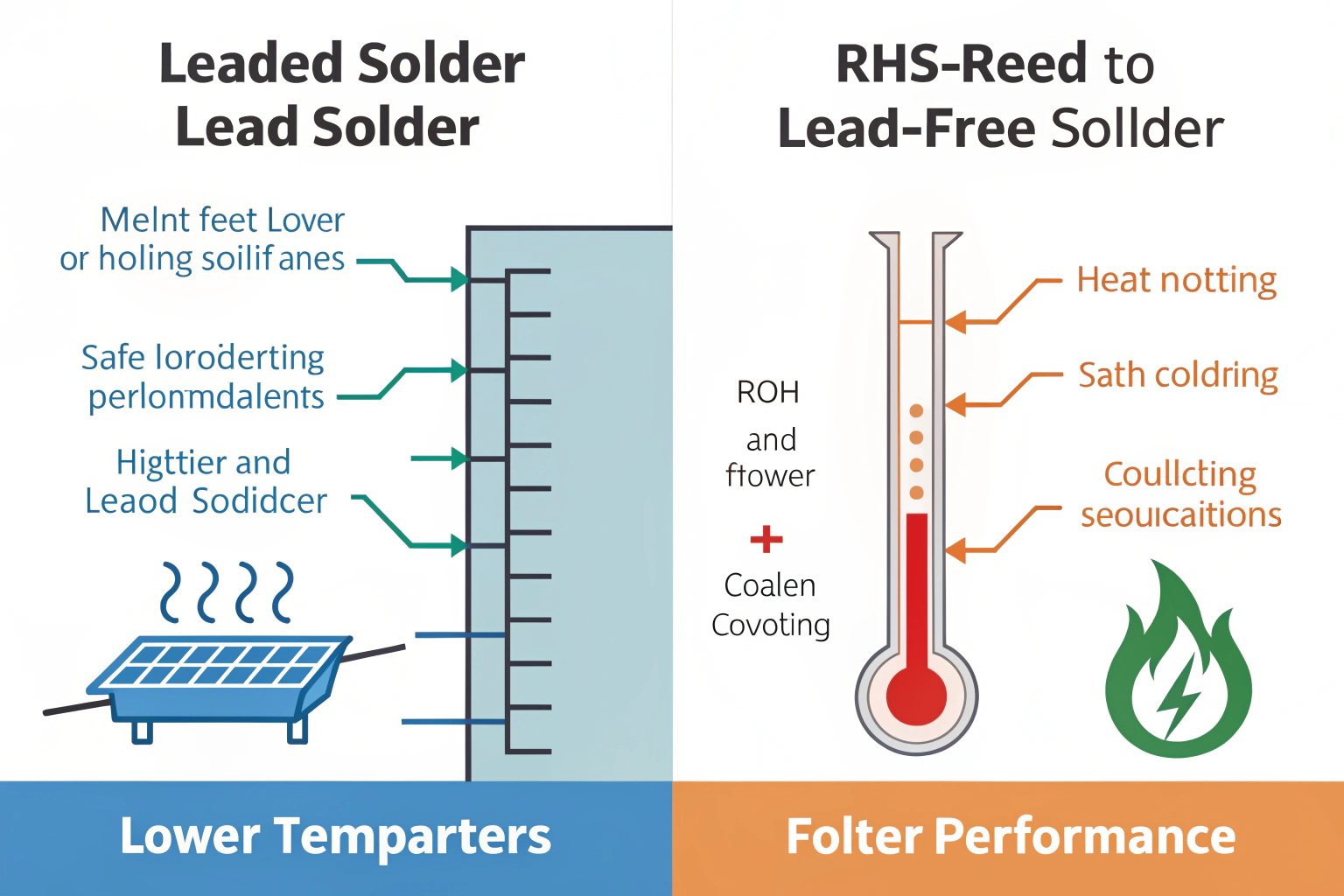
The shift from leaded to lead-free alloys changed how factories design reflow profiles, select flux, and control temperature. Lead-free joints are harder and more resistant to creep but may form different intermetallic layers. Proper process setup prevents defects such as tombstoning or grain boundary fractures.
Technical comparison
- Melting point: Leaded ~183°C; Lead-free SAC alloys ~217–225°C
- Wettability: Leaded wets faster; lead-free needs optimized flux
- Mechanical strength: Lead-free forms stronger but more brittle joints
- Reliability: Lead-free excels under high-temperature cycling
Electronics used in automotive, industrial control, and power systems increasingly favour lead-free alloys for long-term thermal endurance.
Why did the industry transition to lead-free solder?
Regulatory, environmental, and health considerations drove the global shift.
Lead-free solder became necessary due to RoHS, REACH, and global restrictions on hazardous materials, pushing manufacturers to replace leaded alloys in most applications.
Governments implemented strict limits on lead use in consumer and industrial electronics. This accelerated development of reliable alternatives such as SAC305 (Sn96.5/Ag3.0/Cu0.5). Manufacturing lines worldwide redesigned processes to handle higher reflow temperatures and meet safety standards required for export.
Key regulatory drivers
- RoHS compliance in Europe
- REACH regulations for hazardous substances
- WEEE requirements supporting recycling
- Global supply chain alignment for export electronics
Compliance ensures products pass customs inspections and meet customer expectations for environmental responsibility.
What are the main types of lead-free solder?
Lead-free solder includes several alloy families, each optimized for specific manufacturing needs.
The most common options include SAC305, SAC405, SnCu0.7, and low-temperature tin-bismuth alloys used for heat-sensitive applications.
Each alloy affects joint stability, thermal fatigue resistance, cost, and process temperature. Device size, pad design, and expected field environment determine the correct choice.
Leading lead-free solder categories
SAC alloys
Silver-tin-copper blends offer strong mechanical performance and are widely used in SMT assembly.
Tin-copper alloys
Cost-effective for wave soldering and through-hole processes.
Tin-bismuth alloys
Useful for displays, camera modules, and IoT devices requiring low heat.
Specialized alloys
High-reliability aerospace, medical, and automotive electronics use advanced compositions for vibration and temperature extremes.
Selecting the right alloy enhances product lifespan and reduces field returns.
Is lead-free solder the future?
Industry adoption continues growing as performance improves and regulations tighten.
Lead-free solder is becoming the long-term global standard, supported by strong reliability data, environmental compliance, and widespread supply-chain adoption.
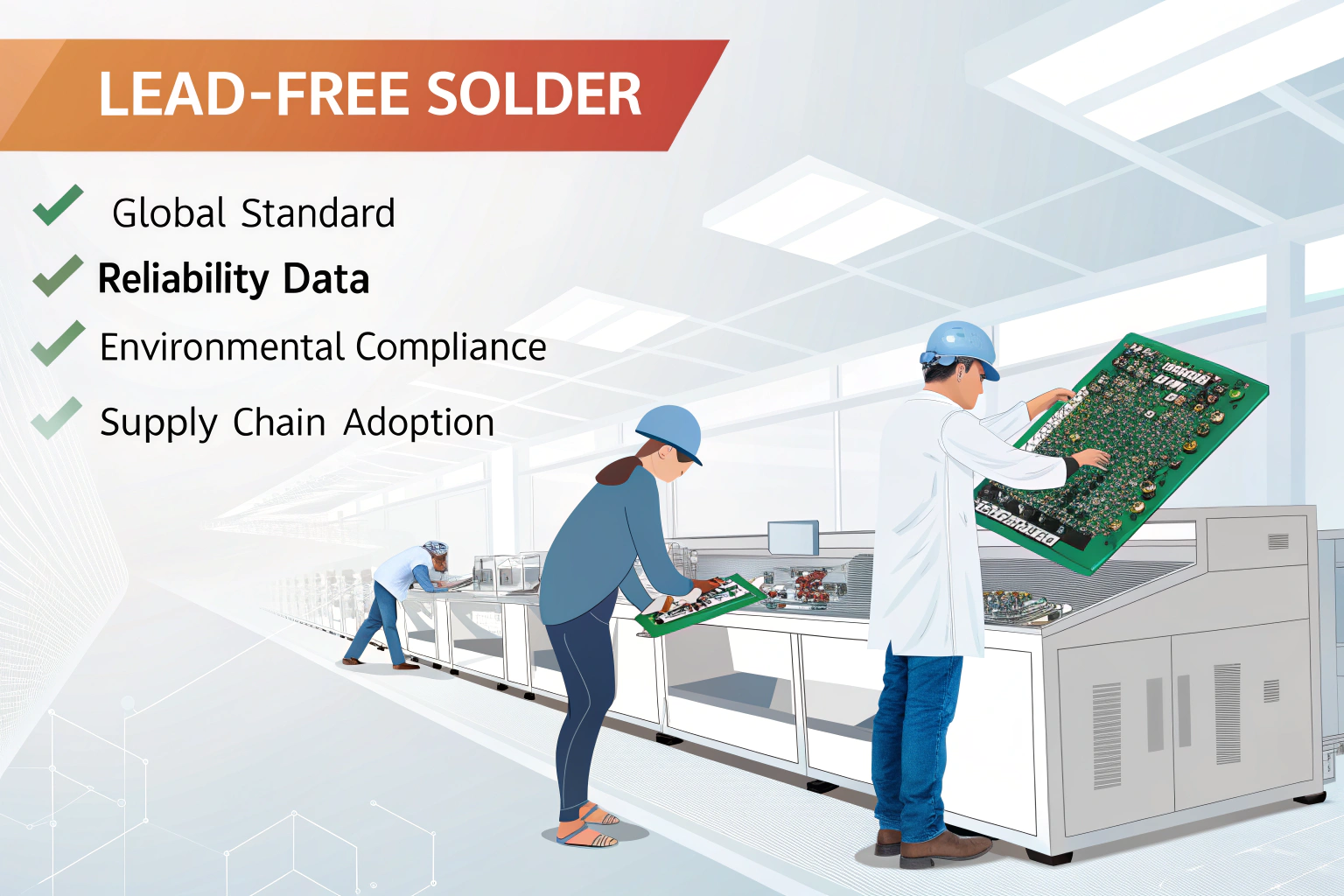
Advances in metallurgy make modern lead-free alloys suitable for harsh environments. Automotive ECUs, industrial controllers, consumer electronics, and smart-home devices widely rely on SAC-based joints. With global markets requiring RoHS-compliant shipments, lead-free solder has become essential for manufacturers targeting international customers.
Industry trends supporting lead-free adoption
- Continuous alloy improvements
- Better flux chemistries for wetting
- Higher thermal-cycle endurance
- Increased customer and regulatory expectations
- Global standardization across OEMs and EMS factories
Lead-free solder now dominates new product launches across most sectors.
Conclusion
Solder composition directly influences reliability, manufacturability, and regulatory readiness. Modern boards use tin-based alloys tailored for strength, heat resistance, and RoHS compliance. Lead-free solder has progressed from an early compromise to the established global standard. With stronger alloys, cleaner flux systems, and more consistent production processes, lead-free technology supports the long-term demands of advanced electronics. Manufacturers seeking stable export performance, regulatory approval, and product longevity increasingly select lead-free solder as the default solution. This shift continues shaping the future of electronics, ensuring safer materials, stronger joints, and more dependable products across all industries.
