
Remote control circuits use wireless signals—RF, IR, or Bluetooth—to send commands from a transmitter to a receiver, enabling devices to operate without direct wiring.**
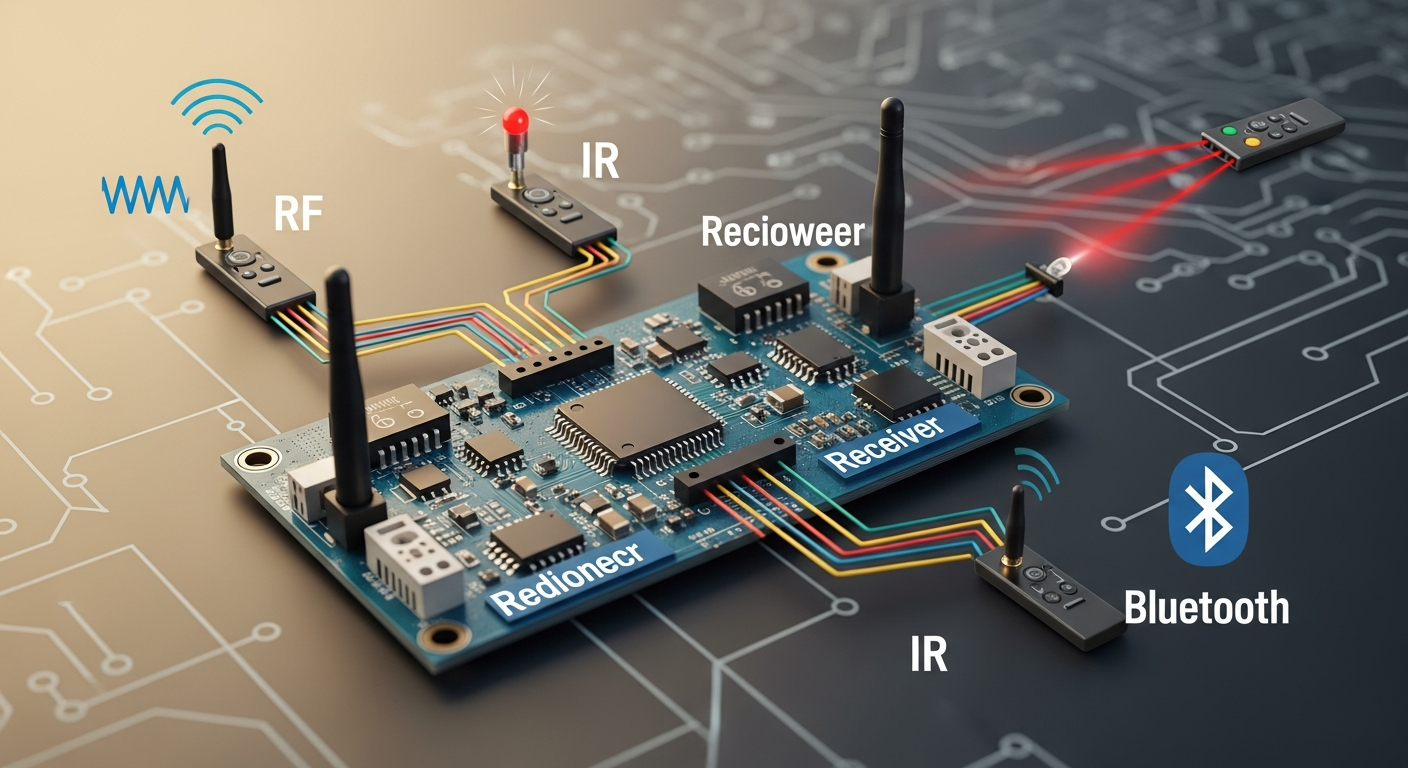
Remote control systems appear in smart-home devices, toys, automation modules, lighting controls, and industrial equipment. Even the simplest wireless circuit relies on careful coordination between signal generation, modulation, transmission, reception, and output driving. Understanding these fundamentals strengthens circuit design, improves reliability, and supports smoother PCB manufacturing.
What is a remote control circuit?
A remote control circuit is an electronic system that transmits signals wirelessly to control a device or function.
A remote control circuit consists of a transmitter that sends encoded signals and a receiver that decodes them to trigger an action such as switching, movement, or adjustment.
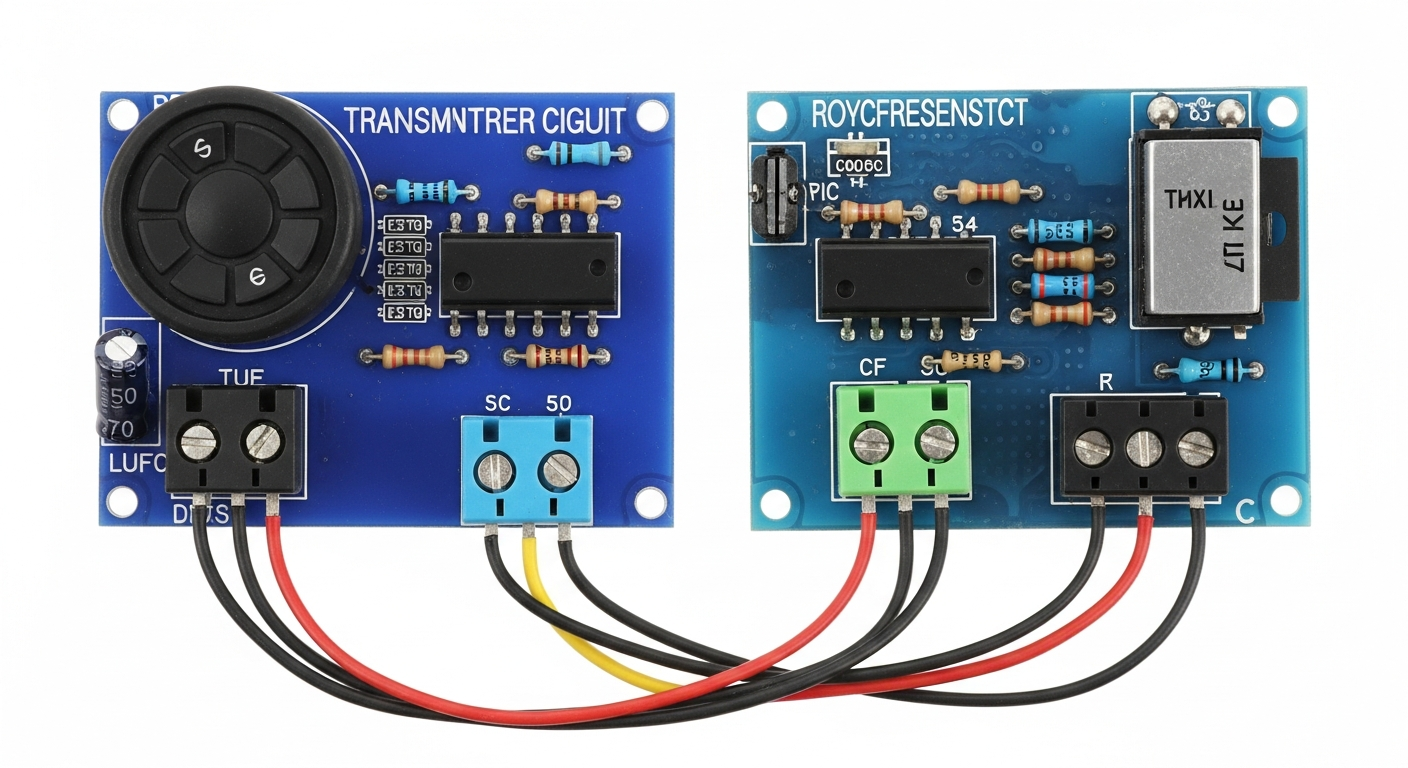
Remote control circuits replace wired switches, enabling flexible placement, safer operation, and automated interaction. They support short-range consumer devices (like IR remotes) and long-range RF systems (such as garage door openers or smart-home hubs).
Core elements
- Signal generation
- Encoding and modulation
- Wireless transmission (IR or RF)
- Receiving and decoding
- Output driving (relay, motor driver, MOSFET, LED, buzzer)
Each stage must be designed for reliable communication under expected environmental conditions.
What types of remote control circuits are commonly used?
Different wireless technologies support different applications.
Common remote control circuit types include IR remote systems, RF modules, Bluetooth modules, Wi-Fi modules, and LoRa-based long-range controls.
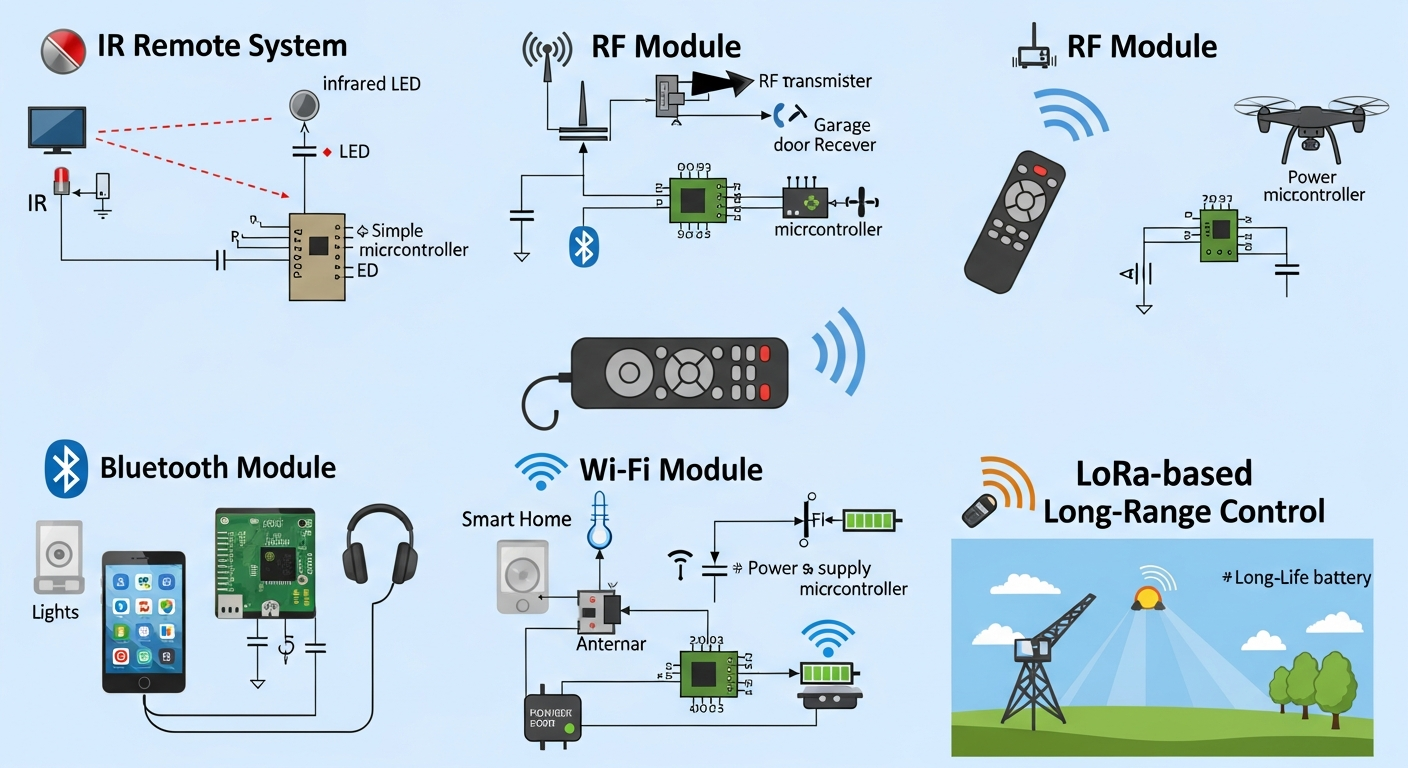
These systems vary in distance, power consumption, data rate, and signal robustness.
Major remote control types
IR (Infrared)
Used in TVs, air conditioners, and simple infrared appliances.
RF (315 MHz / 433 MHz)
Used in key fobs, remote switches, and wireless doorbells.
Bluetooth
Short-range control for audio devices, toys, and smart gadgets.
Wi-Fi
Used in IoT controls, smart plugs, and home automation.
LoRa
Used for long-distance, low-power control in agriculture and industrial monitoring.
Each technology balances cost, complexity, and performance.
What components make up a simple remote control circuit?
Simple remote control circuits use basic building blocks found in most electronics.
Key components include encoders, decoders, oscillators, transistors, RF modules, IR LEDs, photodiodes, relays, MOSFETs, and microcontrollers.
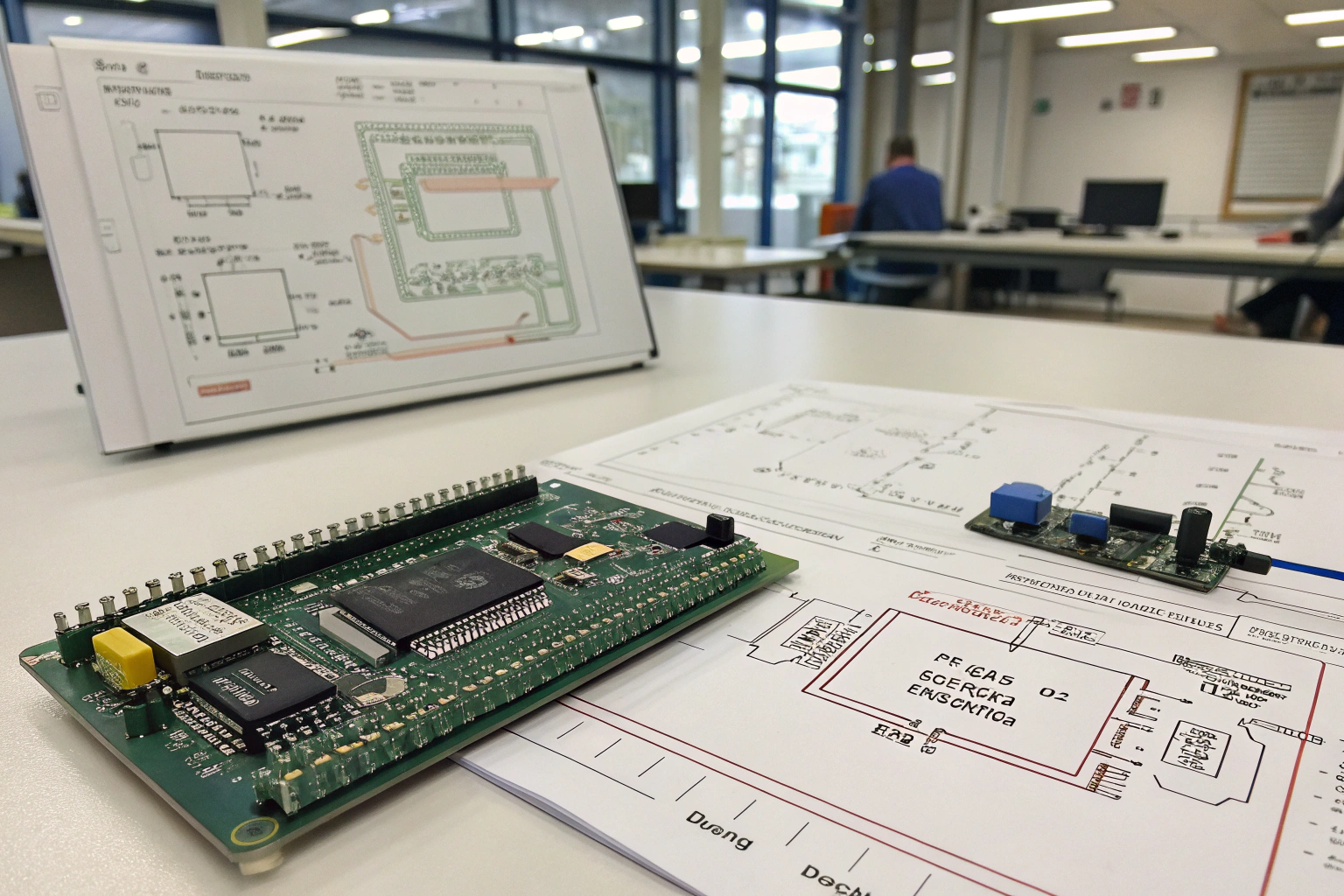
Even entry-level designs combine several functional blocks to achieve stable wireless performance.
Essential components
| Component | Function |
|---|---|
| Encoder IC | Converts button presses into coded signals |
| Transmitter module | Sends RF or IR signal |
| IR LED / RF antenna | Radiates the signal wirelessly |
| Photodiode / RF receiver | Captures the incoming signal |
| Decoder IC | Interprets received codes |
| Transistor / MOSFET | Drives loads or relays |
| Relay module | Switches AC/DC devices |
| Power supply | Ensures stable operation |
Proper component selection improves transmission range and signal accuracy.
How do remote control circuits work?
Wireless control relies on encoding, transmission, and decoding.
A transmitter encodes user input into pulses or modulated signals, which travel through IR light or radio waves. The receiver decodes these signals and activates the intended output.
Most wireless protocols use some form of modulation—AM, ASK, FSK, PWM, or packet-based digital coding—to prevent interference and increase reliability.
Operation sequence
- A button press triggers the encoder.
- The encoder creates a unique digital code.
- The transmitter sends the code via IR or RF.
- The receiver module detects the signal.
- The decoder verifies and extracts the code.
- The output driver controls a relay, motor, LED, or actuator.
This structure ensures predictable behavior even in noisy environments.
What are the main applications of simple remote control circuits?
Remote control circuits appear across consumer, industrial, and IoT markets.
Applications include lighting control, garage doors, home appliances, toys, robotics, industrial automation, and wireless switches.
The simplicity and cost-effectiveness of remote circuits make them ideal for mass-produced electronics and embedded systems.
Common uses
- Smart lighting and wireless power switches
- Car central locking and garage door remotes
- TV and multimedia control
- Robotic movement and toy control
- Smart-home devices
- Industrial wireless triggers
- Agricultural irrigation controls
Their flexibility supports both low-cost consumer devices and high-reliability systems.
How do PCB design and manufacturing affect remote control reliability?
Wireless circuits require careful layout to ensure stable performance.
PCB design impacts signal strength, antenna efficiency, power stability, noise suppression, and decoder accuracy. Proper layout improves range and reduces communication errors.
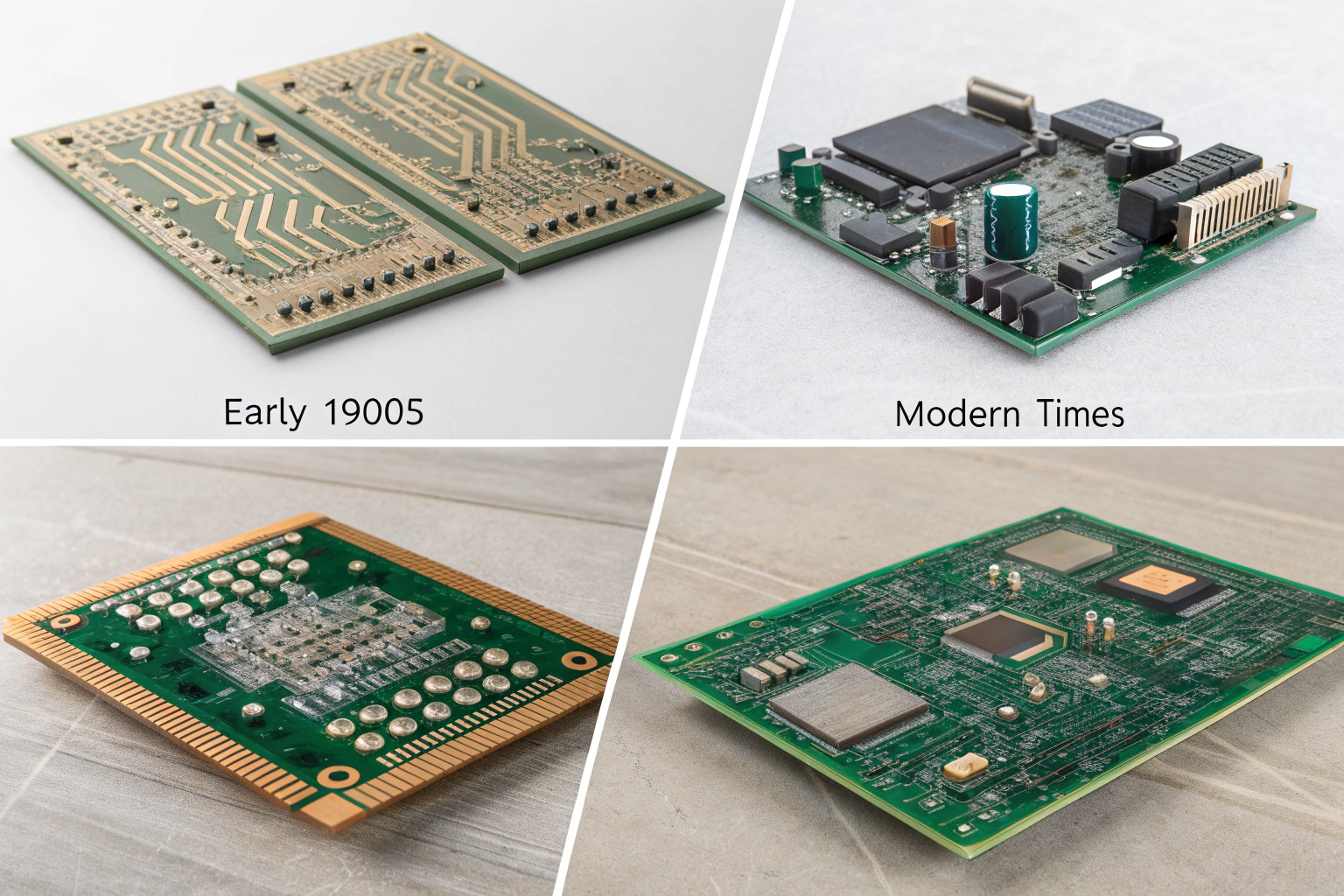
Remote control electronics are sensitive to noise and interference. PCB layout must balance analog, RF, and digital elements.
Key PCB considerations
- Keep antenna traces isolated from noisy digital lines
- Maintain controlled impedance for RF paths
- Use ground planes to reduce EMI
- Place decoupling capacitors close to IC power pins
- Provide proper trace width for power circuits
- Use shielded components if needed for RF stability
Proper PCB design enhances range, reduces false triggers, and improves overall system stability.
Conclusion
Remote control circuits combine wireless transmission, digital encoding, and output driving to achieve flexible, cable-free control across countless applications. From simple IR remotes to advanced RF and Bluetooth systems, each design relies on core principles of encoding, modulation, reception, and power stability. Understanding the components, architecture, and PCB layout requirements enables more reliable and scalable wireless products. With proper design practices, remote control systems deliver long-range performance, low power consumption, strong noise immunity, and robust operation in consumer, industrial, and IoT environments.
