
A prepreg is a fiberglass fabric pre-impregnated with resin, used to bond copper layers together during PCB lamination. It provides insulation, mechanical strength, and dielectric control in multilayer PCB stacks.
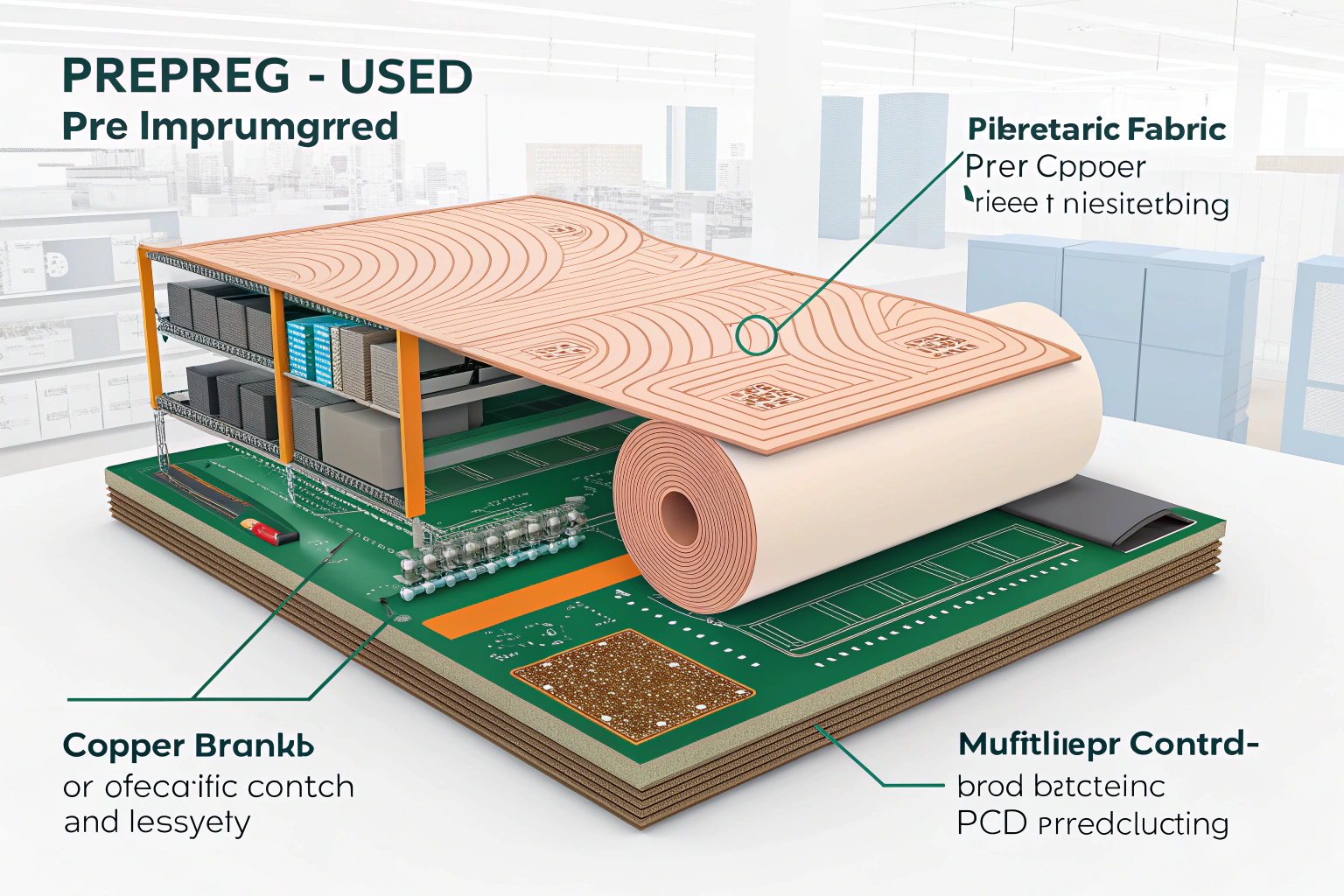
Prepregs determine layer bonding quality, electrical performance, thickness stability, and long-term reliability. They are essential for multilayer PCB construction across high-speed, high-density, and industrial-grade designs.
Why is prepreg important in PCB manufacturing?
Multilayer PCBs require stable bonding and precise dielectric spacing. Prepreg provides the adhesive and insulation needed for lamination.
Prepreg is important because it bonds copper layers, defines dielectric thickness, supports controlled impedance, and enhances the mechanical and electrical stability of multilayer PCBs.
[alt with keywords](https://placehold.co/600×400 "importance of prepreg"]
Deeper Insight
Prepreg sits between copper-clad cores during lamination. When heat and pressure are applied, the resin melts, flows, and cures—locking layers together into a solid structure. This process determines PCB thickness, thermal resistance, dielectric constant (Dk), and overall reliability.
Typical prepreg materials include:
- FR4 epoxy-based prepreg
- High-Tg prepreg for thermal stability
- Rogers/low-Dk prepregs for RF and high-speed boards
- Halogen-free prepregs for environmental requirements
Manufacturers rely on prepreg to maintain precise dielectric spacing, which is vital for controlled impedance. CAM teams evaluate resin content, glass transition temperature (Tg), expansion rate (CTE), and lamination parameters to avoid voids, delamination, or warpage.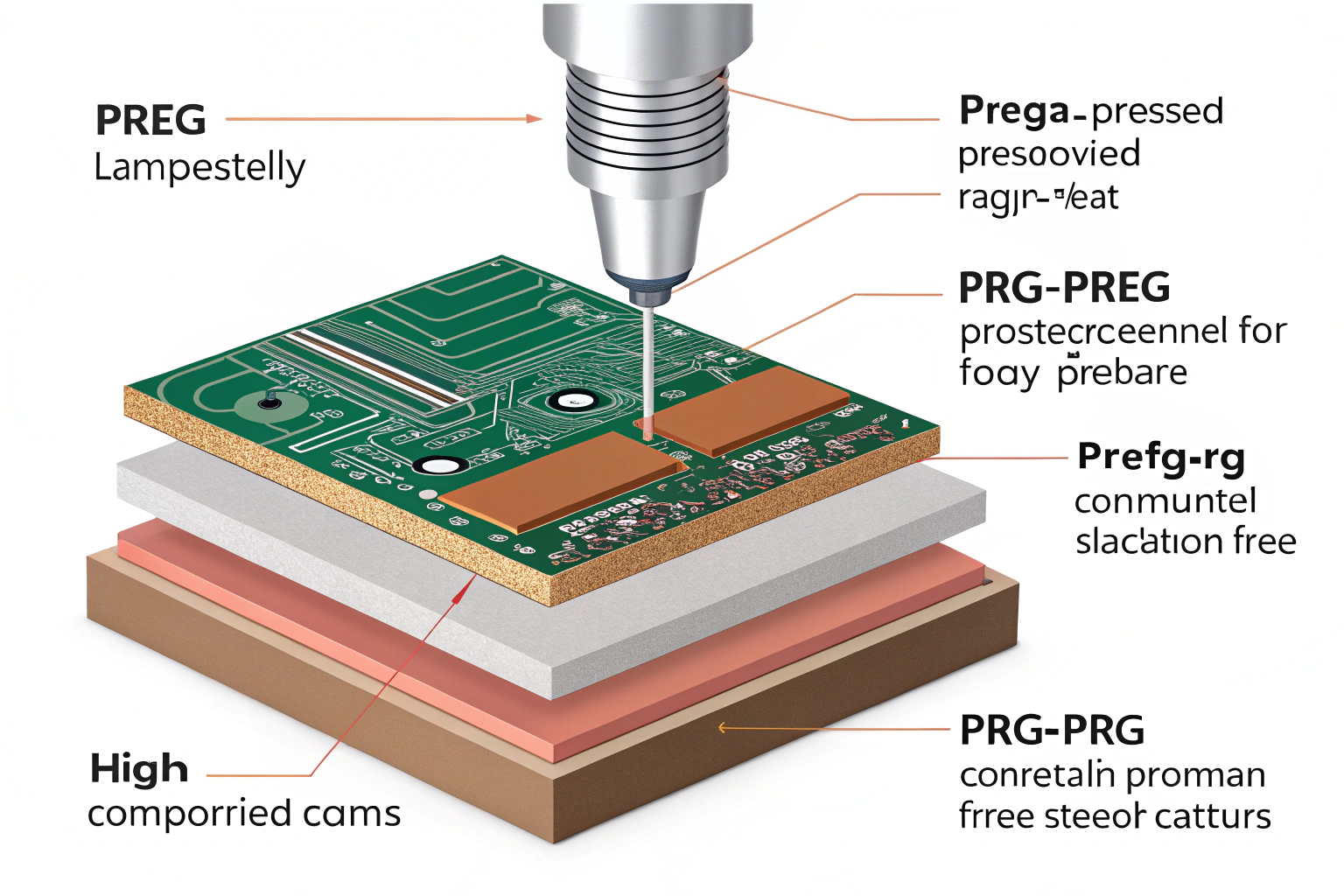
For B2B buyers designing industrial controllers, IoT modules, or high-speed communication boards, stable prepreg performance ensures consistent signal integrity and long-term product durability from prototype to mass production.
What materials are used for prepreg?
Different applications require different resin systems and reinforcement materials.
Prepreg is made from fiberglass cloth combined with epoxy resin, polyimide, or advanced low-loss materials depending on PCB performance requirements.
[alt with keywords](https://placehold.co/600×400 "prepreg materials"]
Deeper Insight
Common prepreg compositions include:
1. Standard FR4 Epoxy Prepreg
- Most widely used
- Balanced cost and performance
- Suitable for general electronics, consumer devices, and control boards
2. High-Tg or High-Temperature Prepreg
- Higher heat resistance
- Better dimensional stability
- Ideal for automotive, industrial, and LED power systems
3. Polyimide Prepreg
- Superior thermal endurance
- Used in aerospace, defense, and high-reliability sectors
4. Low-Dk / Low-Df Prepreg (Rogers, Panasonic, Isola RF materials)
- Low dielectric loss for RF and high-speed designs
- Required for 5G, radar, and high-frequency IoT products
Manufacturers check compatibility between core and prepreg materials. Mismatched resins cause poor bonding or excessive expansion during reflow. Engineering teams evaluate thermal cycles, impedance goals, and lamination windows to select the right material set.
These choices directly impact signal performance, mechanical reliability, and ease of manufacturing across both small-batch and high-volume PCBA projects.
How does prepreg work during PCB lamination?
The lamination stage is where prepreg becomes active and bonds the PCB stack together.
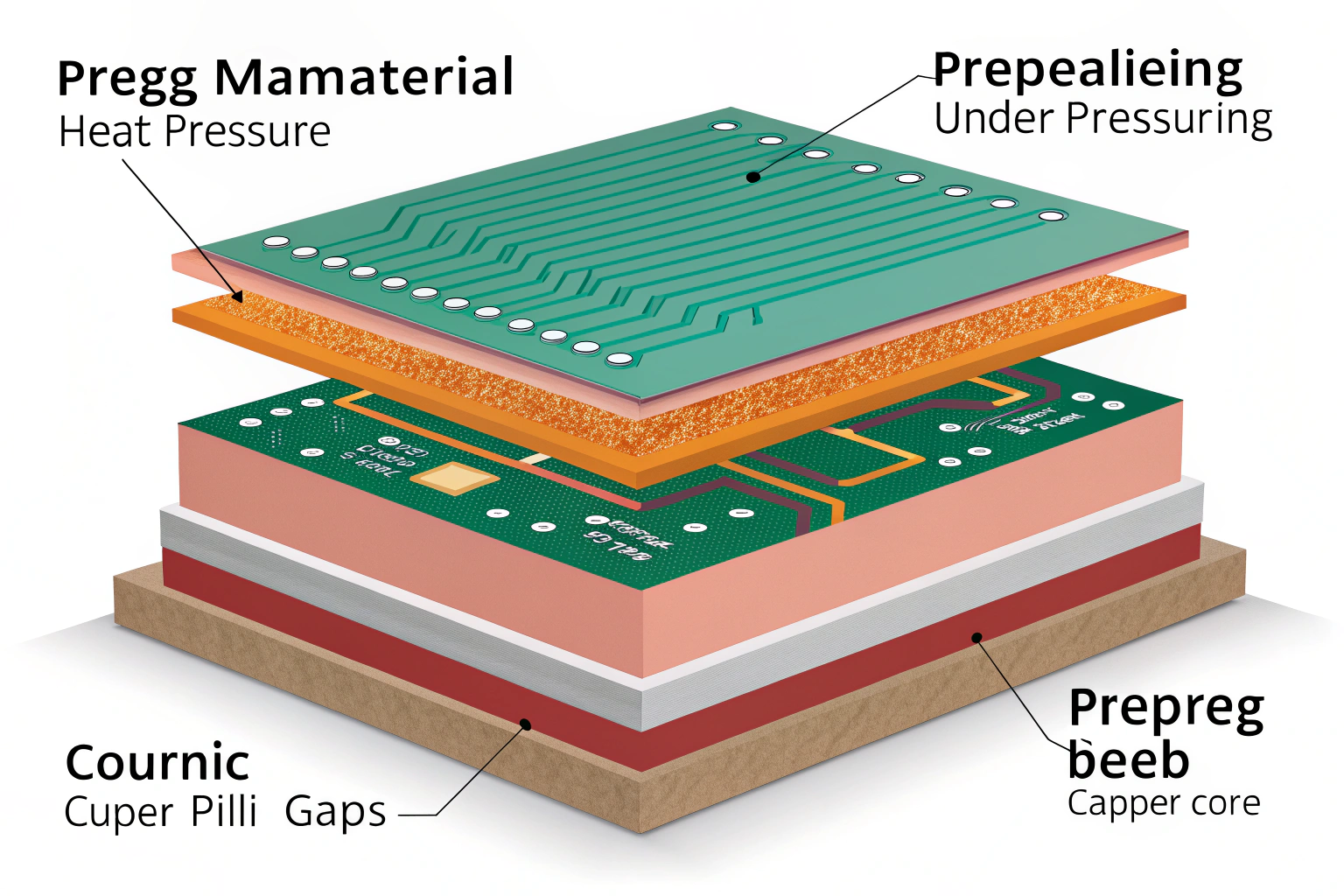
Prepreg melts under heat and pressure, flows into gaps, and cures to form a solid dielectric layer between copper foils and cores.
Deeper Insight
The lamination process works as follows:
-
Stack-up preparation
Prepreg sheets are placed between copper-clad cores based on the defined layer structure. -
Heat and pressure application
Lamination presses heat the prepreg, causing resin to flow and fill spaces around copper features. -
Resin curing
Controlled thermal cycles lock the layers into a single rigid laminate. -
Thickness control
Prepreg defines dielectric thickness that determines impedance performance. -
Cooling and stabilization
Resin solidifies, creating a uniform multilayer PCB.
Manufacturers must control resin flow, squeeze-out, and glass alignment to avoid issues such as:
- Voids and delamination
- Resin cracks
- Warpage and layer misalignment
- Impedance variation
- Thickness inconsistency
For B2B OEM customers, these factors influence product reliability, especially in high-speed or industrial applications. Engineering-driven factories analyze stack-up data, resin content, and lamination curves to deliver stable multilayer performance.
What prepreg types and formats are commonly used?
Not all prepregs behave the same during lamination. Resin content and glass style influence mechanical and electrical performance.
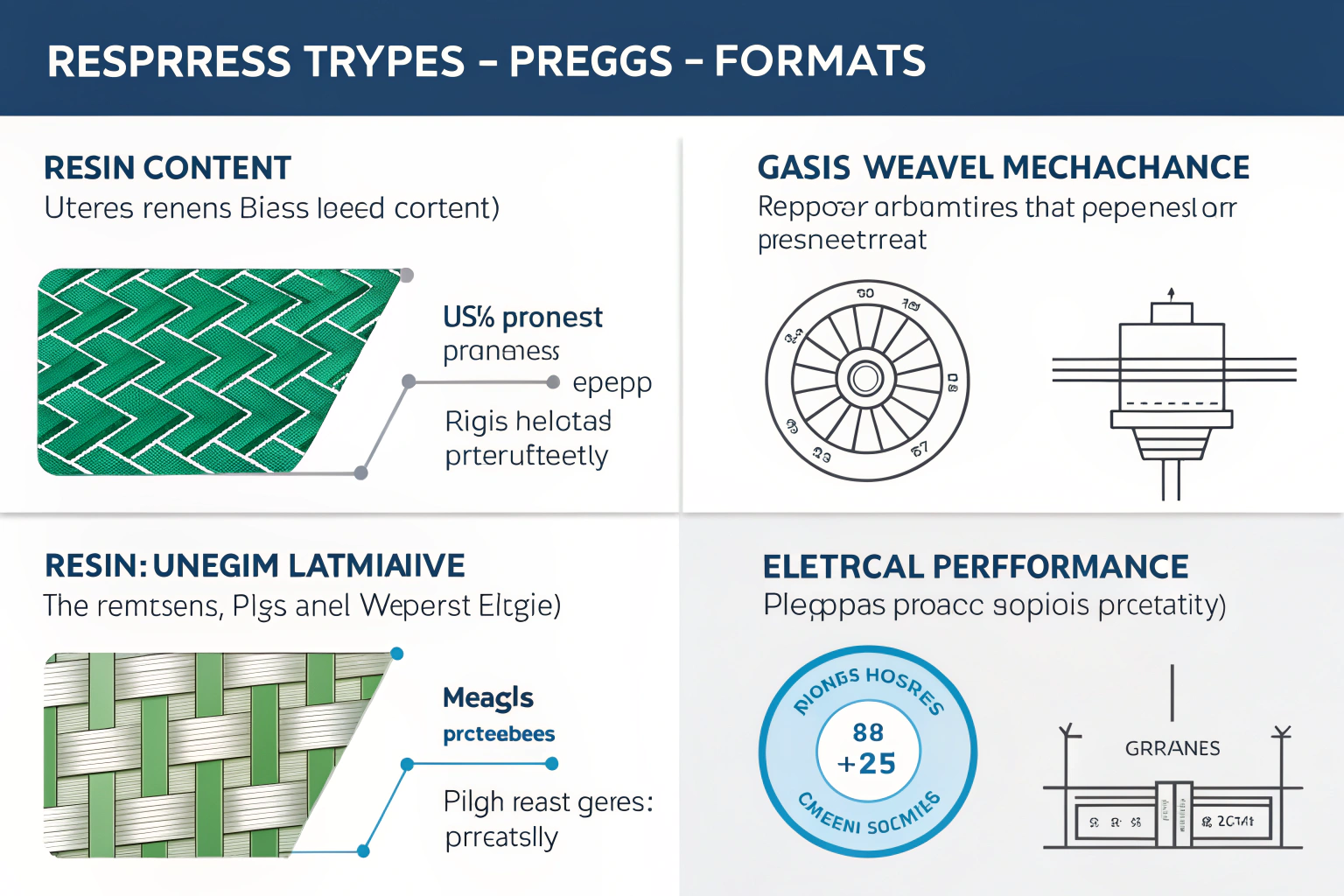
Prepreg types vary by resin content (low, medium, high), glass weave style, and lamination characteristics.
Deeper Insight
Key prepreg variables include:
1. Resin Content
- Low Resin Content (LRC):
Strong mechanical support, minimal flow - Medium Resin Content (MRC):
Balanced bonding and thickness control - High Resin Content (HRC):
Better flow for filling gaps or heavy copper areas
2. Glass Weave Patterns
- 106, 1080: fine weave for high-speed signals
- 2116, 7628: coarse weave for structural support
3. Application-Specific Prepreg
- Void-free prepreg for HDI
- Ultra-low Df prepreg for RF
- Halogen-free prepreg for environmental compliance
Manufacturers match prepreg type to product needs. For example, IoT modules often require low-loss fine-weave prepreg to maintain Wi-Fi, Bluetooth, or LoRa RF performance. Industrial devices may prioritize high-Tg and strong bonding.
Engineering teams provide DFM feedback and recommend alternative materials when original BOM items face shortages or long lead times—supporting consistent production schedules.
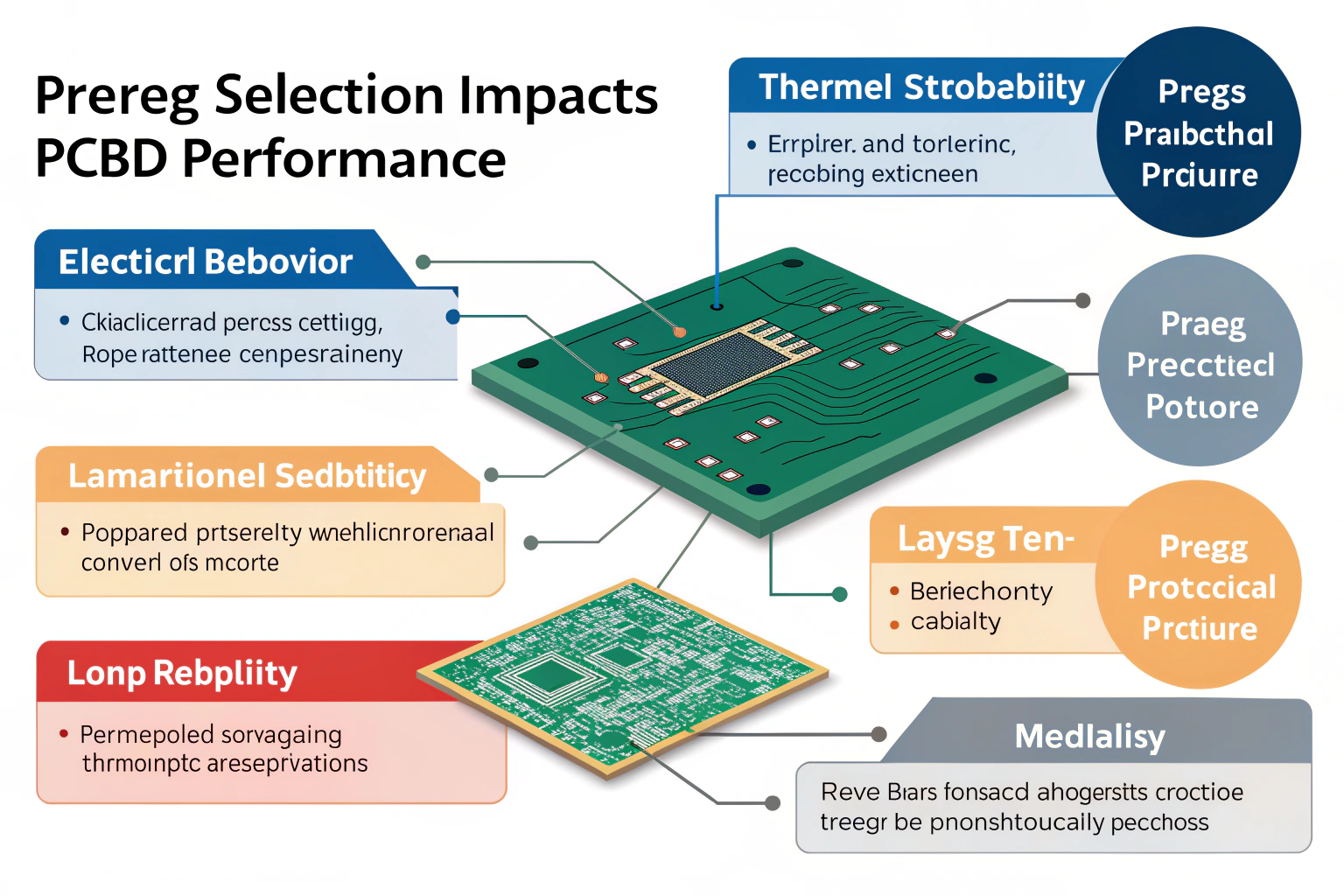
How does prepreg selection affect PCB performance?
Choosing the wrong prepreg can cause impedance issues, warpage, thermal failure, or mechanical breakdown.
Prepreg selection affects electrical behavior, thermal stability, layer thickness, lamination quality, and long-term mechanical reliability.
Deeper Insight
Prepreg impacts PCB performance through:
1. Electrical Properties
- Dielectric constant (Dk)
- Dissipation factor (Df)
- Impedance stability
- High-frequency loss
2. Thermal Properties
- Glass transition temperature (Tg)
- CTE (coefficient of thermal expansion)
- Heat resistance during reflow
3. Mechanical Strength
- Bonding between copper layers
- Flex and vibration durability
- Resistance to bow and twist
4. Manufacturability
- Resin flow behavior
- Void-free lamination
- Thickness accuracy
Factories optimize stack-ups based on prepreg characteristics and customer performance targets. CAM engineers run impedance simulations, check resin compatibility, and validate lamination cycles to ensure consistent quality from prototype to mass production.
For B2B customers, proper prepreg selection improves product lifespan, signal integrity, and reliability under harsh conditions—critical for smart home systems, industrial controls, and advanced IoT electronics.
Conclusion
Prepreg is the bonding and dielectric material that enables multilayer PCB construction. It determines lamination strength, electrical performance, impedance stability, and long-term reliability. By understanding prepreg materials, types, and manufacturing behaviors, designers can build stable, high-performance PCBs suitable for modern electronics. With careful engineering review and proper stack-up planning, manufacturers deliver reliable results across prototypes and full production—ensuring consistent quality for a wide range of industrial and IoT applications.
