
A 6 layer PCB is a multilayer printed circuit board consisting of six conductive copper layers laminated together with insulating materials. Compared with 2-layer or 4-layer boards, a 6 layer PCB provides higher routing density, better signal integrity, and improved power distribution.
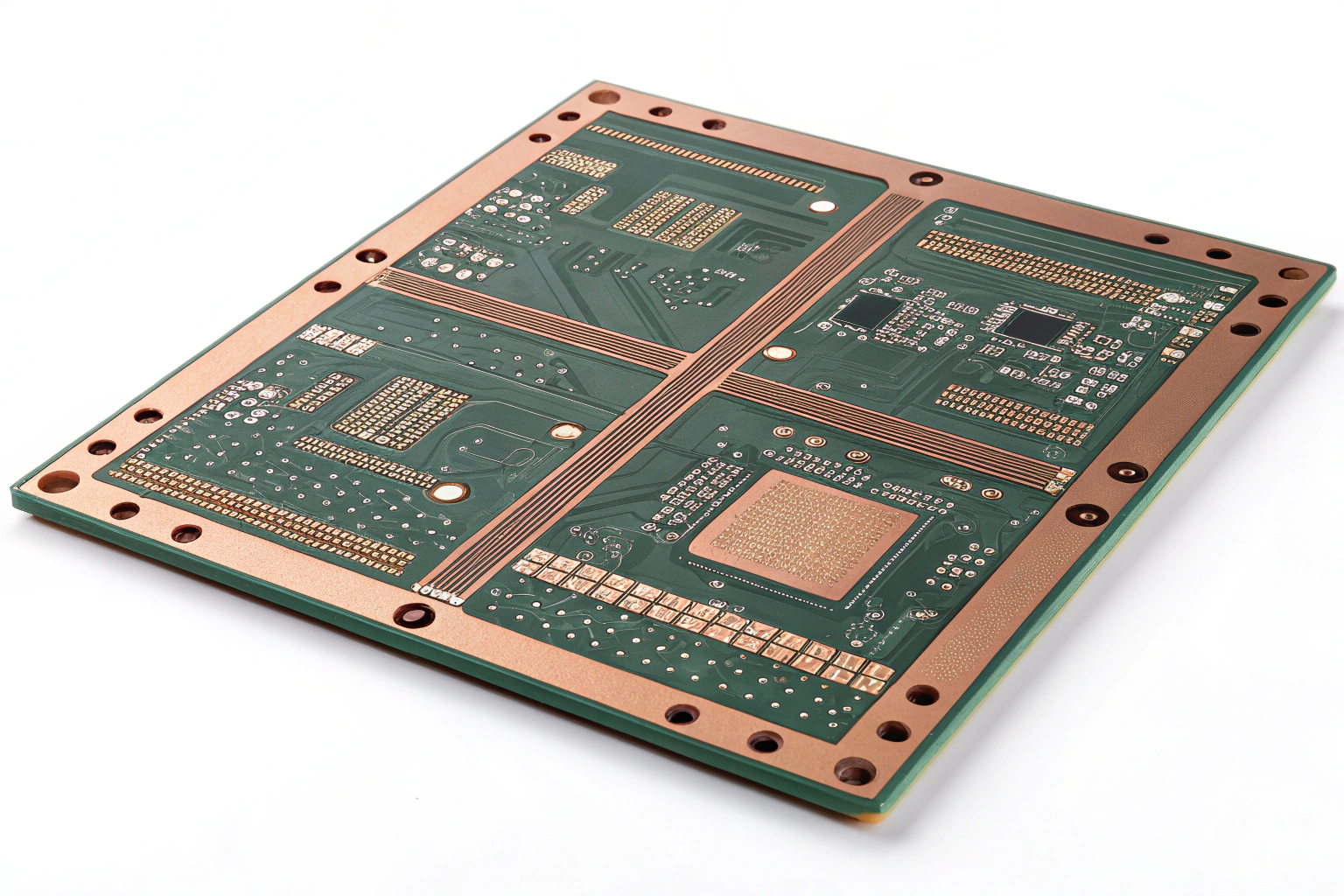
In manufacturing, 6 layer PCBs represent a mature multilayer product category that balances performance, complexity, and production stability. They are widely used in electronics that require reliable operation, compact layout, and controlled electromagnetic behavior.
What is the typical stack-up of a 6 layer PCB?
A standard 6 layer PCB stack-up usually includes signal layers and dedicated power and ground planes.
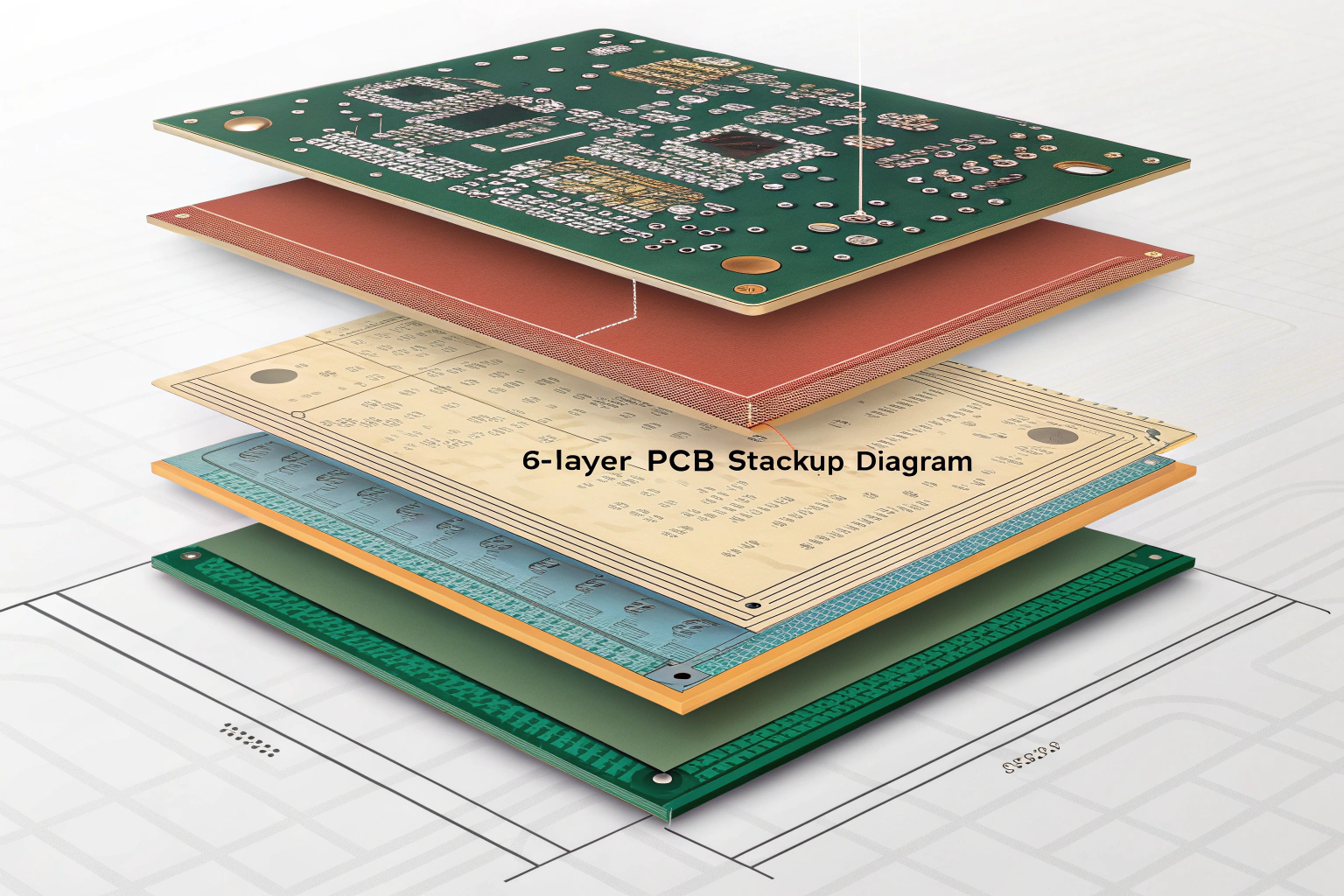
A common structure is:
- Top layer: signal
- Inner layer 1: ground plane
- Inner layer 2: signal
- Inner layer 3: power plane
- Inner layer 4: signal
- Bottom layer: signal
This structure allows signals to reference solid ground planes, which improves impedance control and reduces noise. From a manufacturing perspective, stack-up design directly affects lamination pressure, dielectric thickness control, and drilling accuracy. Proper stack-up planning is essential for stable production and consistent electrical performance.
Why are 6 layer PCBs used instead of 4 layer PCBs?
6 layer PCBs are selected when 4 layer boards cannot meet routing density or electrical requirements.
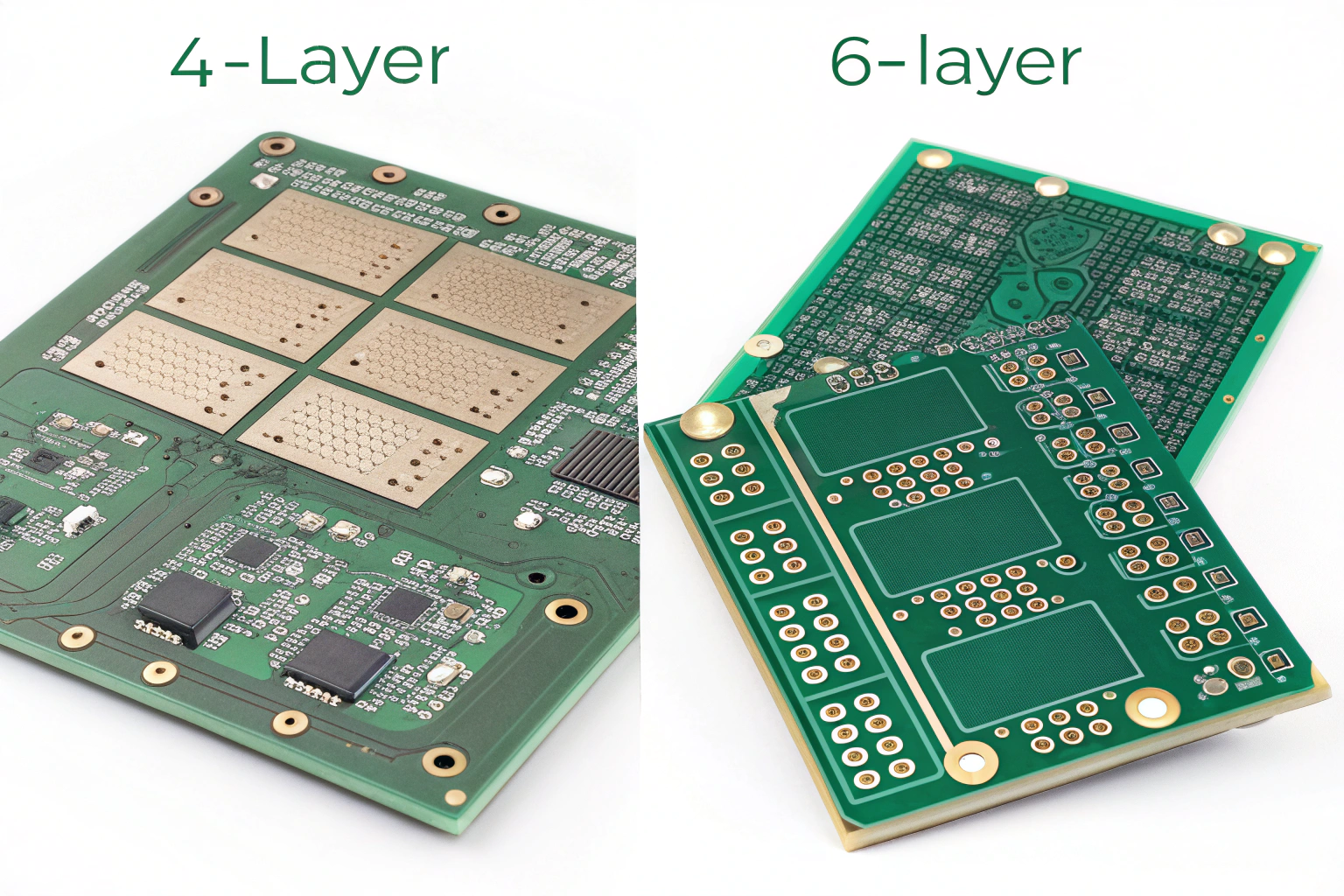
As circuit complexity increases, additional signal layers reduce routing congestion and shorten trace lengths. Dedicated power and ground planes improve power integrity and reduce voltage drop and EMI.
In factory production, 6 layer PCBs also provide more flexibility for layout optimization. Engineers can separate noisy signals from sensitive circuits across different layers, which improves functional test stability and long-term reliability.
How is a 6 layer PCB manufactured in the factory?
The manufacturing process of a 6 layer PCB is more complex than simpler boards and requires strict process control.
Production starts with inner layer imaging and etching. Each inner layer circuit is formed on copper-clad cores and inspected for accuracy. Approved inner layers are stacked with prepreg and copper foil, then laminated under controlled temperature and pressure.
After lamination, precision drilling creates vias connecting all layers. Holes are plated to form reliable interlayer connections. Outer layer imaging, etching, solder mask application, surface finish, and silkscreen printing complete the fabrication process.
Factories producing 6 layer PCBs rely on accurate registration systems, stable lamination profiles, and disciplined workshop management to maintain yield.
What manufacturing challenges are associated with 6 layer PCBs?
6 layer PCBs introduce several technical challenges during production.
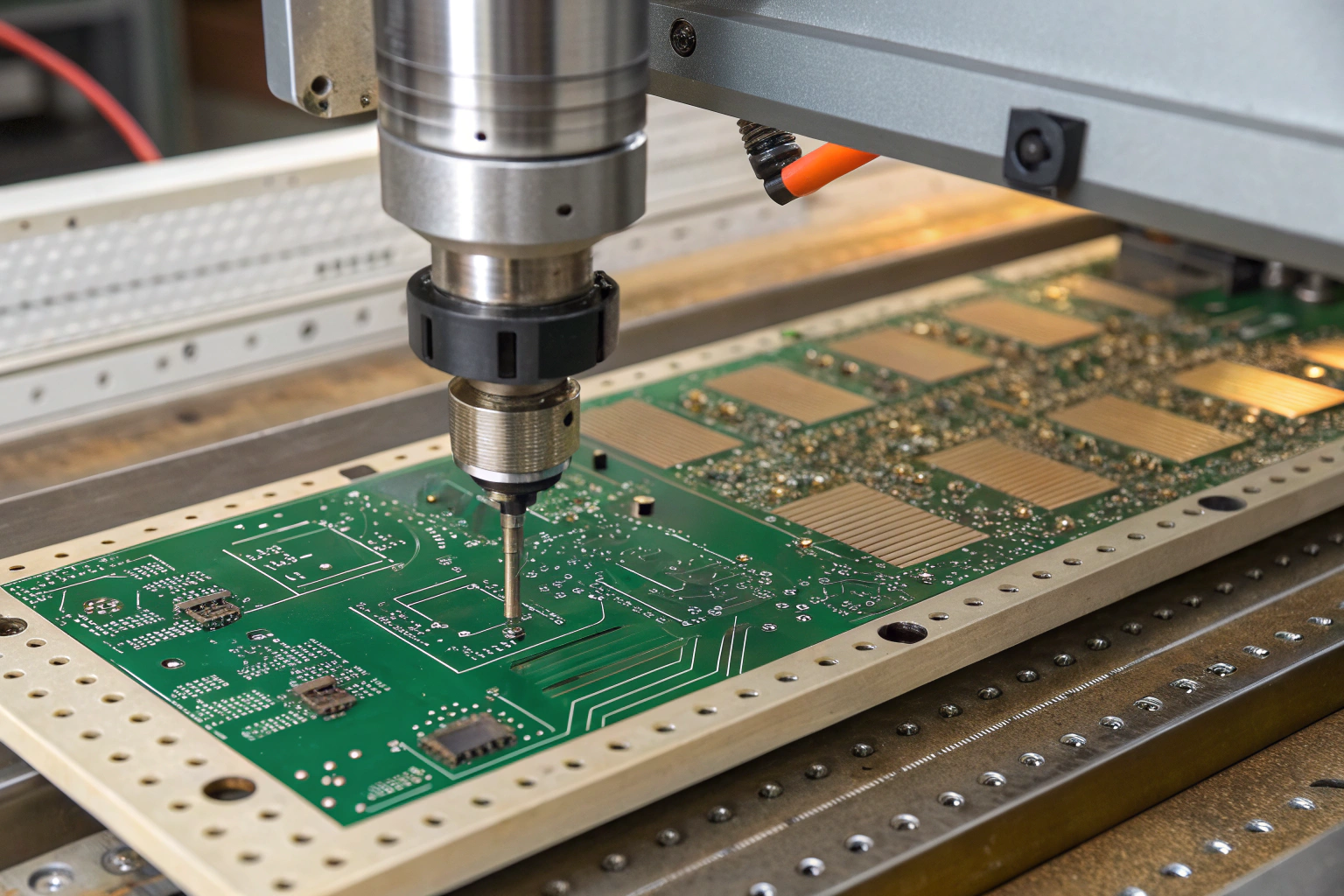
Layer alignment becomes more critical as the number of layers increases. Any misregistration can affect via integrity and signal reliability. Drilling depth control and copper plating uniformity are also more demanding.
Thermal stress during lamination and soldering must be carefully managed to prevent warpage or delamination. For this reason, material selection, prepreg control, and process monitoring are more stringent in 6 layer PCB workshops.
Where are 6 layer PCBs commonly used?
6 layer PCBs are widely used in products that require high reliability and compact design.
Typical applications include industrial control systems, communication equipment, embedded computing boards, medical electronics, power management units, and advanced consumer devices.
These products benefit from improved signal integrity, stable power distribution, and better EMI control provided by multilayer structures.
How do factory capabilities affect 6 layer PCB quality?
The quality of a 6 layer PCB is closely linked to factory capability.
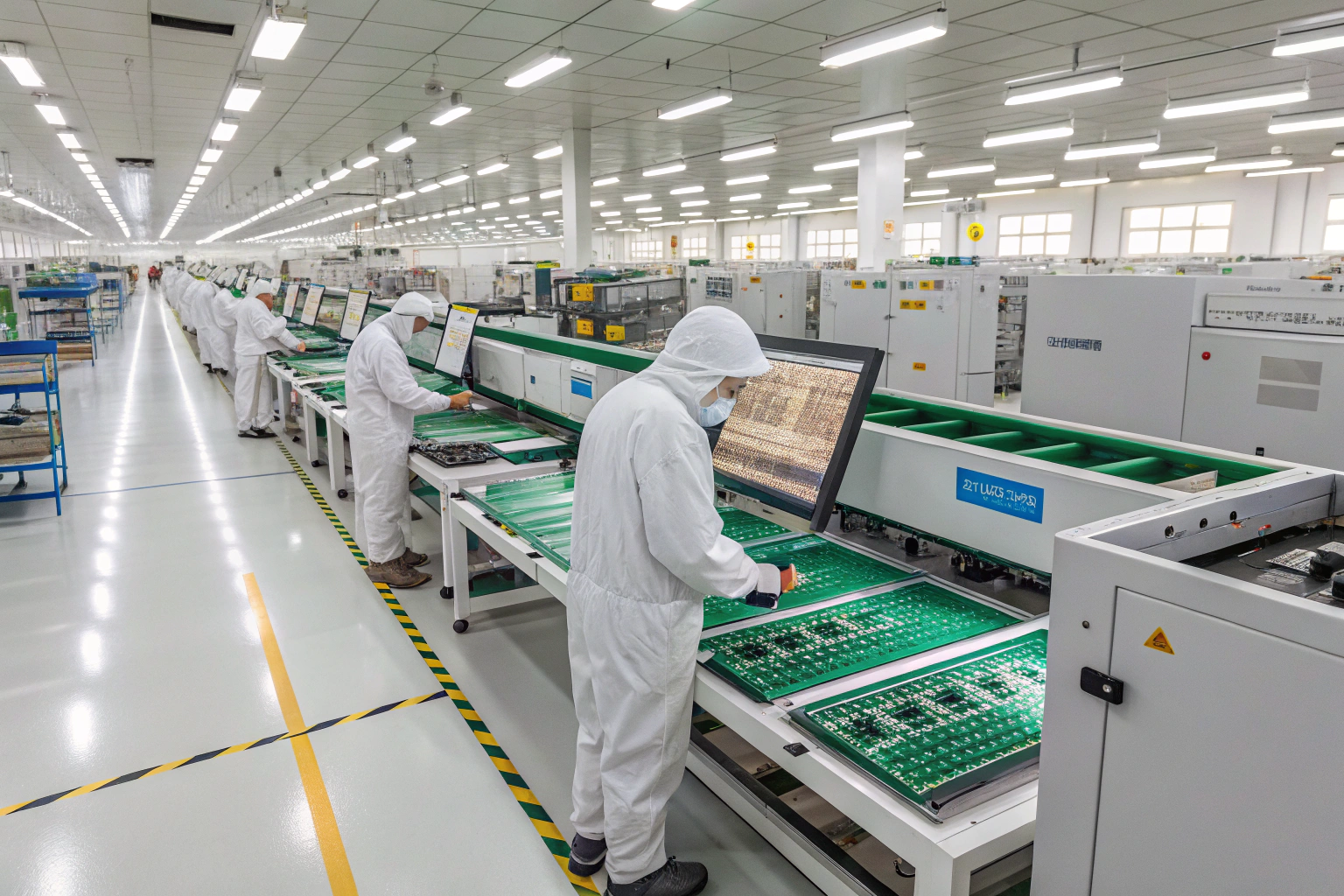
Manufacturers with in-house multilayer lamination, precision drilling, and advanced inspection systems can control each production variable. Engineering teams continuously monitor process parameters and adjust them based on board complexity.
Strong process discipline results in consistent impedance, reliable vias, and stable performance across production batches. This is especially important for products with long service life and strict reliability requirements.
Conclusion
A 6 layer PCB is a multilayer circuit board designed to support higher complexity, better signal integrity, and improved power management. Its structure allows engineers to separate signals, power, and ground effectively while maintaining a compact form factor.
From a manufacturing standpoint, 6 layer PCBs require advanced lamination processes, precise drilling and plating, and disciplined workshop control. When produced in a capable factory environment, 6 layer PCBs deliver stable electrical performance, strong mechanical reliability, and long-term consistency, making them a key building block for modern electronic systems.
