
Using a hot glue gun on a circuit board is generally not recommended for functional or reliability-critical applications. While hot glue can provide temporary mechanical fixation, it introduces risks related to heat, aging, contamination, and rework difficulty that conflict with professional electronics manufacturing standards.
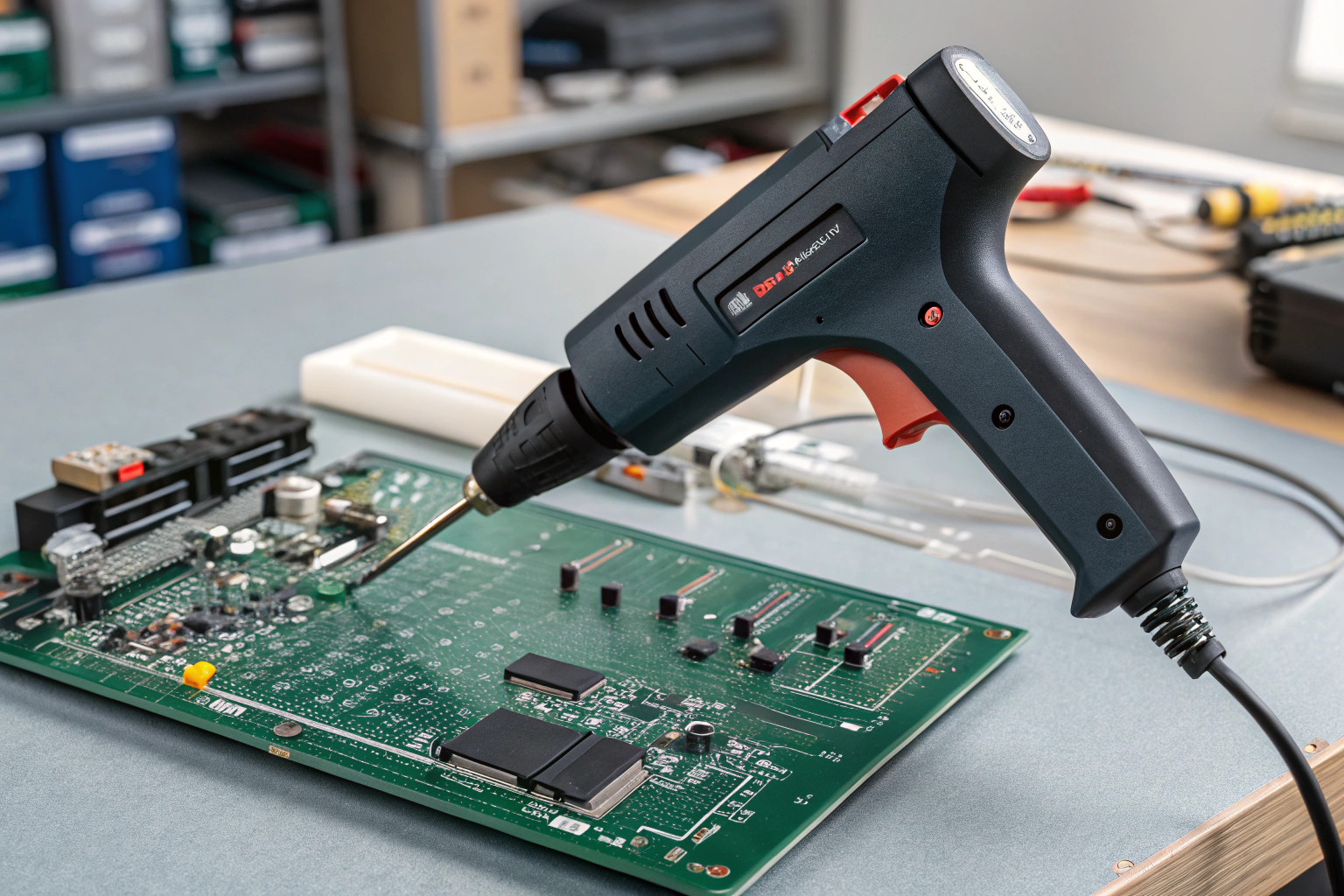
Hot glue is not an electronics-grade material. Its use on PCBs must be clearly limited and carefully evaluated.
In controlled manufacturing environments, adhesive use on circuit boards is treated as an engineering decision, not a convenience choice.
Why Hot Glue Is Problematic for Circuit Boards
Hot glue is designed for crafts and light mechanical tasks.

Its properties do not align with PCB requirements.
Hot glue (thermoplastic adhesive) is applied at high temperature and solidifies as it cools. On a PCB, this creates several inherent issues:
- Application temperature can exceed component limits
- Adhesive softens again at relatively low operating temperatures
- Long-term aging causes hardening, cracking, or loss of adhesion
- Electrical insulation properties degrade over time
Unlike electronics-grade adhesives, hot glue has no defined behavior under thermal cycling, humidity exposure, or long service life. These conditions are unavoidable in real electronic products.
For this reason, hot glue is excluded from formal assembly and rework specifications in professional workshops.
Thermal Risk During Application
Heat damage is immediate and irreversible.
Risk appears before the glue even cures.
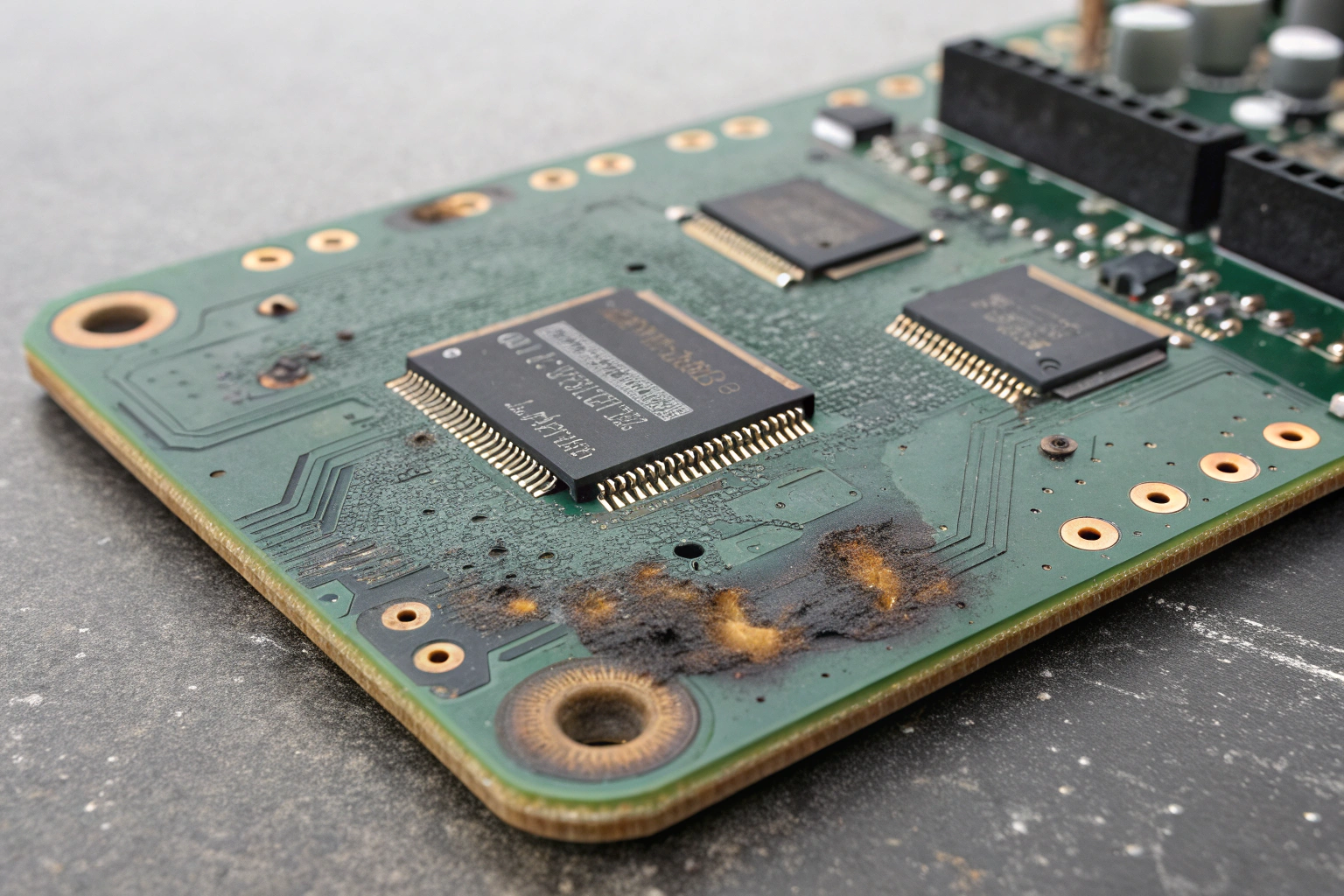
Hot glue guns typically operate between 160°C and 200°C. This temperature range is high enough to:
- Deform plastic connectors
- Damage cable insulation
- Stress solder joints
- Weaken PCB laminate locally
Fine-pitch components, sensors, and connectors are especially vulnerable. Even brief contact with hot glue can introduce latent defects that do not show up in initial testing.
In manufacturing, all materials applied to PCBs must stay well below component maximum ratings during application. Hot glue does not meet this requirement.
Long-Term Reliability and Aging Issues
Short-term stability does not mean long-term reliability.
Aging behavior matters more than initial bonding.
As hot glue ages, it often:
- Becomes brittle and cracks
- Loses adhesion under vibration
- Absorbs contaminants
- Softens again under heat
On a PCB, this leads to loose components, trapped moisture, and stress transfer to solder joints. In warm environments, hot glue can partially reflow, migrate, or drip onto unintended areas.
From a manufacturing reliability perspective, any material with unpredictable aging behavior is unacceptable for production use.
Impact on Inspection, Rework, and Testing
Hot glue obstructs quality control.
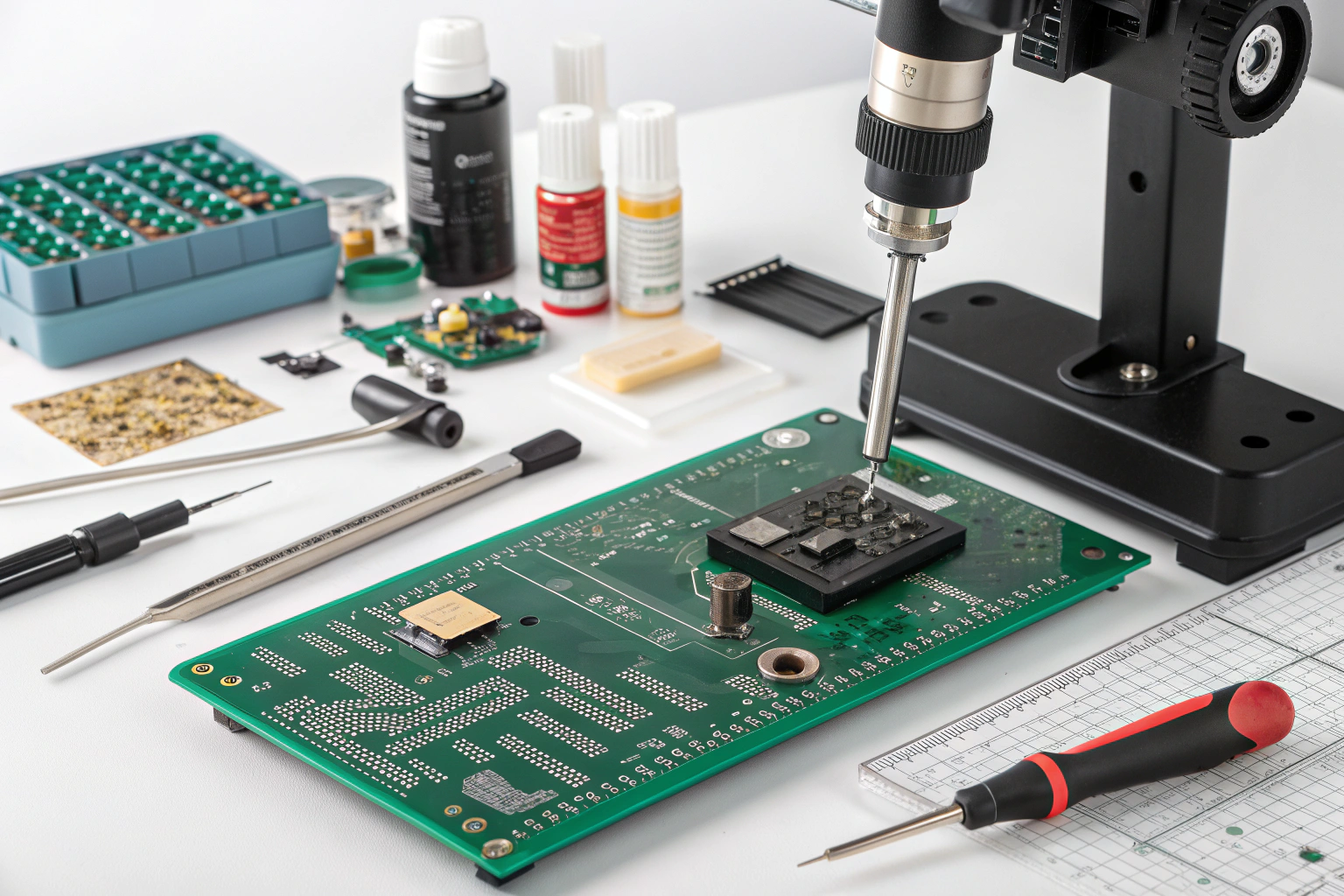
It hides defects instead of preventing them.
Once applied, hot glue:
- Covers solder joints and pads
- Prevents visual inspection and AOI
- Makes rework difficult and risky
- Often damages pads during removal
In factory workshops, all assemblies must remain inspectable and repairable within defined limits. Materials that block inspection or require destructive removal are not allowed.
If a PCB with hot glue enters rework, the probability of pad lift, trace damage, or secondary failure increases significantly.
What Adhesives Are Used Instead in Manufacturing?
Electronics use qualified materials, not general adhesives.
Each adhesive has a defined role.
Professional PCB manufacturing uses adhesives specifically formulated for electronics, such as:
- Silicone adhesive for flexibility and vibration damping
- Epoxy adhesive for structural reinforcement
- UV-curable adhesive for precise, controlled bonding
These materials are:
- Electrically insulating
- Thermally stable
- Documented for aging behavior
- Compatible with inspection and rework
Adhesive type, location, thickness, and cure conditions are defined in process instructions and verified during inspection.
This controlled approach ensures adhesives support reliability rather than compromise it.
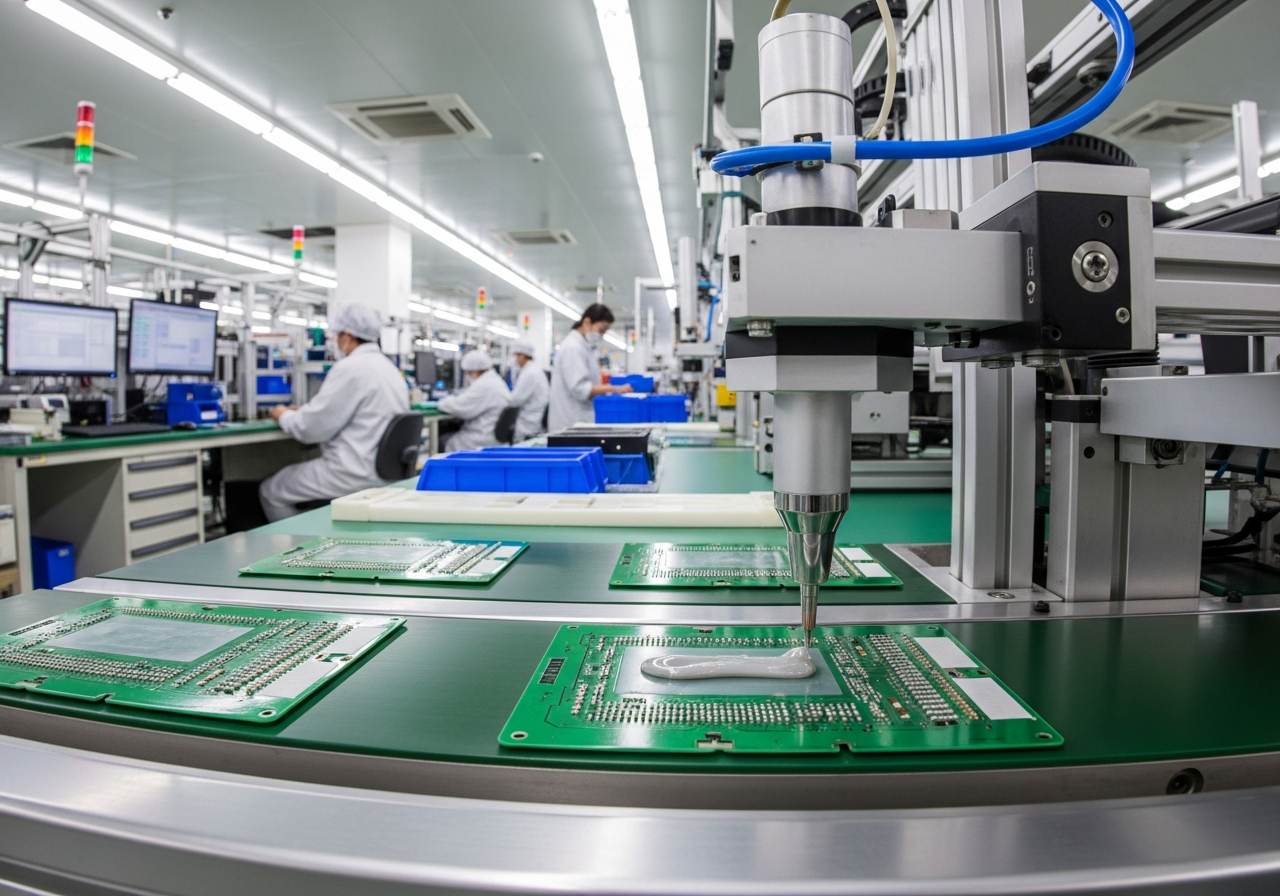
How Factory Workshops Control Adhesive Use on PCBs
Adhesive application is part of the process design.
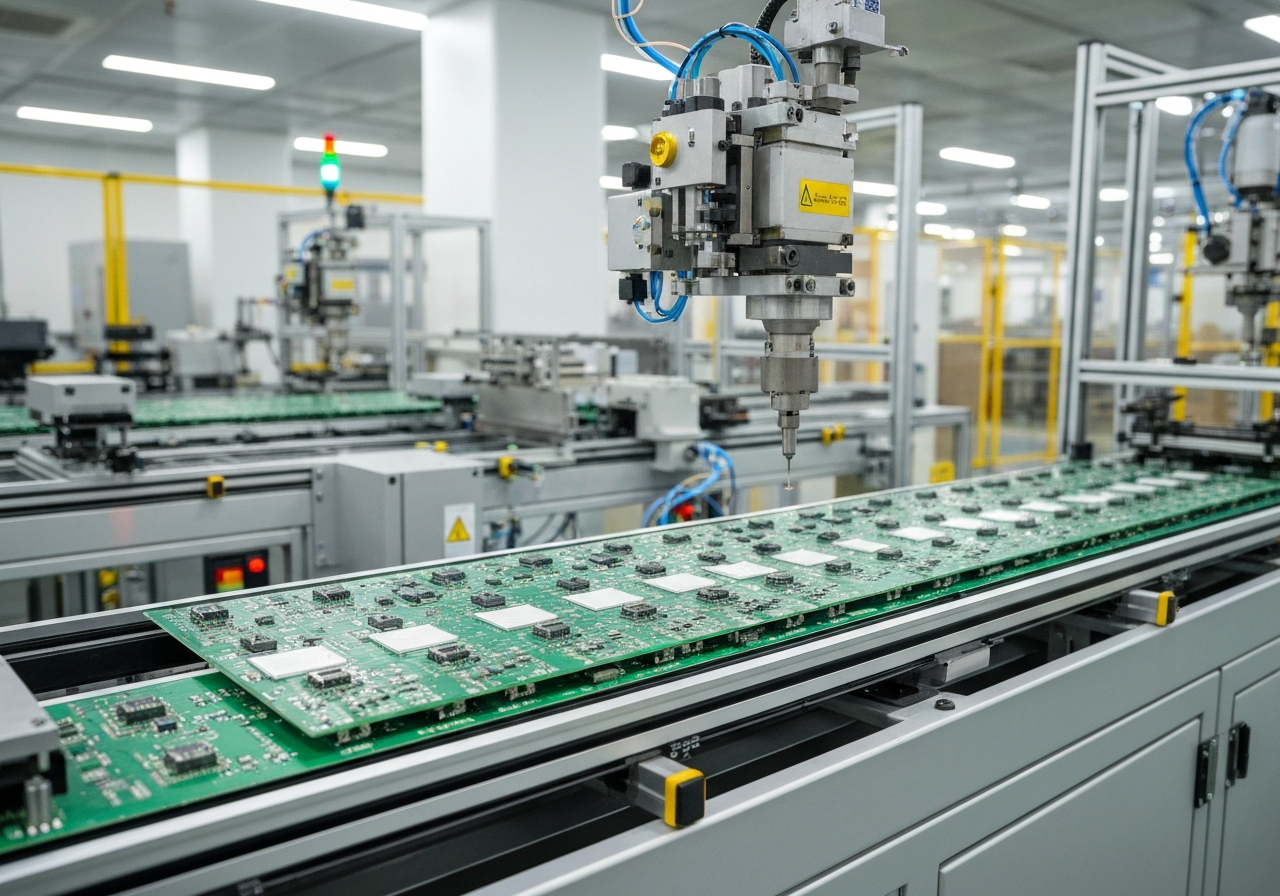
Uncontrolled use is treated as a defect.
In professional factory workshops:
- Only approved adhesives are allowed on the line
- Application points are defined by engineering
- Operators are trained and certified
- Cure conditions are monitored and recorded
Adhesives are applied after soldering, never as a substitute for solder joints. Inspection confirms that glue does not interfere with electrical paths, connectors, or test points.
Any unauthorized adhesive, including hot glue, results in rejection or mandatory rework.
Are There Any Limited Cases Where Hot Glue Is Acceptable?
Acceptability depends on risk tolerance and purpose.
Production standards remain strict.
Hot glue may be seen in non-critical, temporary situations such as:
- Cable positioning during early prototyping
- Short-term mechanical holding outside electrical areas
Even in these cases, such use is considered temporary and non-production. It is never accepted for long-term use, shipped products, or reliability-sensitive assemblies.
Temporary success does not equal manufacturing approval.
Conclusion
Using a hot glue gun on a circuit board is not recommended for professional or long-term electronic assemblies. Hot glue introduces thermal risk during application, unpredictable aging behavior, contamination potential, and major challenges for inspection and rework. In controlled manufacturing environments, adhesive use is strictly defined and limited to electronics-grade materials that are qualified for thermal stability, electrical insulation, and long service life. While hot glue may appear convenient for quick fixes, it compromises reliability, traceability, and product lifespan. High-quality circuit boards are built through disciplined material selection and controlled processes, not through improvised solutions.
