
A 4 layer PCB is one of the most commonly used multilayer circuit boards in modern electronics. It offers a strong balance between performance, cost, and manufacturability. Compared with single-layer or double-layer boards, a 4 layer PCB provides better signal control, lower noise, and higher circuit density, making it suitable for industrial electronics, communication devices, control systems, and embedded products.
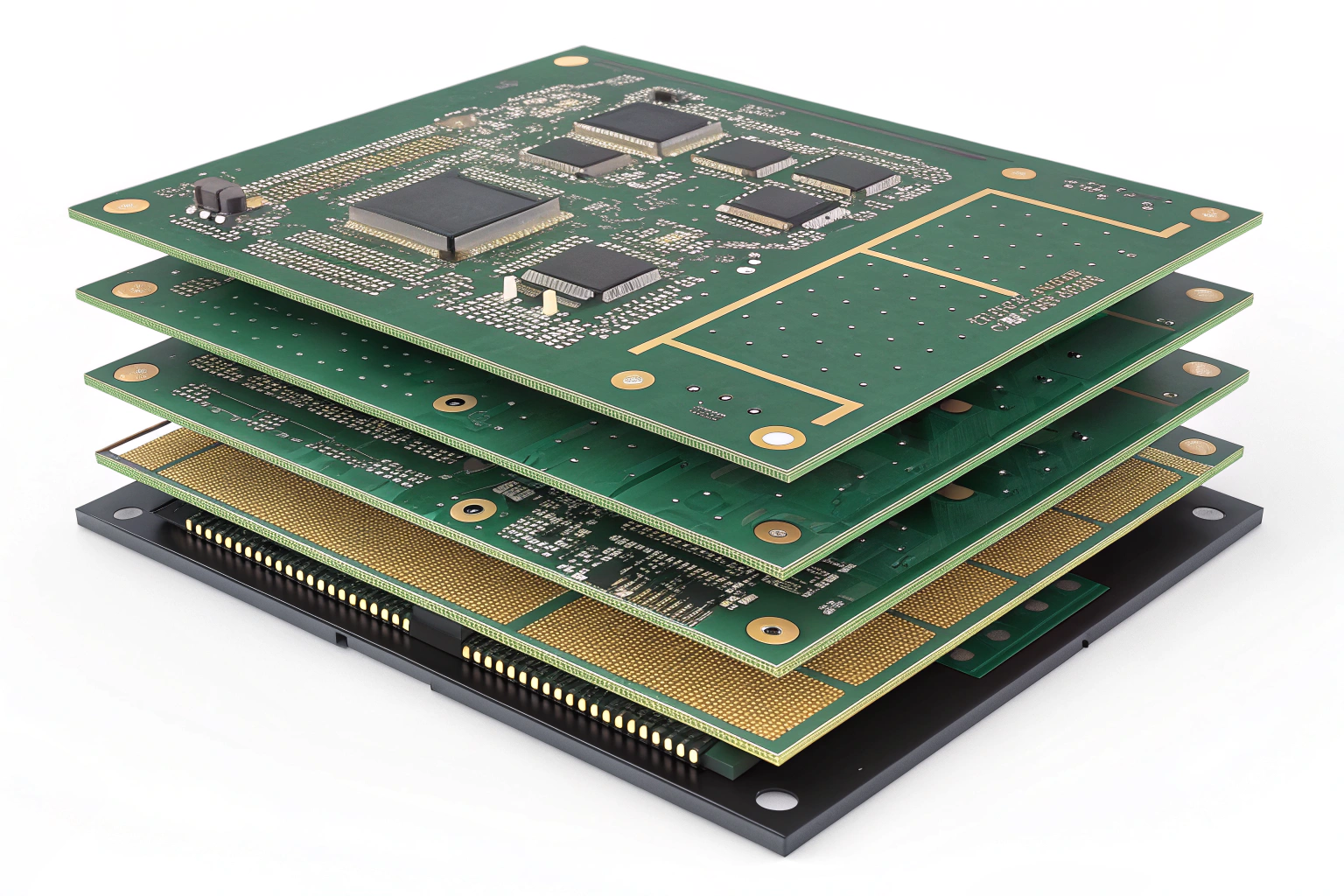
A 4 layer PCB works by stacking four copper layers in a specific order, usually including two signal layers and dedicated power and ground planes. These layers are electrically connected through vias, allowing complex circuits to operate with stable signals and reliable power distribution.
To fully understand how a 4 layer PCB works, it is necessary to look at its layer stack-up, signal flow, power integrity, manufacturing process, and assembly considerations from a production perspective.
What Is the Typical Stack-Up of a 4 Layer PCB?
The stack-up defines how the four copper layers are arranged inside the board. A standard and widely used stack-up is:
- Top Layer: Signal layer
- Inner Layer 1: Ground plane
- Inner Layer 2: Power plane
- Bottom Layer: Signal layer
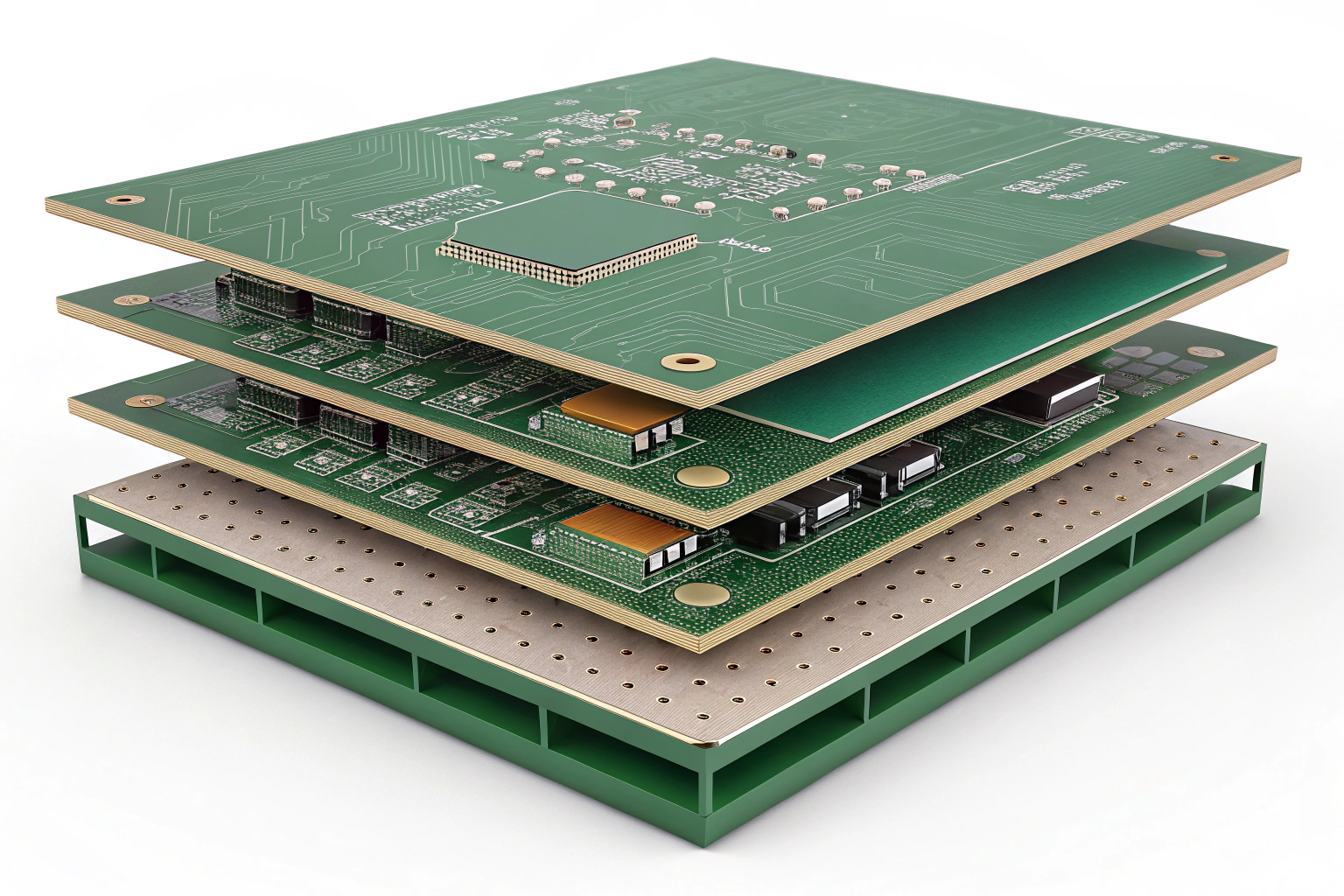
This structure places signal layers next to solid reference planes. The close coupling between signal and ground reduces impedance variation and electromagnetic interference. In some designs, the inner layers may be swapped or split depending on voltage requirements, but symmetry is always important.
From a manufacturing standpoint, balanced stack-up is critical. Symmetry helps prevent board warpage during lamination and reflow soldering. Proper dielectric thickness between layers is also controlled to meet impedance targets and mechanical strength requirements.
How Do Signals Travel in a 4 Layer PCB?
In a 4 layer PCB, most signal routing is done on the top and bottom layers. These signal traces reference the internal ground plane, which provides a stable return path.

High-speed and sensitive signals benefit greatly from this structure. The ground plane directly under the signal layer reduces loop area and minimizes noise. Vias are used to transfer signals between layers, but excessive via transitions are avoided to maintain signal integrity.
Signal performance depends on:
- Trace width and spacing
- Dielectric thickness
- Copper thickness
- Via structure and placement
During engineering review, impedance calculations are performed to ensure that signal traces meet design requirements. Poor routing or incorrect stack-up can lead to reflections, crosstalk, and unstable operation, even if the schematic is correct.
Why Are Power and Ground Planes Essential in a 4 Layer PCB?
The biggest advantage of a 4 layer PCB is the inclusion of dedicated power and ground planes. These planes form the electrical backbone of the board.
A solid ground plane:
- Provides a continuous return path
- Reduces electromagnetic interference
- Improves signal stability
The power plane distributes voltage evenly across the board. This reduces voltage drop and supports fast current demand from components. Decoupling capacitors placed close to power pins work together with the planes to suppress noise.
From a factory perspective, plane integrity is closely monitored. Breaks, voids, or misalignment in power and ground layers can cause hidden defects that are difficult to detect after assembly. Automated optical inspection and electrical testing help ensure plane continuity before shipment.
How Is a 4 Layer PCB Manufactured?
The manufacturing of a 4 layer PCB involves both inner layer and outer layer processes. It begins with fabricating the two inner copper layers, which are etched onto core materials.

Main production steps include:
- Inner layer imaging and etching
- Inner layer inspection and oxide treatment
- Layer stacking with prepreg sheets
- Lamination under controlled heat and pressure
- CNC drilling of vias and holes
- Copper plating for vias and surfaces
- Outer layer patterning and etching
- Solder mask, silkscreen, and surface finish
In the factory workshop, lamination is one of the most critical steps. Temperature, pressure, and time must be precisely controlled to avoid delamination or resin voids. Drill accuracy is also essential, as vias must align perfectly with inner layer pads to ensure reliable electrical connections.
How Does PCBA Assembly Affect a 4 Layer PCB?
After fabrication, the 4 layer PCB moves to assembly. Because these boards often carry dense layouts and fine-pitch components, assembly quality directly affects performance.
Key assembly factors include:
- Accurate solder paste printing
- Stable pick-and-place alignment
- Controlled reflow temperature profiles
- Proper thermal balance across layers
The internal copper planes store heat, which affects soldering behavior. Reflow profiles must be adjusted to ensure complete solder melting without overheating components. Inspection methods such as AOI, X-ray inspection for BGA devices, and functional testing are used to confirm assembly reliability.
Why Is a 4 Layer PCB Widely Used?
A 4 layer PCB offers a practical step up from double-layer boards without the cost and complexity of higher layer counts. It supports higher routing density, better signal integrity, and more stable power delivery.

Typical applications include:
- Industrial control boards
- Communication modules
- Embedded systems
- Power management boards
- Smart devices and controllers
From a production viewpoint, 4 layer boards are mature and highly manufacturable. Process stability is high, yields are predictable, and long-term reliability can be achieved with proper design and material selection.
Conclusion
A 4 layer PCB works by combining two signal layers with dedicated internal power and ground planes to create a stable, compact, and high-performance circuit platform. This structure improves signal integrity, reduces noise, and ensures consistent power distribution across the board. Compared with simpler boards, it provides a clear advantage in electrical performance without excessive manufacturing complexity.
The reliability of a 4 layer PCB depends not only on circuit design but also on manufacturing precision and assembly control. Inner layer accuracy, lamination quality, drilling alignment, copper plating, and soldering profiles all influence final performance. Each process step must be executed under strict control to prevent hidden defects and long-term failures.
As electronic products continue to demand higher stability, faster signals, and smaller form factors, the 4 layer PCB remains a proven and efficient solution. When designed with proper stack-up planning and manufactured with disciplined process control, a 4 layer PCB delivers consistent quality, electrical reliability, and mechanical durability throughout the product lifecycle.
