
Touching a Printed Circuit Board (PCB) may appear harmless, but in electronics manufacturing and testing environments, it carries real safety and reliability risks. These risks affect both personnel safety and product quality. Whether touching a PCB is safe depends on its electrical state, voltage level, environmental controls, and handling procedures.
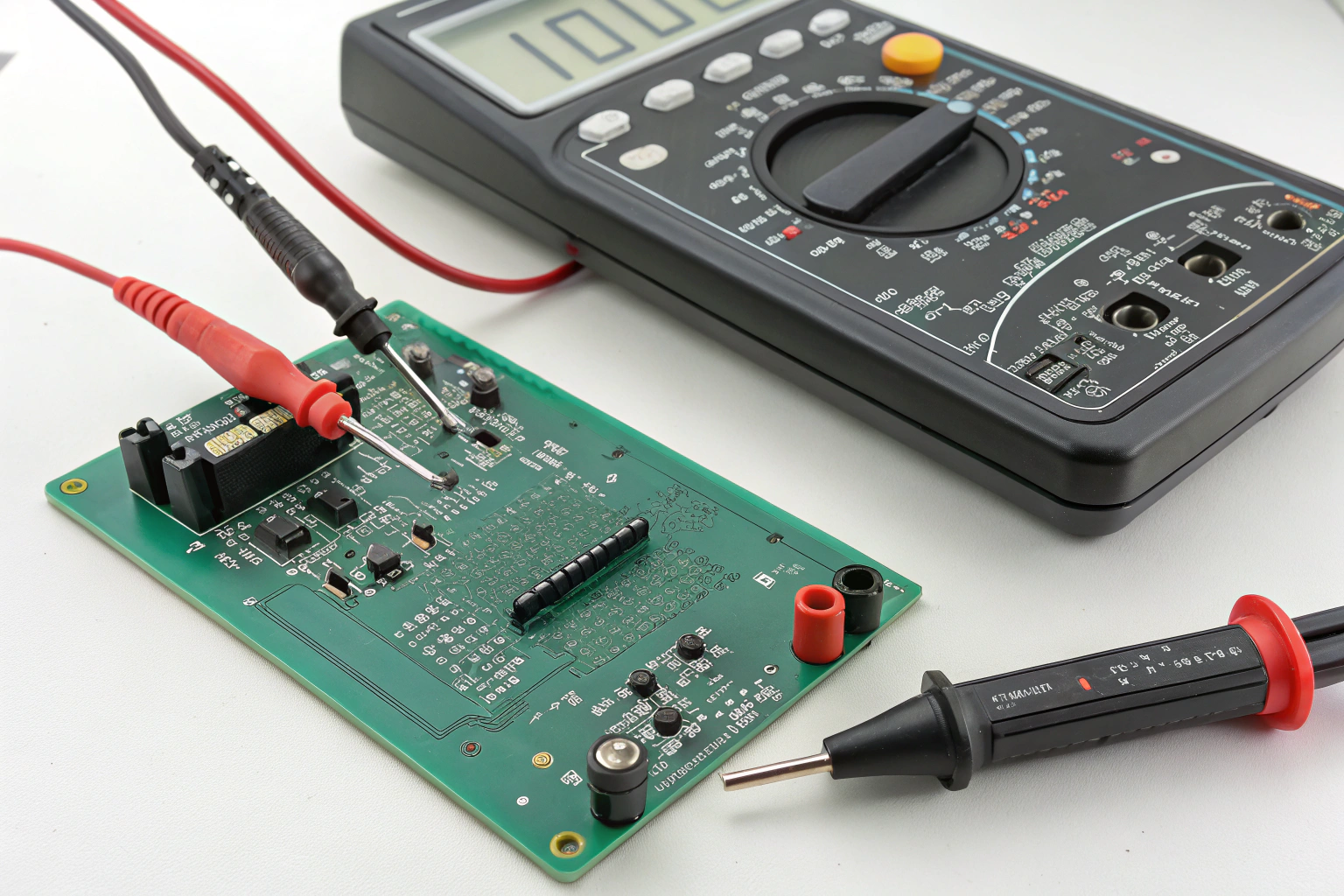
In professional manufacturing settings, PCB handling is governed by strict safety and process rules. These rules are designed not only to protect operators, but also to prevent hidden damage that can reduce product reliability. Understanding the risks and correct handling methods is essential for safe and stable production.
When Is Touching a PCB Potentially Dangerous?
Touching a PCB becomes dangerous primarily when electrical energy is present or when hazardous components are exposed.
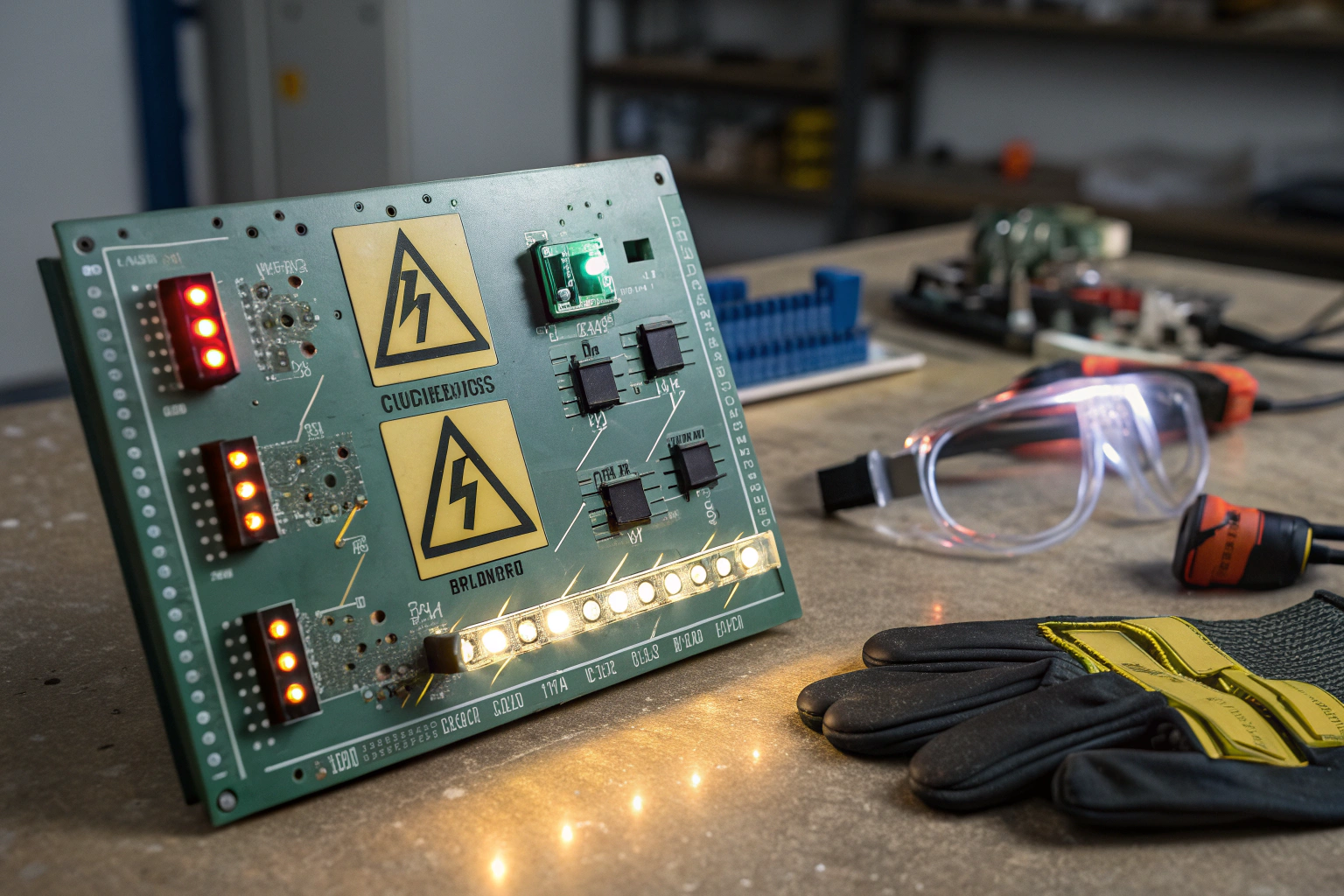
High-risk situations include:
- Powered-on PCBs with exposed conductors
- Boards connected to high-voltage or high-current circuits
- Charged capacitors after power removal
- PCBs used in power, motor, or industrial control systems
Even after power is disconnected, some components can retain charge for seconds or minutes. Contact with these areas may result in electric shock or burns. For this reason, factory safety rules prohibit direct contact with energized or recently powered boards unless proper protective equipment and procedures are used.
Can Touching a PCB Damage the Board?
Yes, touching a PCB can damage it even when no immediate safety hazard exists. The damage may not be visible but can affect long-term reliability.
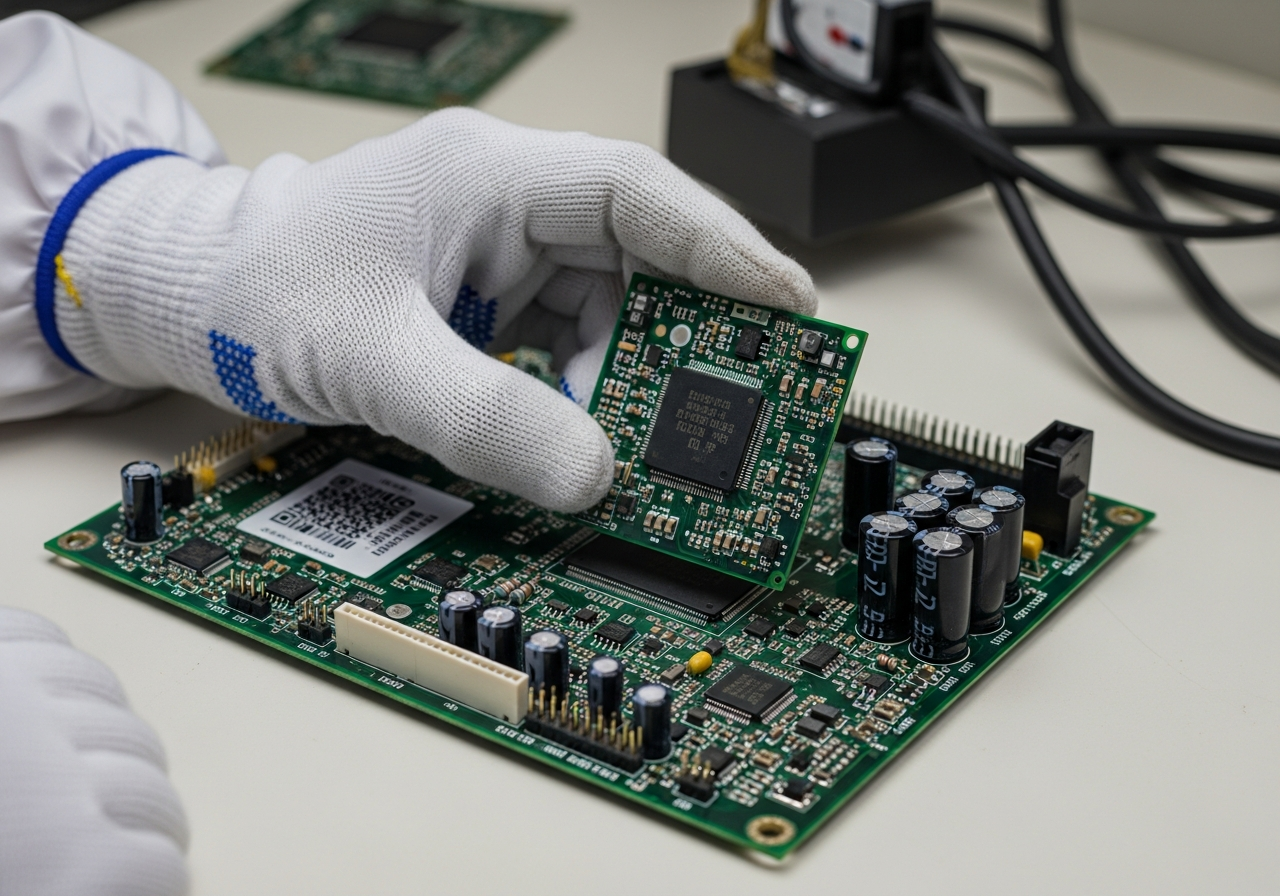
Common risks include:
- Electrostatic discharge (ESD) damaging sensitive components
- Skin oils contaminating solder joints and contacts
- Mechanical stress on components and solder joints
In manufacturing workshops, ESD damage is one of the most common hidden causes of early PCB failure. Modern ICs are highly sensitive, and a small static discharge from human contact can permanently degrade internal structures without leaving visible marks.
Contamination from fingerprints can also interfere with solderability, corrosion resistance, and electrical contact quality.
How Do Factory Workshops Control PCB Handling Safety?
Professional manufacturing facilities implement strict PCB handling controls to reduce both safety and quality risks.
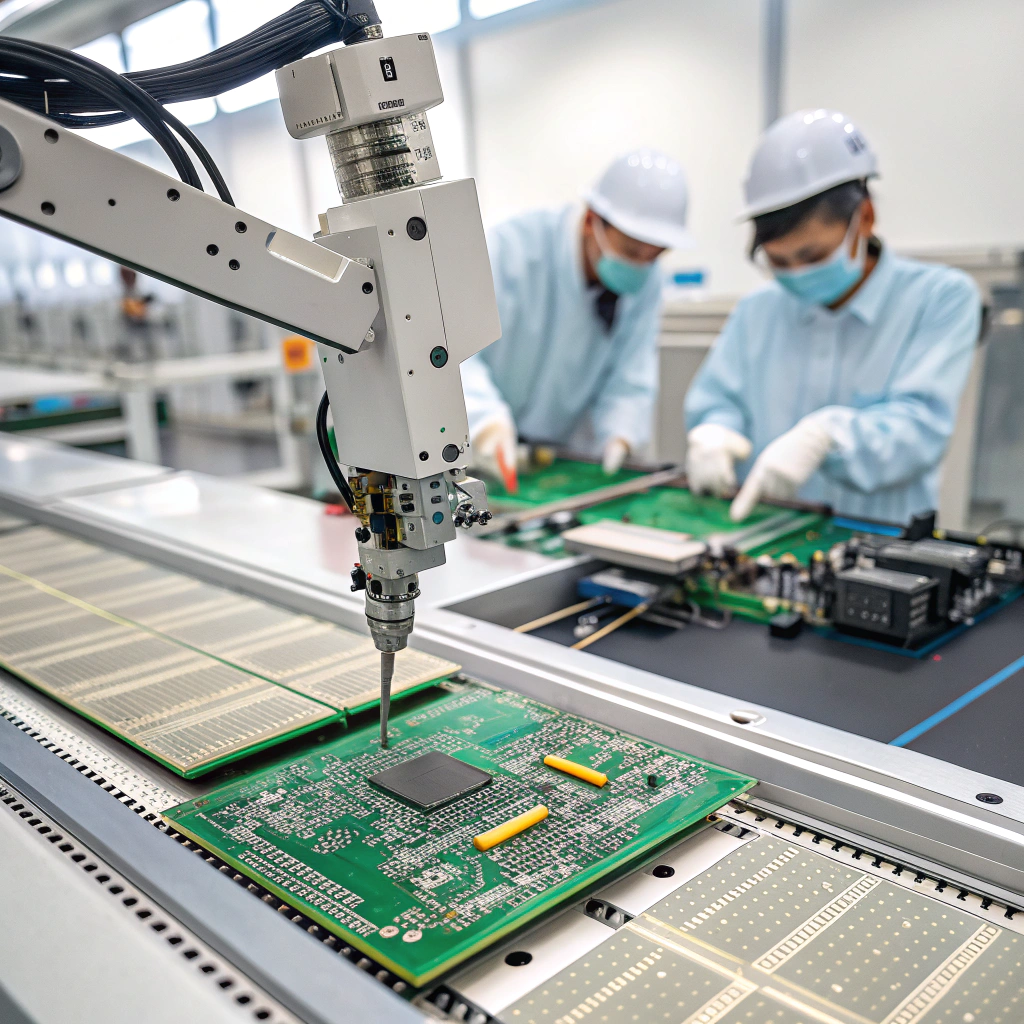
Standard workshop controls include:
- ESD-safe workstations and flooring
- Wrist straps and grounding systems
- Defined handling points on PCB edges
- Mandatory power-off verification before handling
Operators are trained to handle PCBs only by the edges and to avoid touching exposed pads, components, or connectors. These controls ensure that human contact does not introduce electrical or contamination-related defects into the production process.
Is It Safe to Touch an Unpowered PCB?
An unpowered PCB is generally safer to touch, but it is not risk-free.
Potential concerns include:
- Residual charge in capacitors
- ESD damage from static electricity
- Mechanical damage from improper handling
In manufacturing environments, even unpowered PCBs are treated as sensitive items. Handling rules remain in place throughout assembly, inspection, and testing stages. Gloves or finger cots may be used in controlled areas to reduce contamination risk.
The absence of power does not eliminate the need for ESD protection or proper handling discipline.
How Do Manufacturing Processes Reduce Touch-Related Risks?
Manufacturing processes are designed to minimize unnecessary human contact with PCBs.
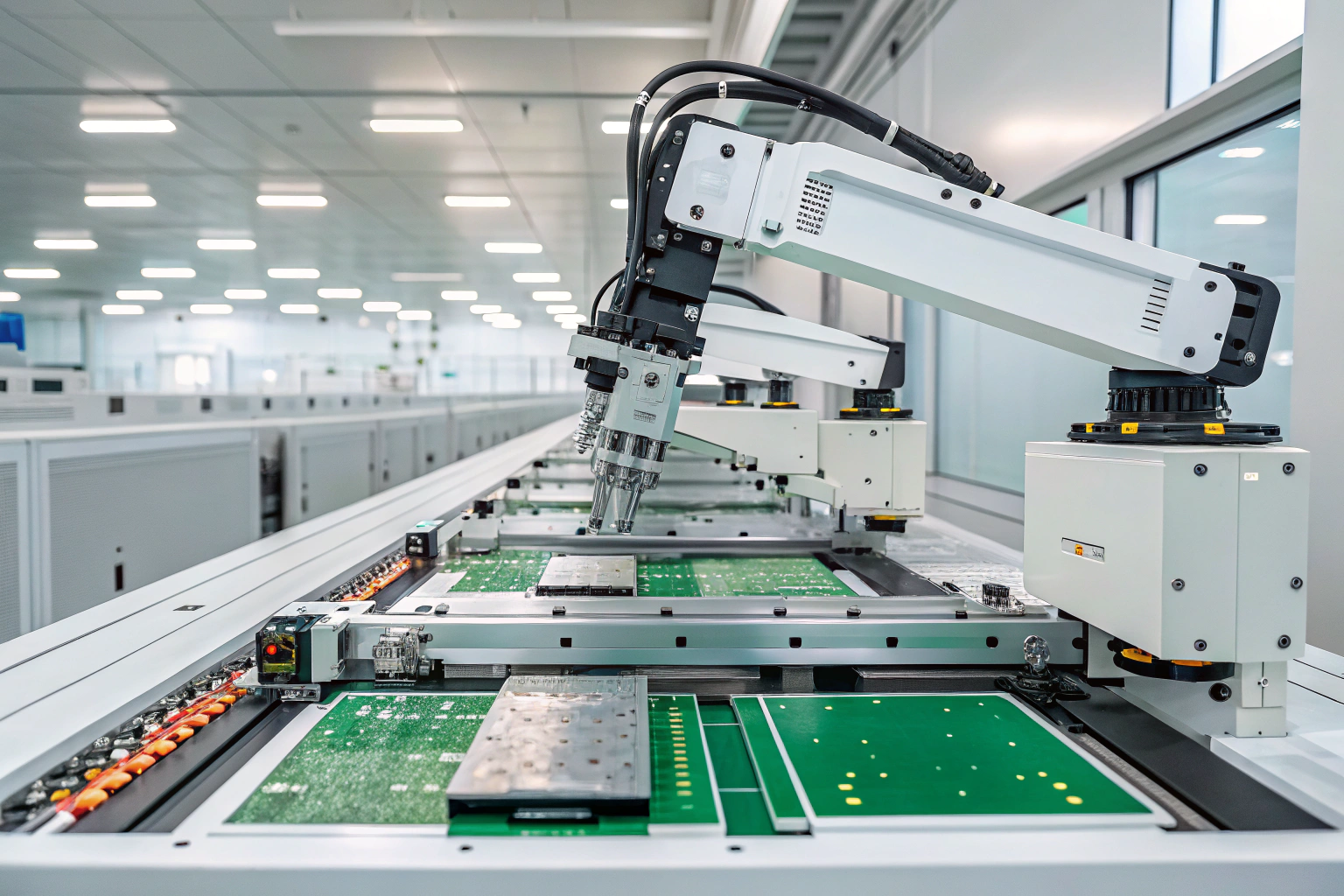
Key process strategies include:
- Automated SMT assembly and inspection
- Use of carriers and fixtures for transport
- Defined rework stations with safety controls
- Clear work instructions for handling
Automation reduces variation and limits exposure to ESD and contamination. When manual handling is required, it is restricted to trained personnel using approved tools and procedures.
Process discipline ensures that touching a PCB is a controlled exception rather than a routine action.
What Are the Long-Term Reliability Risks of Improper PCB Handling?
Improper PCB handling may not cause immediate failure, but it can introduce latent defects that surface later.
Long-term risks include:
- Early-life component failure
- Increased corrosion over time
- Intermittent electrical faults
- Reduced product lifespan
In manufacturing quality systems, handling-related defects are difficult to trace because they often appear after shipment or extended use. This is why handling rules are enforced as strictly as electrical or assembly standards.
Conclusion
Touching a PCB is not always unsafe, but it is never risk-free. In professional manufacturing environments, direct PCB contact is controlled to protect both human safety and product reliability. Powered boards present clear electrical hazards, while unpowered boards remain vulnerable to ESD, contamination, and mechanical damage. Through ESD-safe workshops, disciplined handling procedures, automation, and operator training, PCB handling risks are minimized. Treating every PCB as a sensitive and potentially hazardous item is a fundamental principle of reliable electronics manufacturing and long-term product quality.
