
An annular ring is the copper area surrounding a drilled hole on a PCB, ensuring strong electrical and mechanical connection for vias and component pads.
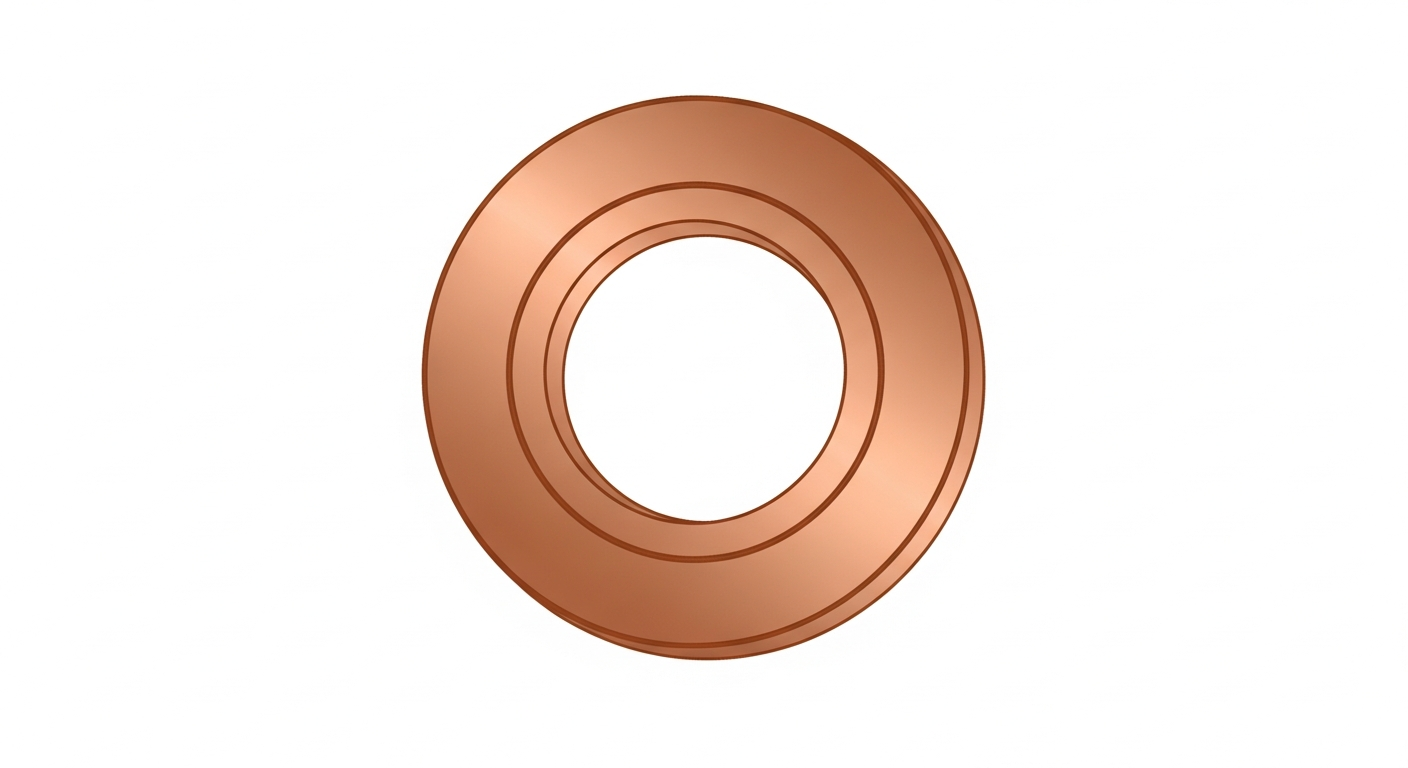
A clear understanding of annular ring design helps engineering teams improve reliability, avoid manufacturing defects, and achieve stable performance from prototype to mass production.
What is an annular ring in PCB design?
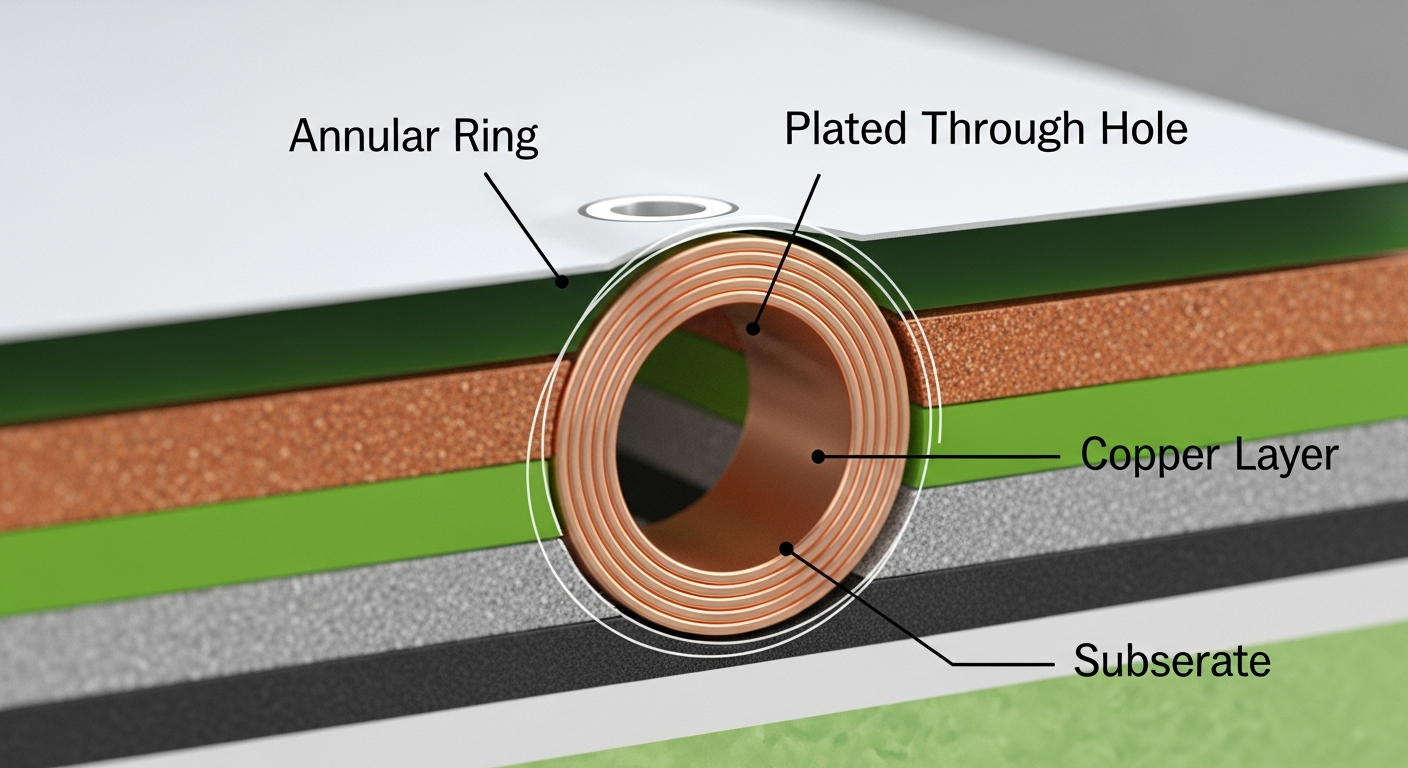
An annular ring refers to the copper pad material left around a plated hole after drilling.
A proper annular ring ensures secure via plating, stable component mounting, and reliable electrical connectivity.
Deeper Explanation and Industry Insights
Definition and Function
The annular ring is formed when a drill removes copper from the center of a pad, leaving a copper “ring” around the hole. This ring supports plating, preserves conductivity between layers, and maintains structural strength. Larger rings tolerate more drill deviation, while smaller rings require stricter positional accuracy.
Why It Matters
If the ring is too small, drill misalignment can break the connection, causing opens or poor plating. High-density boards with microvias require tight control of annular ring width to prevent defects. Stable rings also improve heat transfer during soldering.
Manufacturing Strength
Professional factories use precision drilling, laser alignment, and layer-to-layer registration control to maintain consistent annular ring dimensions. Advanced AOI and X-ray systems verify pad integrity before plating, protecting reliability for IoT devices, industrial controllers, and communication modules.
How is annular ring size determined?
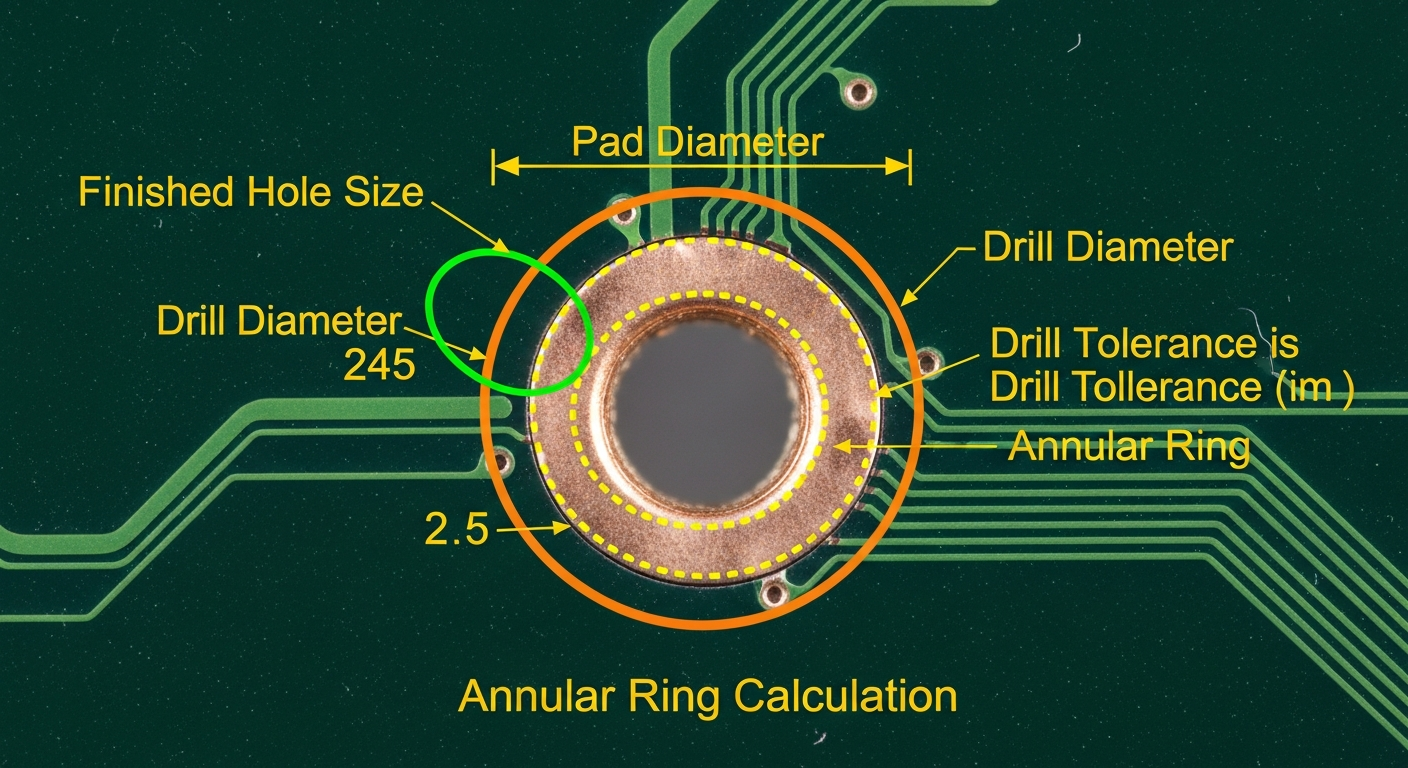
Annular ring size depends on pad diameter, finished hole size, drill tolerance, and PCB fabrication capability.
A proper ring balances manufacturability, routing density, and electrical reliability.
Deeper Explanation and Industry Insights
Basic Formula
Annular Ring = (Pad Diameter – Finished Hole Size) / 2
This calculation determines available copper around the drilled hole.
Design Factors
- Drill wander tolerance
- Material movement during lamination
- Registration accuracy
- Copper weight and plating thickness
Manufacturer Capability
High-precision drilling allows smaller rings, enabling compact layouts. Industrial PCB factories maintain ±0.03 mm drilling accuracy, ensuring stable ring geometry even on multilayer or HDI boards.
B2B Impact
Accurate calculations reduce rejects, prevent via failures, and allow design teams to push density without risking reliability. Proper sizing also avoids costly redesign cycles during prototype-to-production transitions.
What causes annular ring breakout?
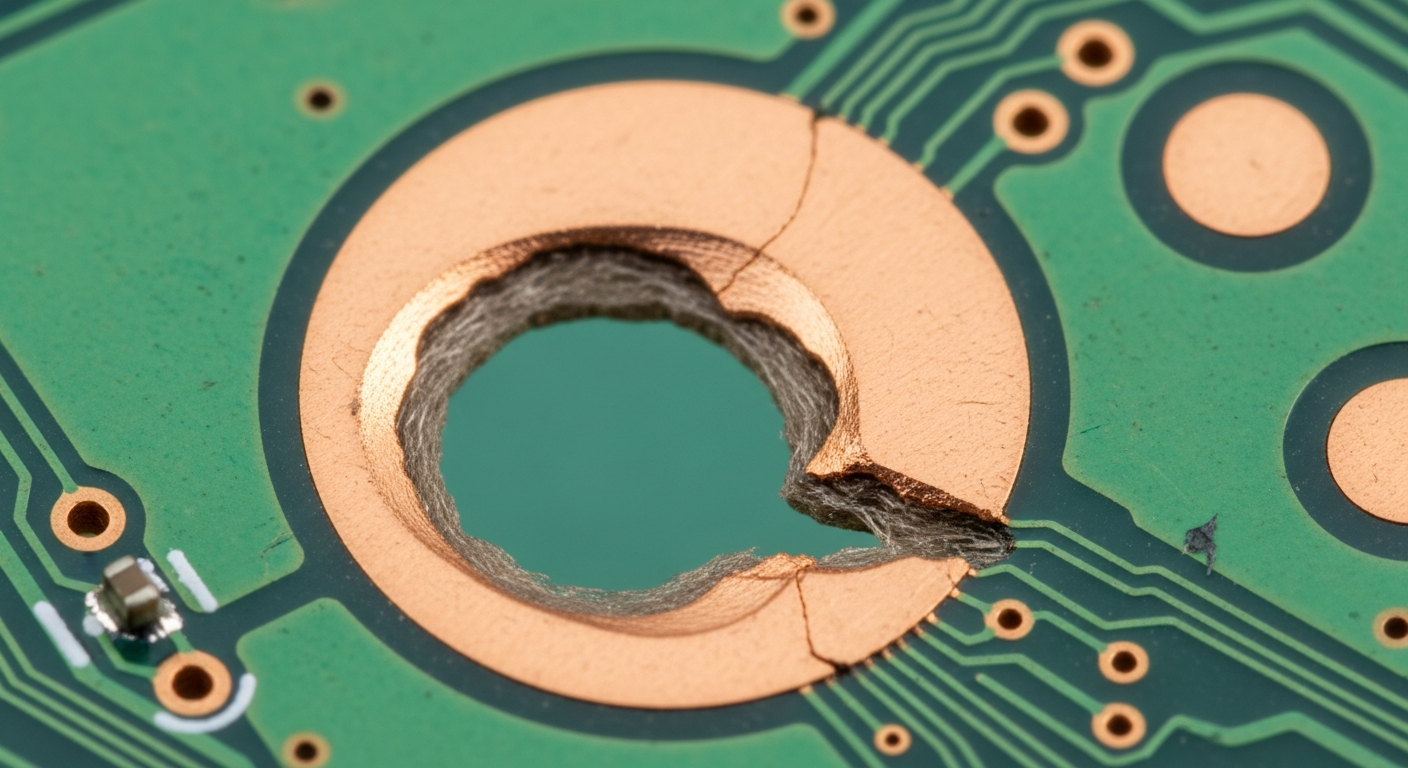
Breakout occurs when the drilled hole shifts outside the pad boundary, cutting through the copper ring.
Annular ring breakout results from drill deviation, poor registration, or unsuitable design tolerances.
Deeper Explanation and Industry Insights
How Breakout Happens
Breakout occurs when the drill bit deviates from the pad center or when pad size is too small for manufacturing tolerances. The result is partial or complete loss of the copper ring, leading to weak plating and unstable connections.
Common Causes
- Lamination shrinkage
- Drill bit wear
- Misalignment during imaging
- Incorrect stack-up rigidity
- Inadequate annular ring size in the design
Factory-Level Prevention
Modern factories use laser-guided drilling, rigid-panel lamination, and optimized tooling points to reduce alignment error. AOI inspection and in-process measurements verify hole position before plating, preventing breakout in final products.
How does annular ring size affect PCB reliability?
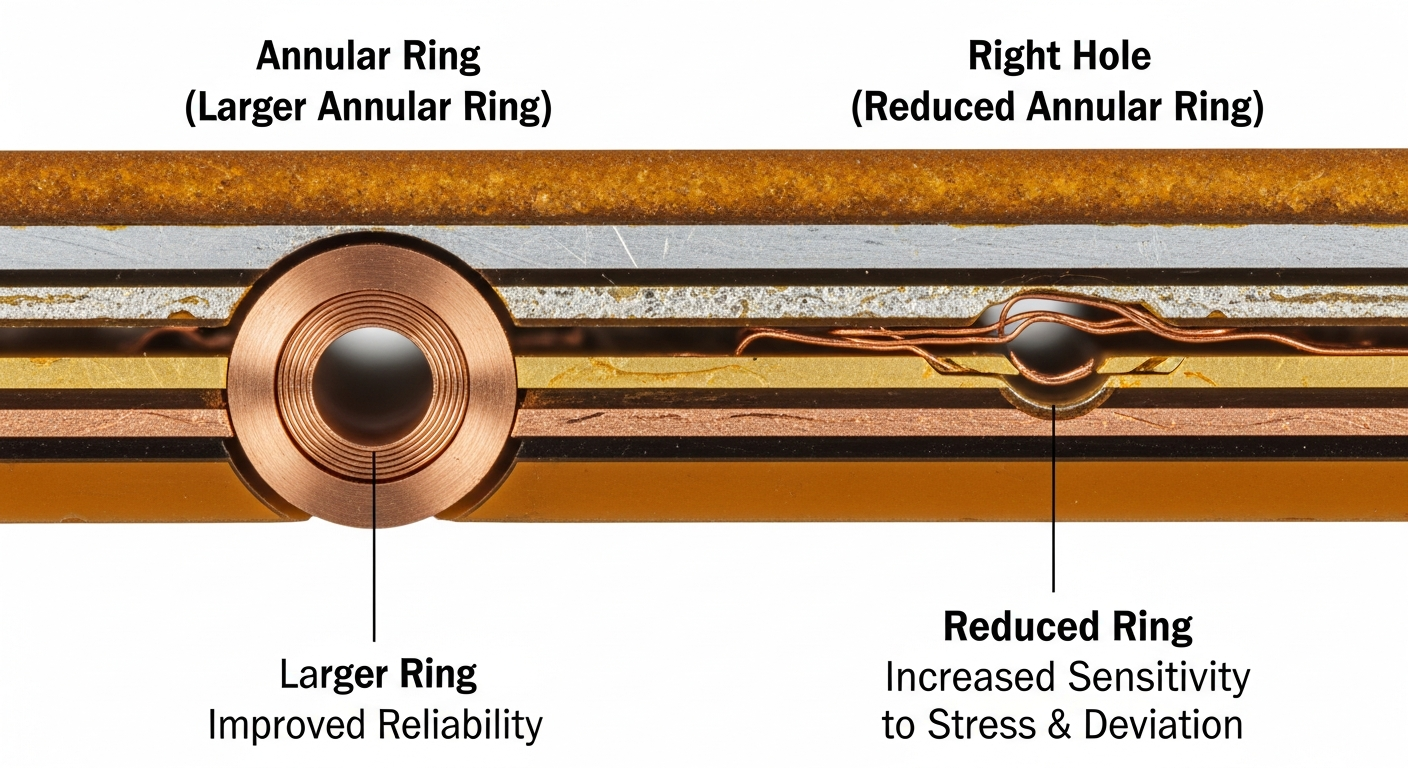
Larger rings improve mechanical strength and plating reliability, while reduced rings increase sensitivity to drill deviation and stress.
Proper annular ring dimensions directly impact long-term electrical stability.
Deeper Explanation and Industry Insights
Mechanical Reliability
A wide ring provides strong copper support during plating and soldering. Weak rings may crack during thermal cycling or vibration. Industrial and automotive boards require robust ring structures to withstand harsh conditions.
Electrical Reliability
Stable annular rings maintain secure via continuity. Rings that are too small risk barrel cracks or opens, especially after multiple reflow cycles.
Factory Optimization
PCB manufacturers adjust drill parameters, use premium plated-through-hole processing, and enforce IPC class 2/3 standards to protect via integrity. These controls ensure that even high-layer-count PCBs deliver consistent reliability in field applications.
How do HDI and microvias change annular ring requirements?
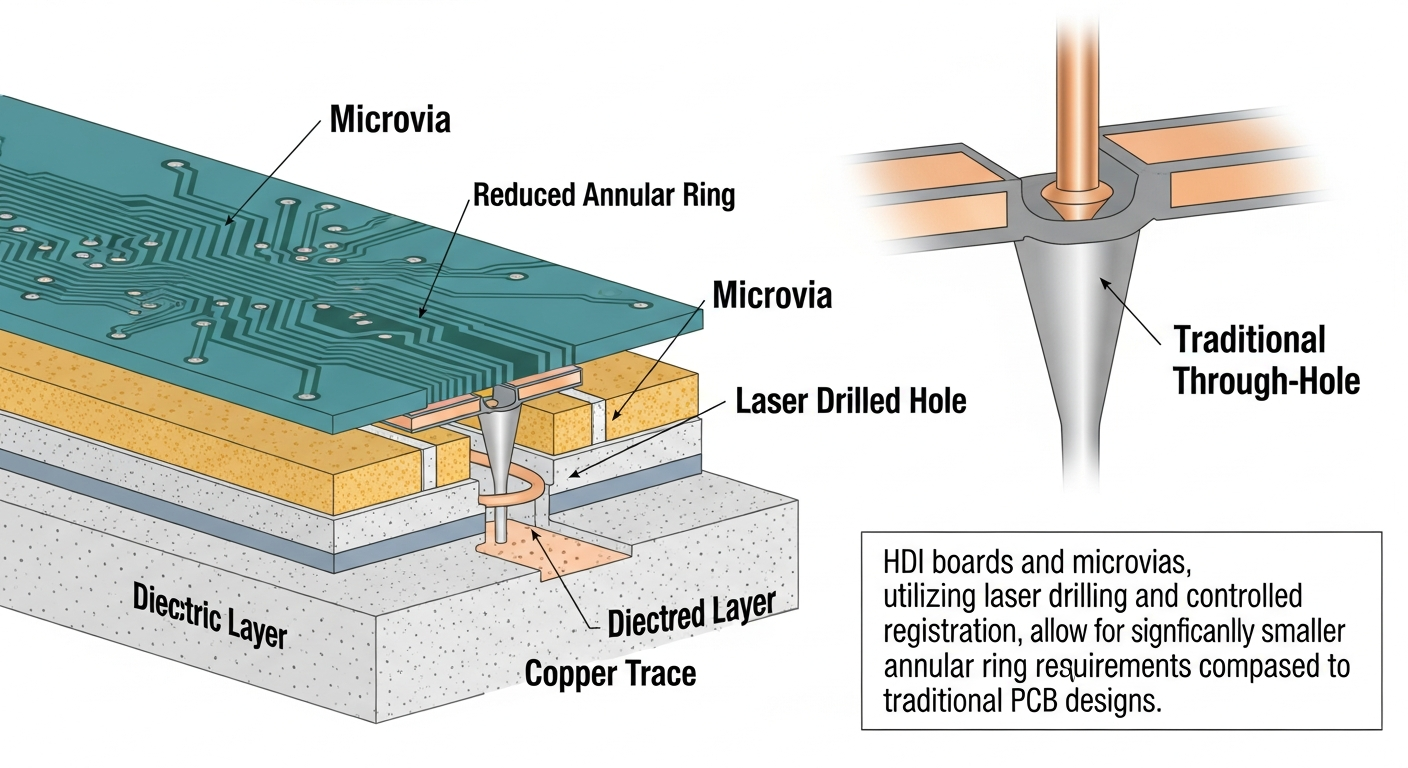
HDI boards and microvias use laser drilling and require significantly smaller annular rings.
Controlled registration and laser accuracy redefine ring design rules in advanced PCBs.
Deeper Explanation and Industry Insights
Microvia Geometry
Microvias can be as small as 0.1 mm, leaving limited room for annular rings. Laser drilling offers precise positioning, making smaller rings feasible without increasing defect rates.
HDI Stack-Ups
HDI structures include stacked, staggered, and buried microvias, all demanding tight ring control. Every layer must align with sub-millimeter accuracy to maintain conductivity.
Industrial Capability
Factories equipped for HDI manufacturing use:
- UV/CO₂ laser drilling
- High-resolution imaging
- Sequential lamination
- X-ray registration alignment
These capabilities support compact consumer electronics, communication modules, and wearables that depend on high-density layouts.
How can engineers optimize annular ring design for manufacturability?
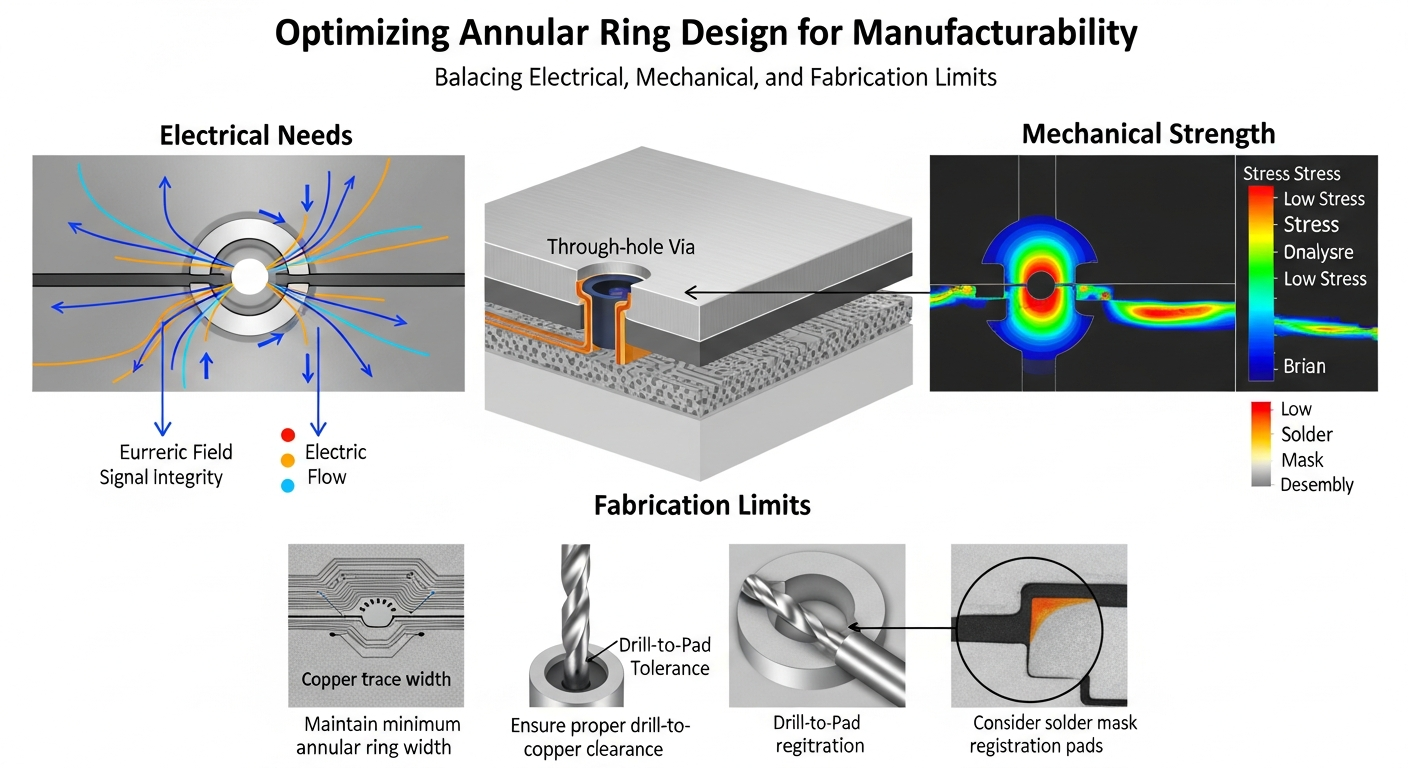
Optimizing annular ring size requires balancing electrical needs, mechanical strength, and fabrication limits.
Following DFM guidance reduces defects and improves production yield.
Deeper Explanation and Industry Insights
Practical Design Guidelines
- Use pad sizes that match factory drill tolerances.
- Follow IPC minimum ring standards for via types.
- Include tooling holes and fiducials to improve registration.
- Consider thicker pads for high-current or high-stress vias.
- Avoid extremely small rings unless HDI capability is confirmed.
Manufacturing Perspective
Strong DFM communication ensures design intentions match fabrication capabilities. Engineering teams review ring sizes, drill charts, stack-up details, and via plating requirements. Early adjustments prevent failed prototypes and unstable mass production runs.
B2B Benefits
Reliable annular ring design reduces testing failures, prevents scrap, and ensures consistent performance across batches. Stable manufacturing support shortens development cycles for industrial controllers, smart-home devices, IoT modules, and power-driving boards.
Conclusion
Annular rings play a critical role in via structure, plating reliability, and overall PCB durability. Proper sizing protects against drill deviation, strengthens mechanical stability, and ensures consistent conductivity across layers. High-precision drilling, stable lamination, and rigorous registration controls allow manufacturers to maintain uniform ring geometry even in HDI, microvia, and multilayer applications. When design teams follow clear DFM guidelines, prototypes move smoothly into mass production with fewer defects and reduced risk. Strong annular ring strategies support long-term reliability, help maintain signal integrity, and protect performance across a wide range of electronic products used in industrial, consumer, and IoT markets. This foundation ensures each PCB remains dependable throughout assembly, operation, and long-term field use.
