
PCB layer counts are usually even numbers such as 2, 4, 6, or more. This industry norm often raises a technical question during design review or cost evaluation: whether three layer PCBs exist and if they are suitable for real manufacturing.

Three layer PCBs can be manufactured from a technical standpoint, but they are considered non-standard and are rarely used in stable, scalable production.
The primary reason lies in structural imbalance, process risk, and long-term reliability concerns.
The following sections explain what a three layer PCB is, why it is uncommon, and how manufacturing and workshop processes influence this decision.
What Is a Three Layer PCB?
A three layer PCB contains three copper layers.

In theory, a three layer PCB consists of:
- One top copper layer
- One internal copper layer
- One bottom copper layer
Unlike four layer boards, the internal copper layer is not symmetrically positioned within the dielectric structure. This asymmetry is the core technical issue associated with three layer designs.
Electrically, three copper layers can function. The limitation is not signal transmission, but mechanical balance and manufacturing stability.
Why Are PCB Layers Normally Even Numbers?
Symmetry is essential in PCB fabrication.

PCB lamination relies on heat and pressure to bond copper layers and dielectric materials into a single structure. Even-layer stack-ups naturally form mirrored constructions, which distribute mechanical stress evenly.
A three layer PCB breaks this symmetry. During lamination and later during reflow soldering, uneven copper and resin distribution causes internal stress. This often results in:
- Board warpage or twisting
- Increased delamination risk
- Reduced via reliability over thermal cycles
For this reason, even-layer designs are strongly preferred in professional manufacturing environments.
How Would a Three Layer PCB Be Manufactured?
Production is possible but requires special control.
Manufacturing a three layer PCB involves adjusting prepreg thickness, copper balance, and lamination pressure to compensate for the asymmetric stack-up.
Compared to standard four layer boards, this approach introduces:
- Narrower lamination process windows
- Higher engineering review effort
- Increased variability between batches
In factory workshops, non-standard stack-ups increase setup time, slow approval cycles, and raise the risk of yield fluctuation. These factors reduce production efficiency and consistency.
Why Is a Four Layer PCB Usually Chosen Instead?
One additional layer resolves multiple problems.

A four layer PCB provides:
- Structural symmetry
- Dedicated power and ground planes
- Better signal integrity
- Lower EMI risk
From a manufacturing perspective, the cost difference between three and four layer PCBs is often small. Lamination, drilling, plating, and inspection steps are already required, and adding one more layer does not double complexity.
Four layer PCBs also benefit from standardized stack-ups, mature lamination recipes, and well-established inspection criteria, resulting in higher yield and more predictable quality.
Are There Any Situations Where Three Layer PCBs Are Used?
Usage is extremely limited.
Three layer PCBs may appear in:
- Experimental or research projects
- Legacy designs with fixed constraints
- Special internal standards not intended for scaling
Even in these cases, most manufacturers recommend redesigning to either a two layer or four layer structure. The long-term reliability and production risks of three layer boards usually outweigh any theoretical material or routing advantage.
How Do Three Layer PCBs Affect Assembly and Factory Processes?
Assembly risk increases noticeably.
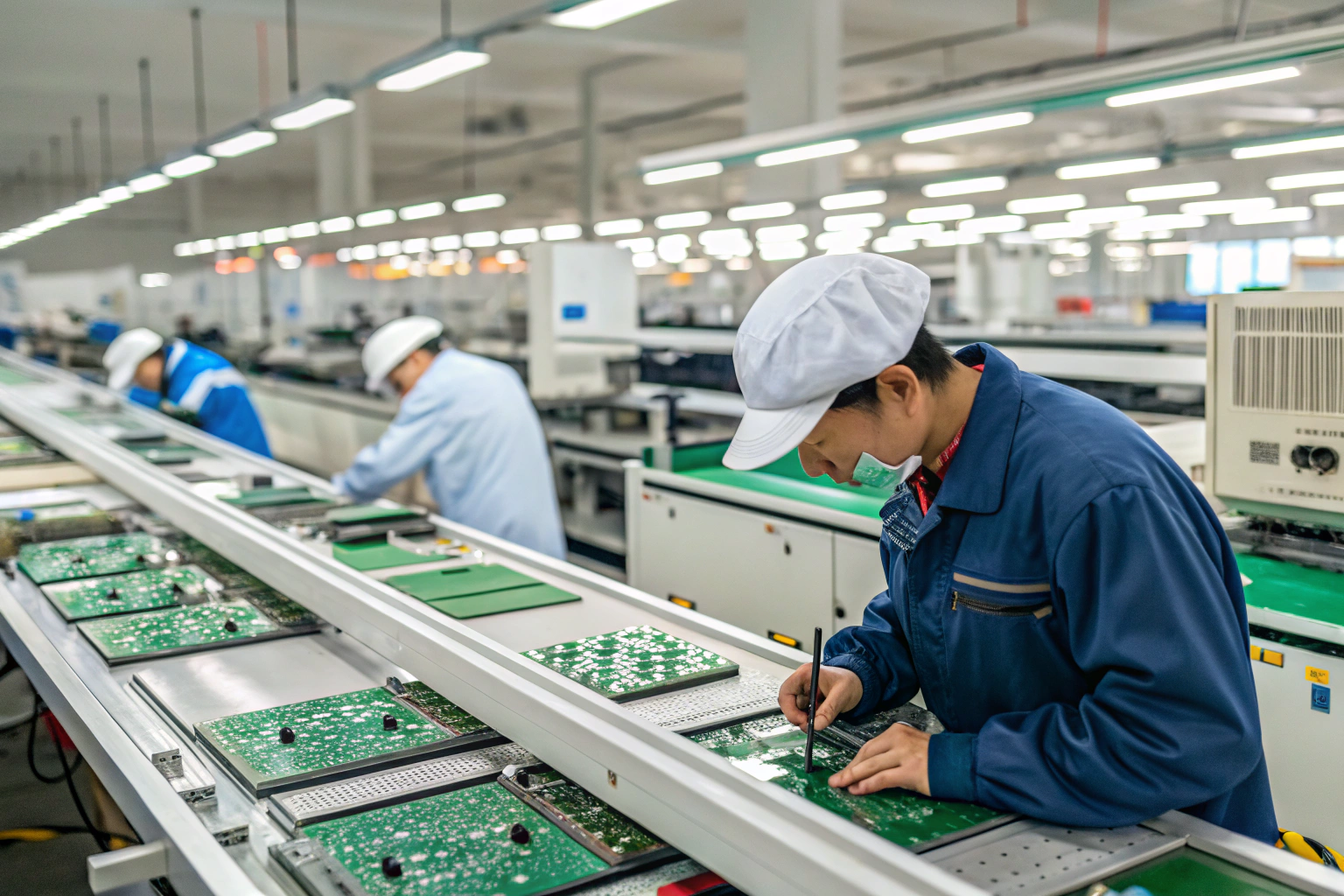
During SMT reflow soldering, asymmetric copper distribution can cause localized bending. Warpage affects:
- Component coplanarity
- Solder joint quality
- AOI inspection accuracy
- Functional test stability
In factory workshops, additional support fixtures or process adjustments may be required to maintain flatness. These extra controls increase handling complexity and reduce throughput compared to standard even-layer boards.
Quality control becomes more challenging, especially when scaling production volume.
Conclusion
Three layer PCBs do exist from a technical perspective, but they are not considered a practical or reliable standard in modern PCB manufacturing. The lack of structural symmetry introduces higher risks of warpage, tighter lamination control requirements, and less stable assembly behavior.
In professional production environments, even-layer PCBs—particularly four layer designs—offer a far better balance of electrical performance, mechanical stability, and manufacturing efficiency. Standardized stack-ups, mature factory processes, and predictable quality outcomes make four layer PCBs the preferred solution once two layers are no longer sufficient. As a result, three layer PCBs remain a rare exception rather than a viable mainstream option in electronic manufacturing.
