
Spraying WD-40 on a PCB is not recommended. WD-40 is a water-displacing and lubricating product, not an electronics-grade cleaner or protector. While it may appear to fix a problem temporarily, it often introduces long-term reliability risks such as contamination, leakage currents, and insulation breakdown.
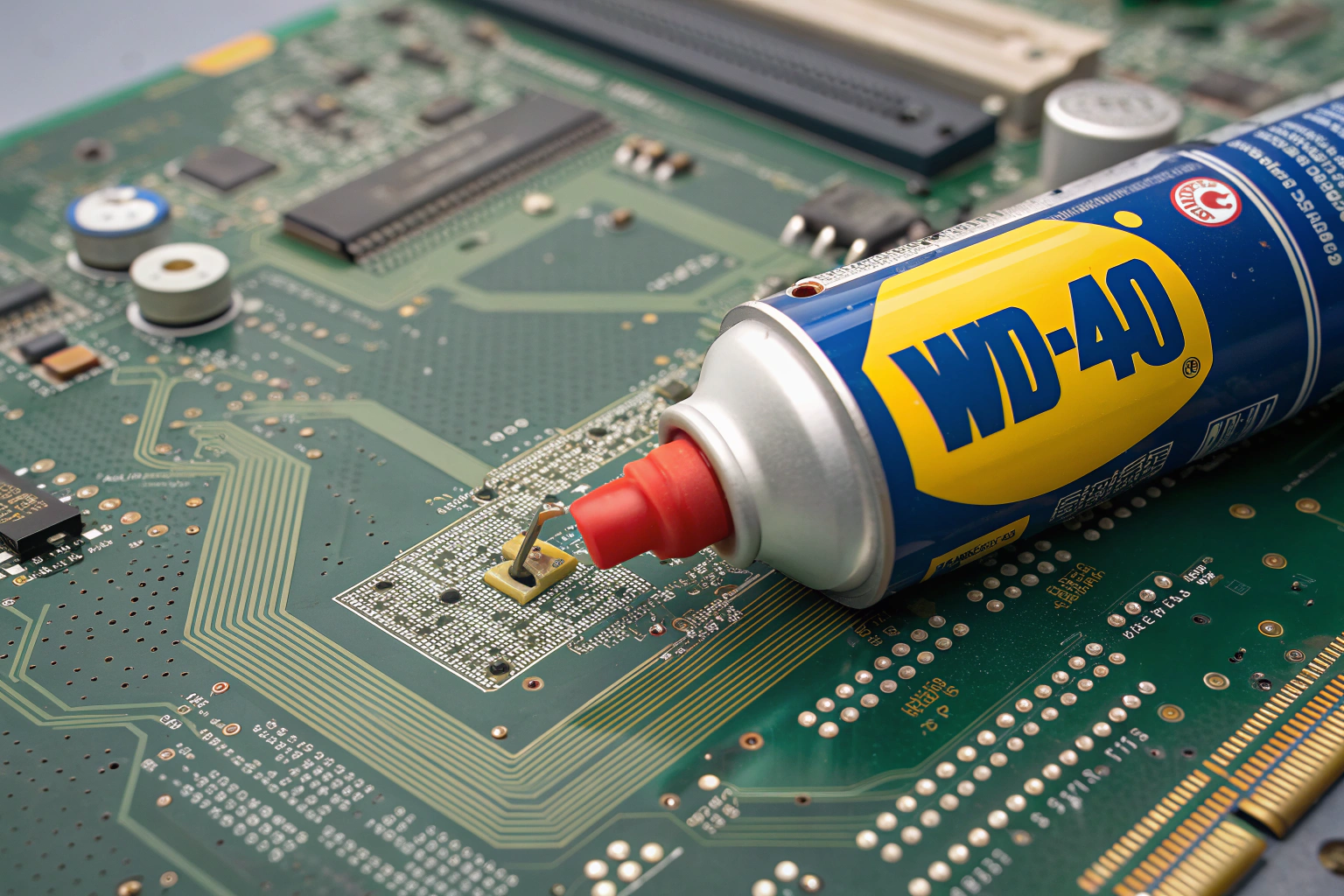
In professional electronics manufacturing, WD-40 is considered unsuitable for PCB cleaning, protection, or repair.
Understanding why WD-40 should not be used on circuit boards requires looking at its chemistry, electrical behavior, and impact on manufacturing processes.
What Is WD-40 Designed for and Why That Matters?
WD-40 is designed for mechanical use.
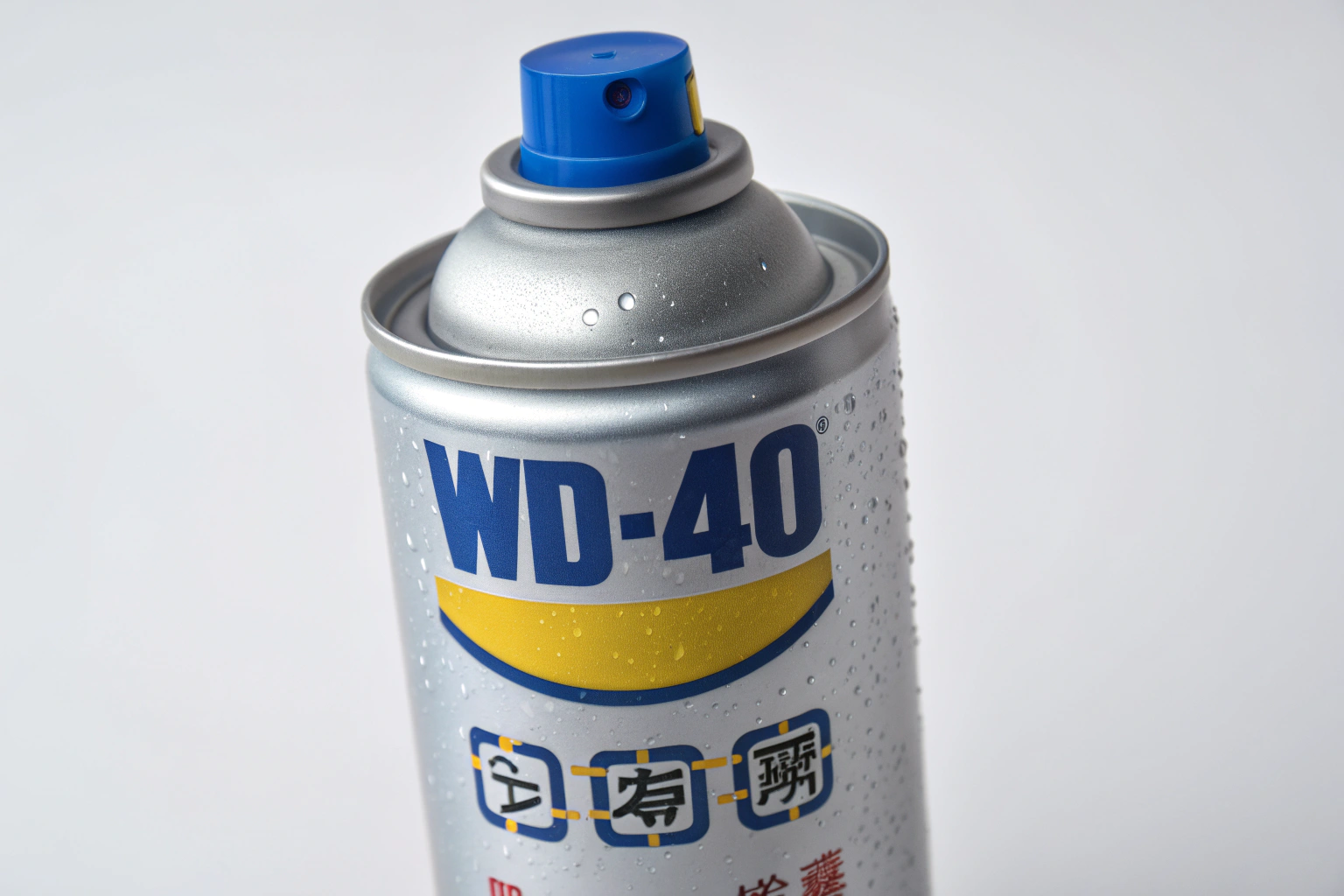
Its purpose conflicts with PCB requirements.
WD-40 was formulated to:
- Displace water
- Loosen rusted parts
- Provide light lubrication
- Protect metal surfaces from corrosion
These functions are useful for hinges, bolts, and mechanical assemblies. However, PCBs require materials that are electrically insulating, chemically stable, and non-residue-forming.
WD-40 leaves an oily film after application. On a PCB, this film spreads across solder joints, pads, and component leads. While it may temporarily reduce moisture-related issues, it creates new electrical and contamination risks that outweigh any short-term benefit.
In manufacturing environments, any material that leaves uncontrolled residue on a PCB is automatically disqualified.
How WD-40 Affects Electrical Performance of a PCB?
Electrical circuits demand clean, stable surfaces.
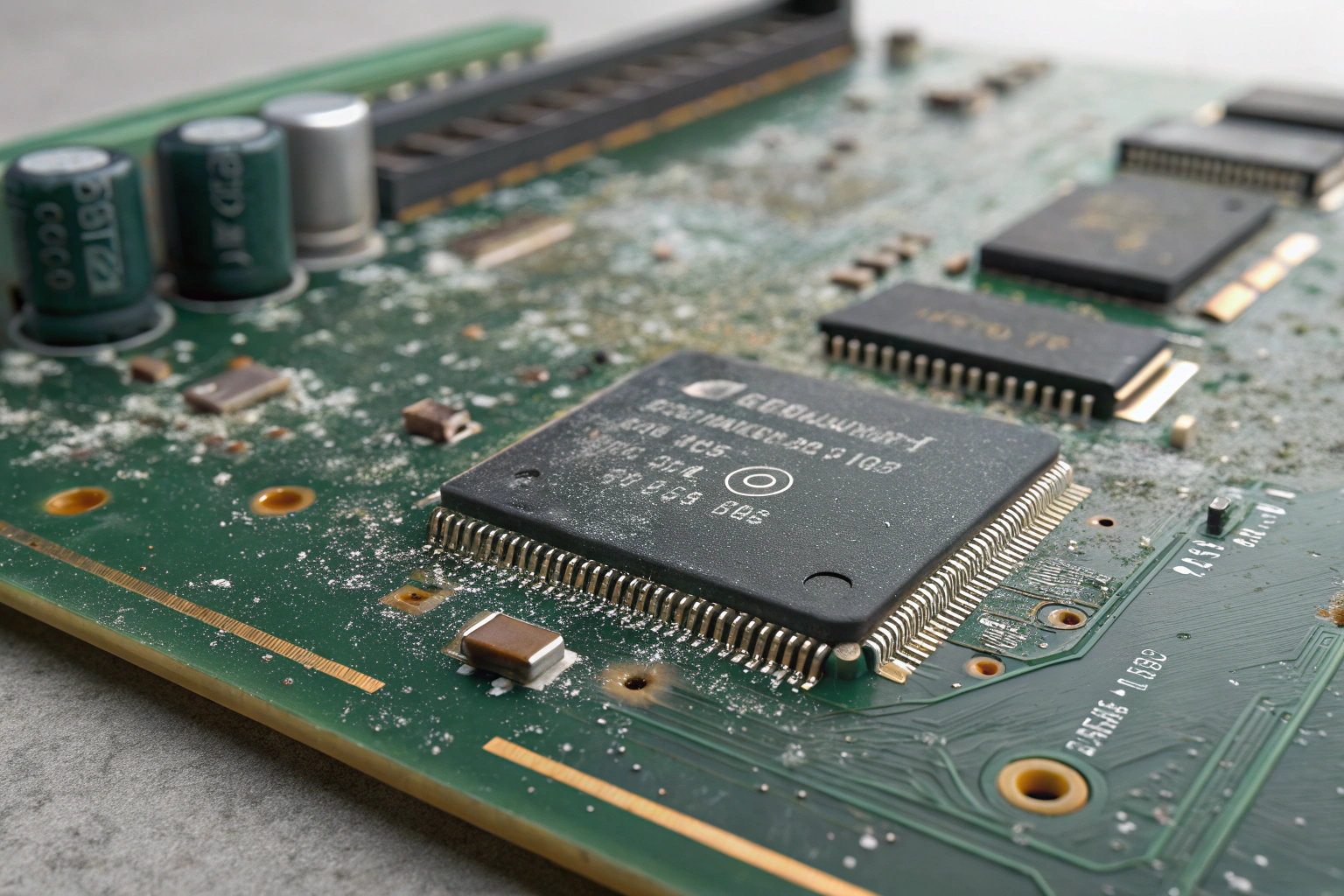
Oily residues disrupt that stability.
When WD-40 is sprayed on a PCB, several electrical risks appear:
- Reduced insulation resistance between traces
- Increased leakage current in high-impedance circuits
- Signal instability in analog and RF sections
- Attraction of dust and airborne contaminants
Over time, the oily layer traps moisture and particles. This combination accelerates corrosion and creates unpredictable electrical paths, especially on dense or high-voltage boards.
In factory testing, such contamination often shows up as intermittent failures that are difficult to trace. Boards may pass initial power-up but fail after temperature or humidity changes.
For this reason, WD-40 contamination is treated as a serious quality issue in professional workshops.
Why WD-40 Causes Long-Term Reliability Problems?
Short-term improvement hides long-term damage.
Aging behavior is uncontrolled.
WD-40 is not designed to remain chemically stable on electronic assemblies over long periods. With heat and time, its residue can:
- Oxidize and thicken
- Migrate under components
- Interact with plastics and sealants
- Become conductive under humidity
Once residue creeps under ICs or connectors, it is extremely difficult to remove completely. This compromises rework, inspection, and future repair.
In manufacturing, long-term reliability is prioritized over temporary fixes. Materials with unknown aging behavior are never allowed on production PCBs.
How Factory Workshops Handle Moisture and Contamination Instead?
Professional processes prevent problems rather than mask them.
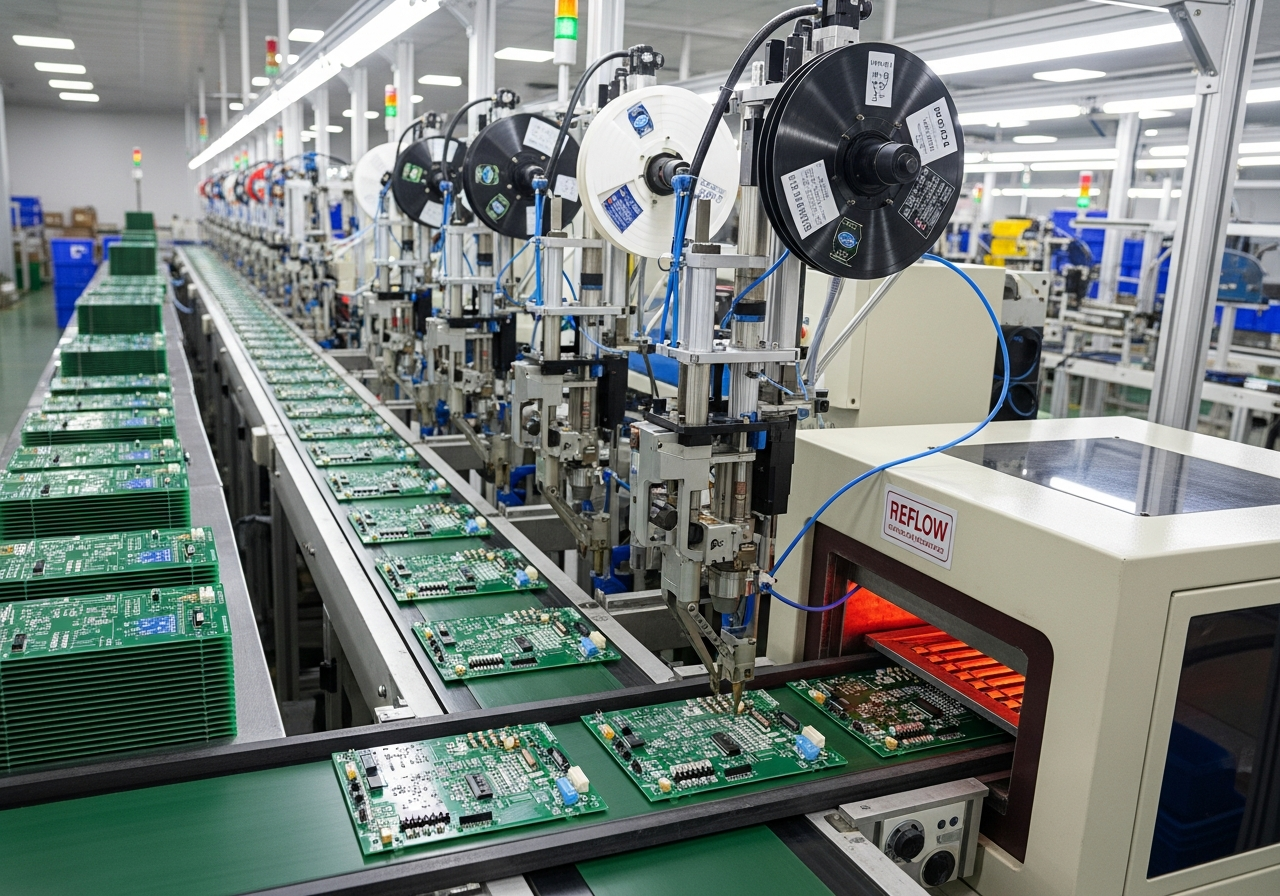
WD-40 is not part of any approved process.
In controlled factory workshops, moisture and contamination are managed through:
- Proper PCB storage in dry cabinets
- Controlled humidity on production lines
- Electronics-grade cleaning agents (IPA, DI water)
- Measured ionic contamination testing
If moisture protection is required, approved solutions include:
- Conformal coating
- Potting compounds
- Electronics-grade contact cleaners
These materials are qualified for electrical insulation, thermal stability, and long-term aging. Their application is documented and controlled.
WD-40 does not meet these requirements and is therefore excluded from manufacturing use.
Are There Any Situations Where WD-40 Might Seem to Work?
Temporary success does not equal safe practice.
Risk remains even if function returns.
In uncontrolled environments, WD-40 may appear to restore function by displacing moisture or improving contact temporarily. However, this effect is misleading.
Such cases often result in:
- Repeat failure after days or weeks
- Worsening corrosion over time
- Increased difficulty in proper cleaning later
From a manufacturing and quality standpoint, this is considered damage masking, not repair. Any board exposed to WD-40 would require thorough cleaning and revalidation before being considered reliable.
What Should Be Used Instead of WD-40 on a PCB?
Electronics require electronics-grade solutions.
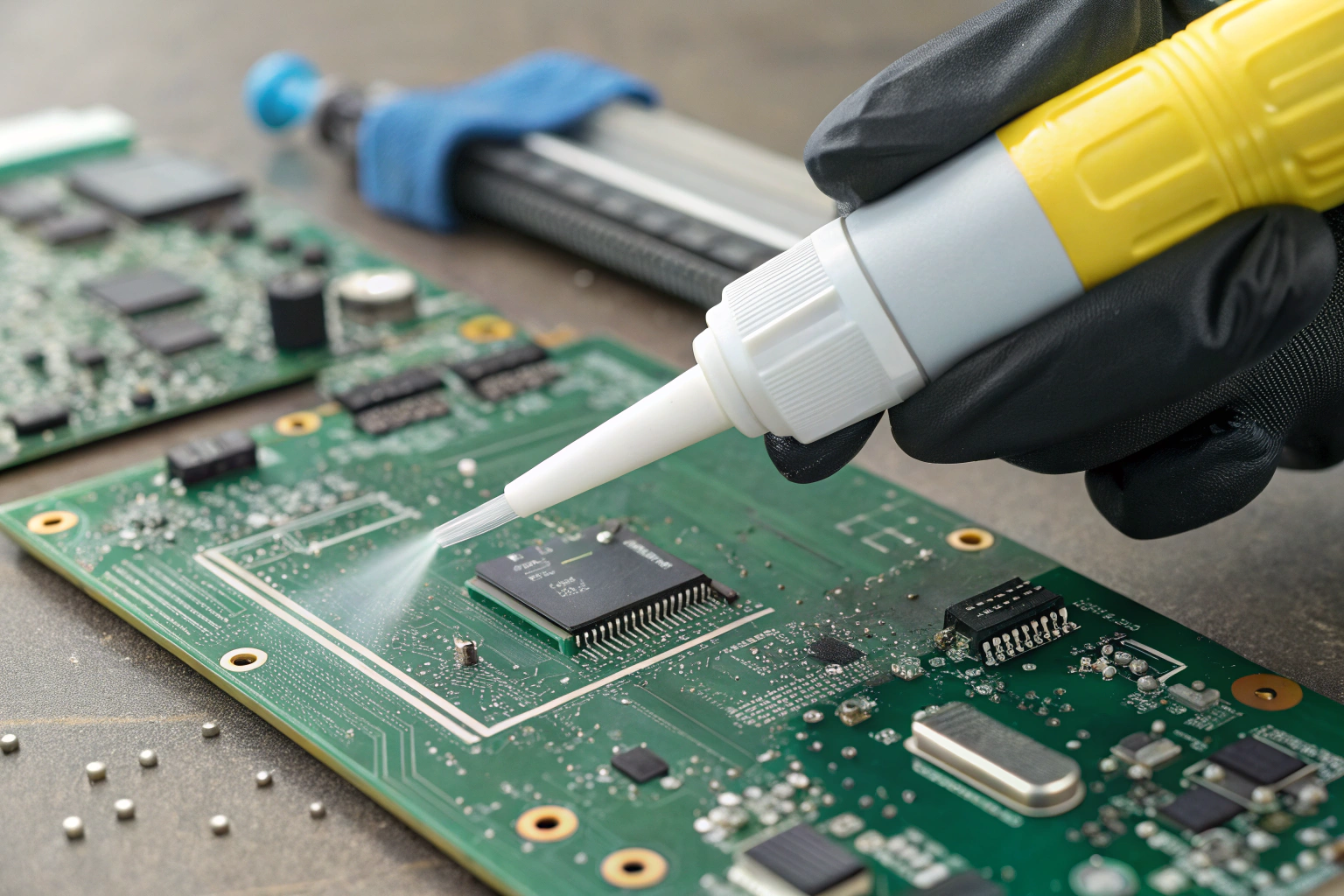
Correct materials protect long-term performance.
Approved alternatives include:
- Isopropyl alcohol (IPA) for cleaning
- Dedicated electronics contact cleaners
- Conformal coatings for moisture protection
- Proper mechanical repair or replacement
These solutions are designed to evaporate cleanly, leave no conductive residue, and maintain insulation resistance.
In professional manufacturing, material choice is as important as process control. Using the wrong chemical can negate all other quality controls.
Conclusion
WD-40 should not be sprayed on a PCB. While it is effective for mechanical lubrication and water displacement, it introduces oily residues, electrical instability, and long-term reliability risks when used on circuit boards. In professional manufacturing, WD-40 is not an approved material for cleaning, protection, or repair of electronic assemblies. Factory workshops rely on controlled environments, electronics-grade cleaners, and qualified protective coatings to manage moisture and contamination safely. Using WD-40 on a PCB may appear to solve a problem briefly, but it compromises inspection, rework, and long-term performance. For reliable electronics, temporary chemical fixes are never an acceptable substitute for proper materials and disciplined manufacturing processes.
