
Superglue (cyanoacrylate) should not be used on a circuit board in most cases. While it can bond materials quickly, it is not designed for electronic assemblies and can cause long-term reliability issues, including corrosion, electrical leakage, mechanical stress, and repair difficulty.
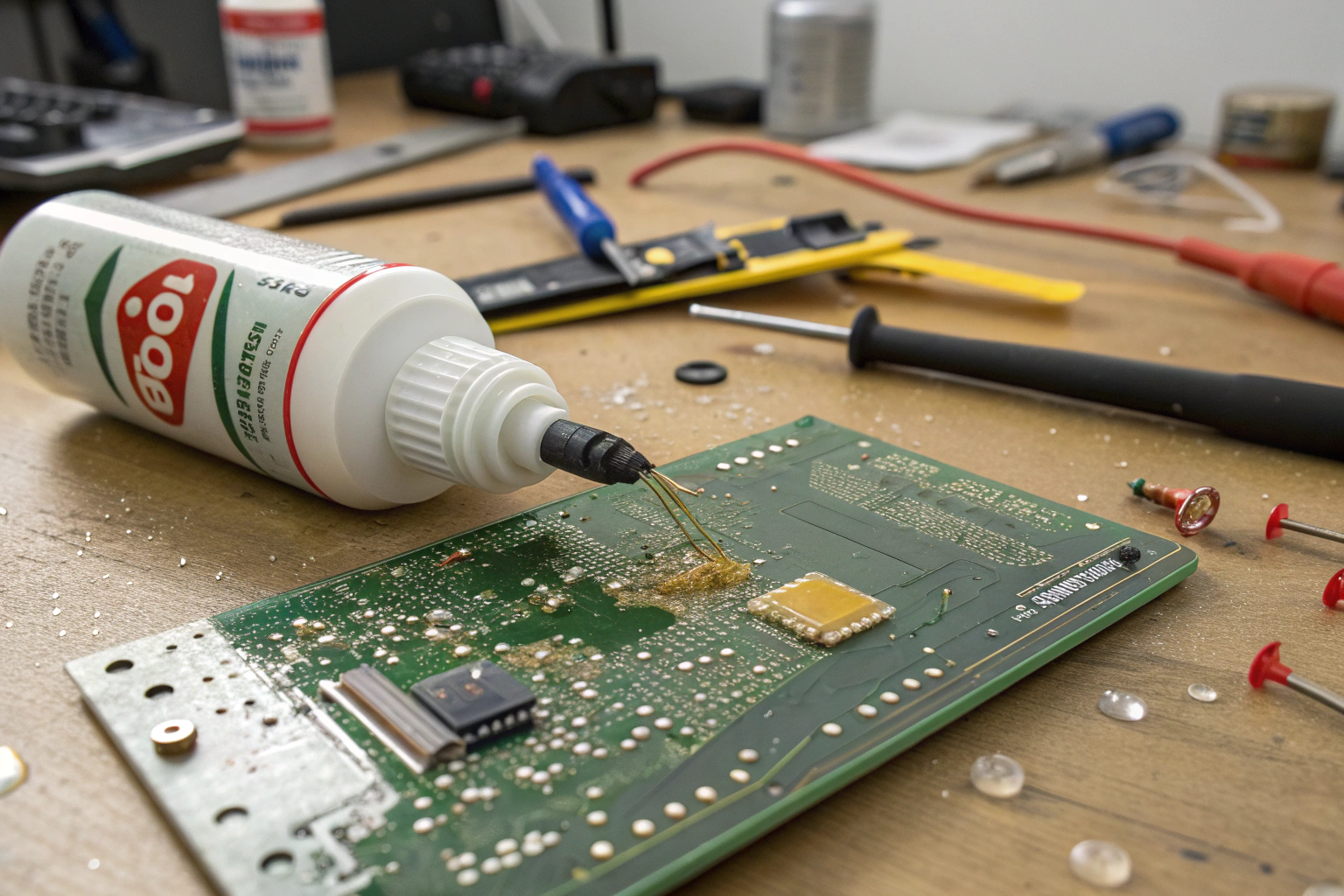
In electronics manufacturing, adhesive selection is a controlled engineering decision. Using superglue on a PCB is generally considered a temporary or improper solution rather than an acceptable production method.
Understanding why superglue is unsuitable for PCBs requires looking at electrical behavior, materials science, and manufacturing process control.
Why Superglue Is Not PCB-Safe by Design?
Superglue is optimized for speed, not electronics.
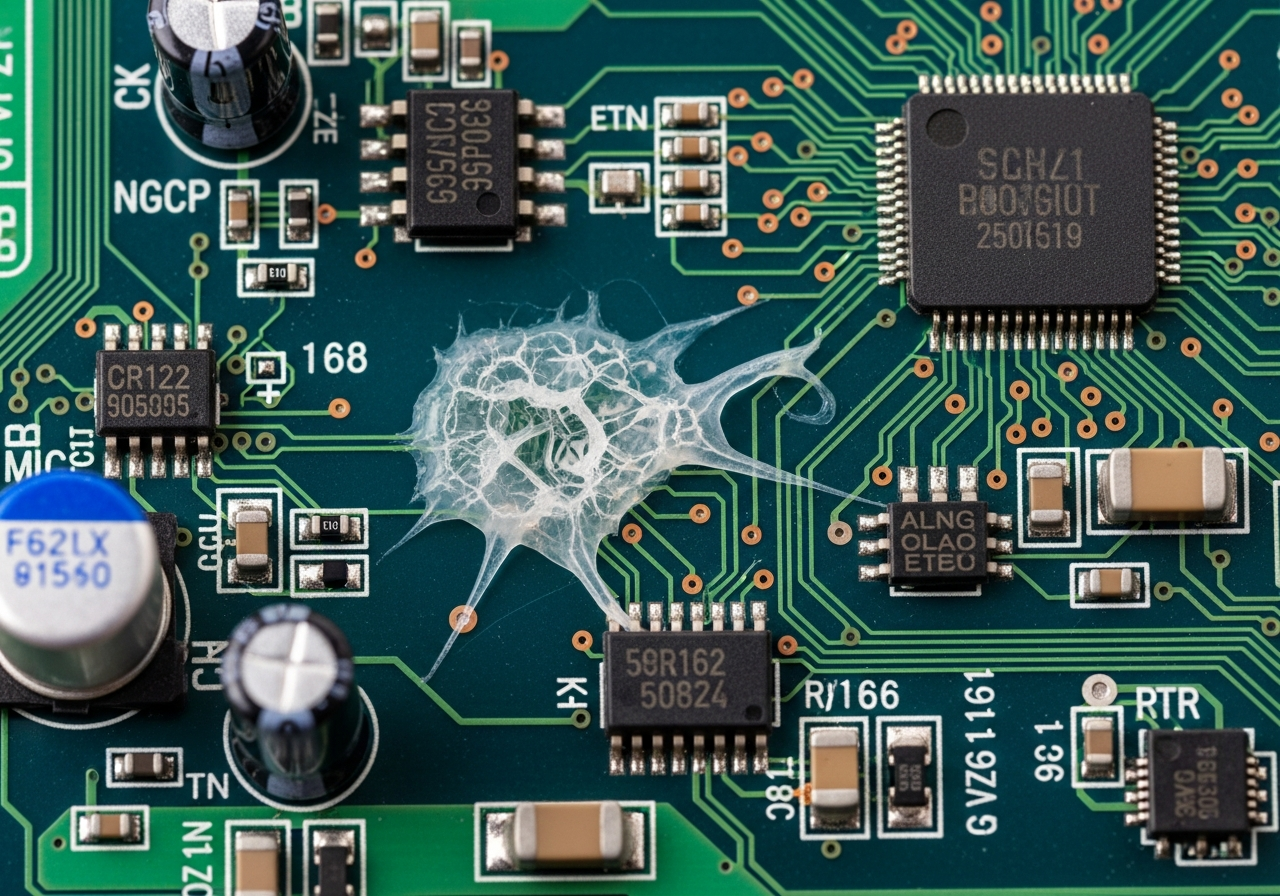
Its chemistry conflicts with PCB requirements.
Cyanoacrylate adhesives cure rapidly by reacting with moisture in the air. During curing and aging, they can release vapors that interact with metals and polymers.
On a PCB, this can lead to:
- Corrosion of copper and component leads
- White residue formation near solder joints
- Reduced insulation resistance
- Long-term electrical leakage
Superglue is also brittle after curing. Circuit boards expand and contract with temperature changes. A rigid adhesive transfers stress directly to solder joints and component bodies, increasing the risk of cracking over time.
For these reasons, superglue is not approved in controlled electronic assembly processes.
What Happens If Superglue Is Used on Components or Traces?
Short-term bonding often hides long-term damage.
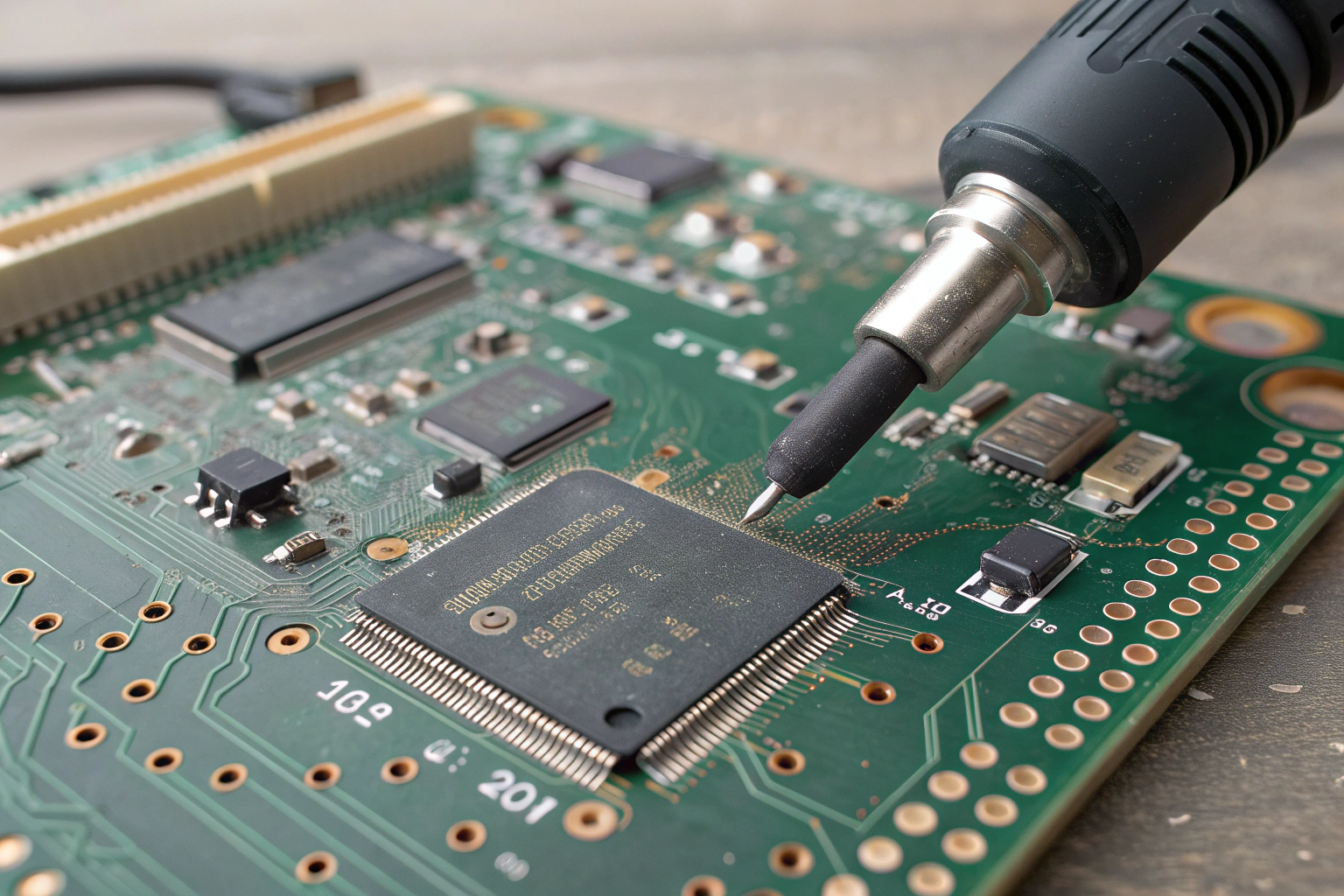
Problems appear after time and heat.
When superglue is applied to components, wires, or PCB traces, several risks emerge:
- Adhesive wicks under components and traps contamination
- Rework becomes extremely difficult or impossible
- Heat from operation accelerates adhesive degradation
- Electrical performance becomes unpredictable
In dense PCBs, glue can migrate into connectors, test points, or fine-pitch areas. Once cured, removal often damages pads or traces.
From a manufacturing perspective, any material that prevents inspection, rework, or testing is unacceptable for production use.
Can Superglue Be Used for Mechanical Fixes Only?
Even mechanical fixes carry electrical risk.
Separation is rarely perfect.
Some consider superglue for non-electrical tasks such as:
- Fixing a cracked PCB corner
- Securing a loose plastic spacer
- Holding a wire temporarily
Even in these cases, risks remain. Vapors can spread across the board. Brittle bonding can crack further under vibration. Adhesive may flow into unintended areas.
In factory workshops, mechanical stabilization is handled using approved materials such as:
- Electronics-grade epoxy
- Silicone adhesive
- Mechanical fasteners or brackets
These materials are tested for thermal stability, electrical insulation, and long-term aging.
What Adhesives Are Used Instead in PCB Manufacturing?
Adhesives in electronics are selected, not improvised.
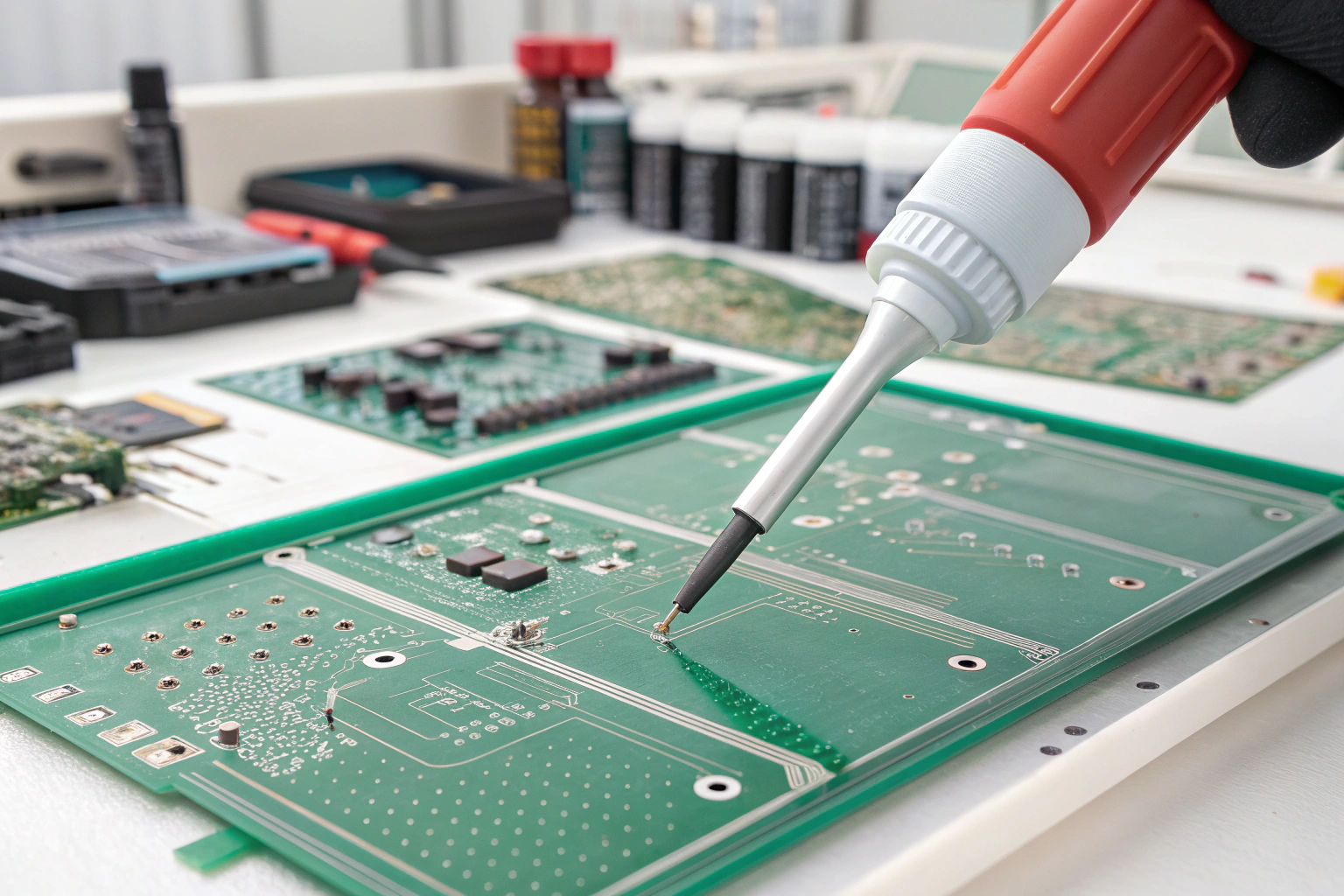
Each type serves a defined purpose.
Professional PCB assembly uses adhesives specifically designed for electronics, including:
- Epoxy adhesives for structural reinforcement
- Silicone adhesives for vibration damping and flexibility
- UV-curable adhesives for precise, fast curing with control
These materials are:
- Electrically insulating
- Thermally stable
- Chemically compatible with PCB materials
- Qualified for long-term reliability
Adhesive application is documented in process instructions. Cure time, thickness, and location are controlled to avoid stress concentration or contamination.
This approach ensures that adhesives support the PCB rather than compromise it.
How Factory Workshops Control Adhesive Use on PCBs?
Adhesive handling is part of process control.
Uncontrolled use is not allowed.
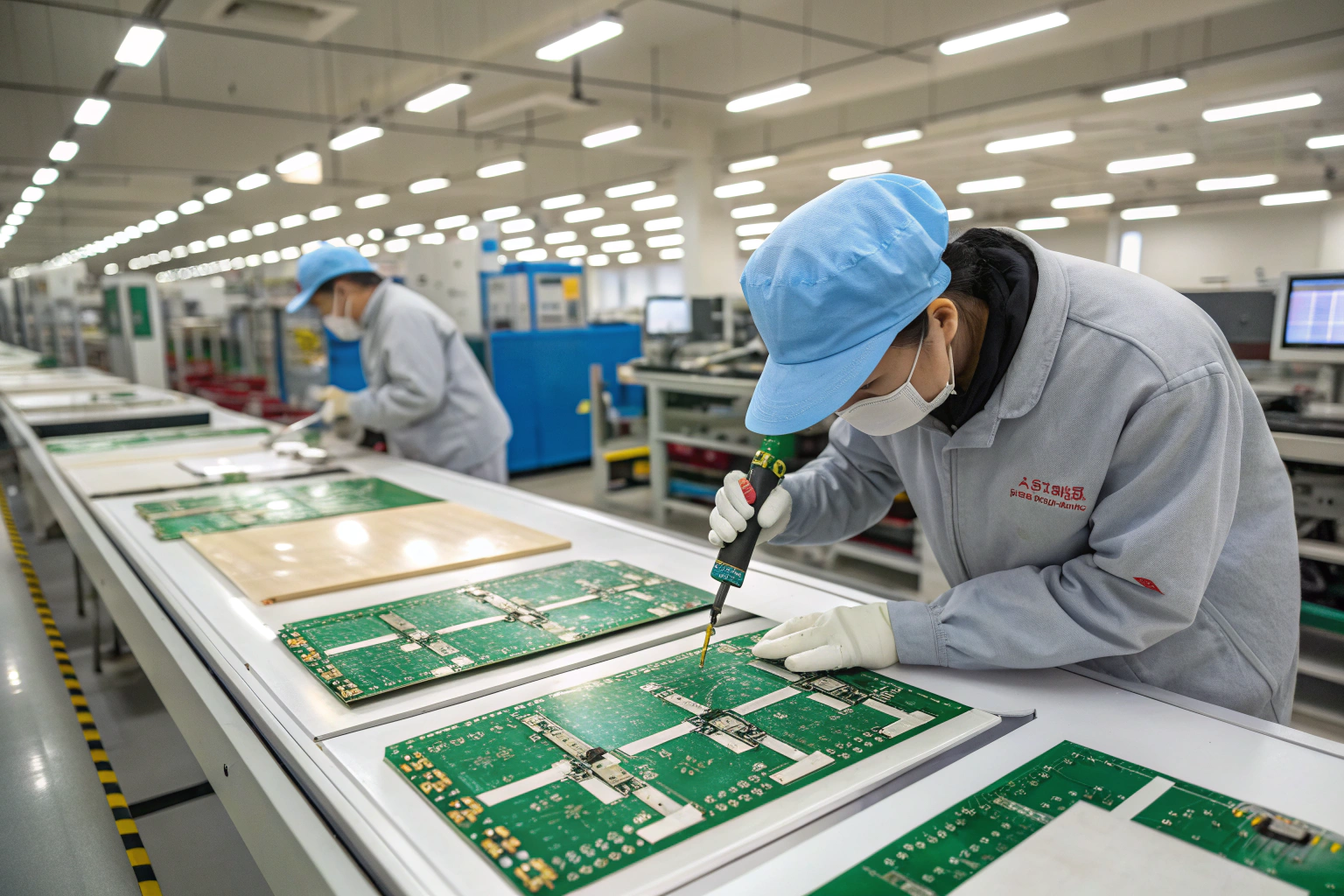
In professional manufacturing workshops, adhesive use follows strict rules:
- Only approved materials are allowed on the line
- Application points are defined in work instructions
- Operators receive specific training
- Cure conditions are monitored and recorded
Adhesives are never applied casually during rework. Any deviation requires engineering approval.
Inspection systems verify that adhesive does not interfere with solder joints, connectors, or test points. If adhesive contamination is detected, boards are rejected.
This discipline prevents hidden failures and ensures consistent quality across production batches.
Is There Any Situation Where Superglue Is Acceptable?
Acceptability depends on risk tolerance.
Production standards are uncompromising.
Outside of controlled manufacturing, superglue may be used as a temporary, non-critical fix on non-powered areas, with full awareness of the risks. However, such use is never considered production-quality or reliable.
In manufacturing and long-life products, superglue is not accepted because:
- Reliability cannot be guaranteed
- Rework is restricted
- Aging behavior is unpredictable
Temporary success does not equal long-term stability.
Conclusion
Superglue is not suitable for use on circuit boards in professional electronics manufacturing. While it bonds quickly, its chemical behavior, brittleness, and long-term instability introduce risks such as corrosion, electrical leakage, mechanical stress, and unrepairable damage. Factory workshops rely on electronics-grade adhesives, controlled processes, and documented standards to ensure PCB reliability over time. Using the wrong adhesive may appear convenient, but it compromises inspection, rework, and product lifespan. In electronic assembly, every material choice matters. Proper adhesive selection protects not only the circuit board, but the entire product lifecycle.
