
HASL (Hot Air Solder Leveling) coats exposed copper pads with molten solder, creating a protective and solder-ready surface for PCB assembly.
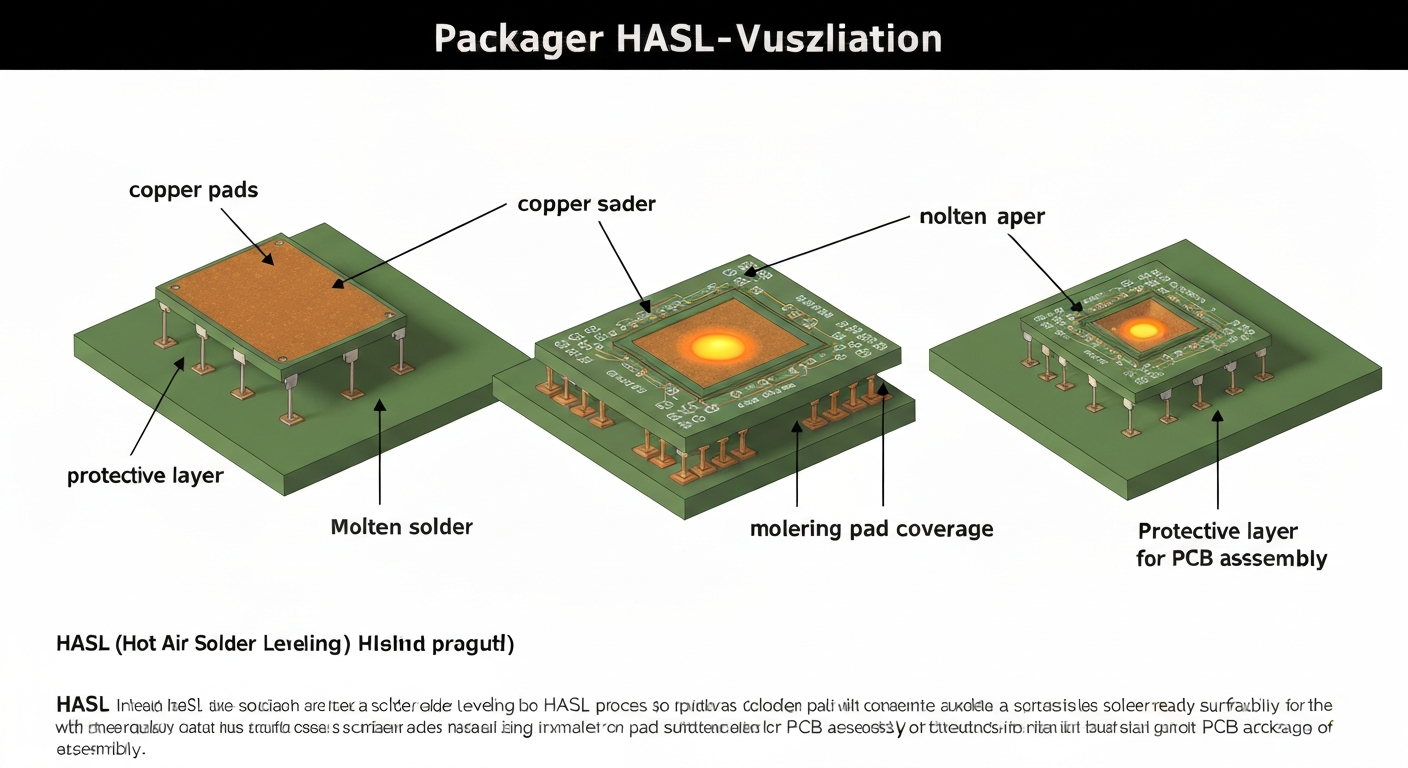
A solid understanding of HASL helps engineering teams choose the right surface finish, balance cost with performance, and avoid assembly risks during prototype and mass-production builds.
What does the HASL surface finish do on a PCB?
Incorrect surface finishes often lead to poor solderability, oxidation, or assembly defects.
HASL protects copper, improves solderability, and prepares pads for reliable component bonding.
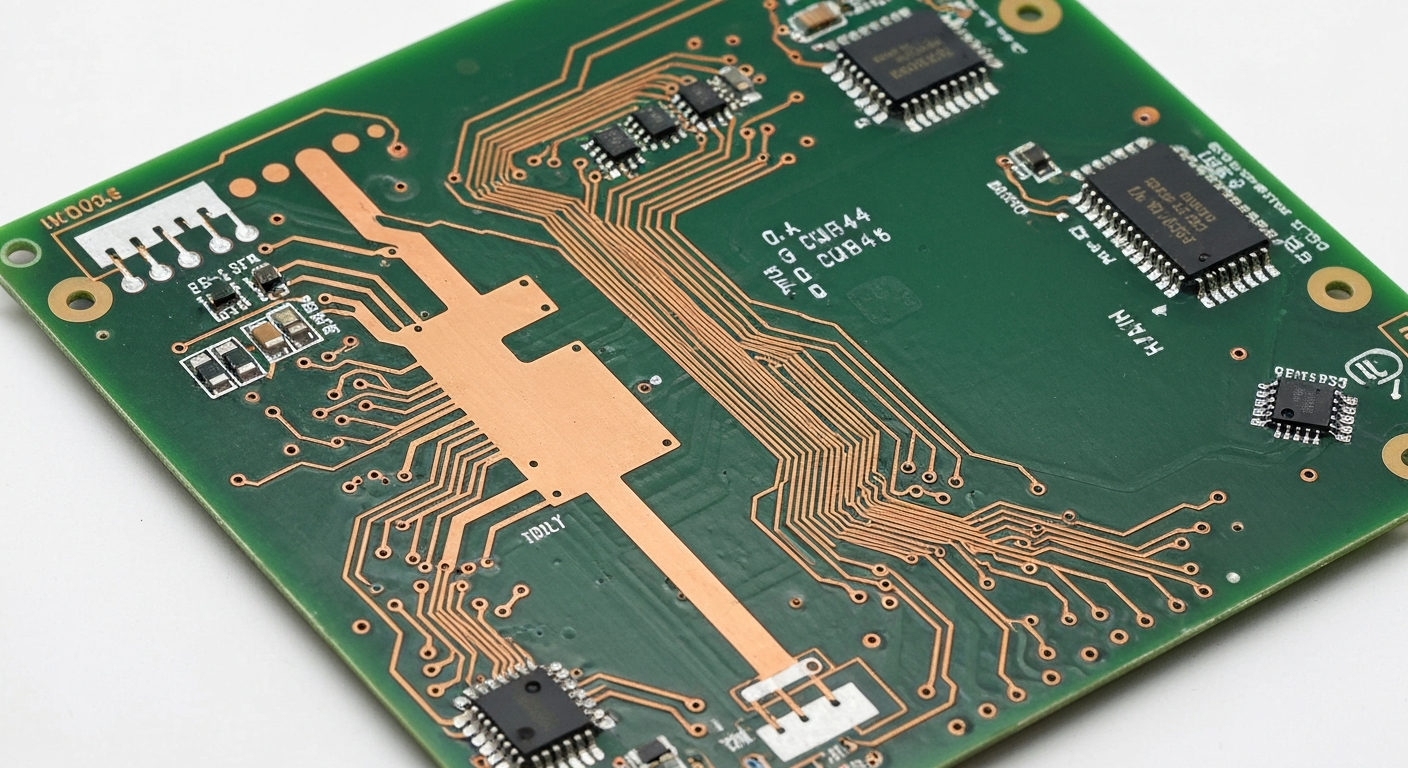
Copper Protection, Solder Readiness, and Cost Efficiency
HASL coats copper pads with molten tin-lead or lead-free solder. Hot-air knives blow away excess solder, leaving a durable metallic layer. This prevents oxidation and prepares pads for clean solder joints during SMT or DIP assembly. Because of its low cost and wide compatibility, HASL is common in consumer electronics, industrial controls, and IoT devices.
In real B2B production, inconsistent layer thickness or uneven surfaces can affect fine-pitch components. Engineering-driven factories check pad design, ensure correct mask openings, and verify solder thickness stability. With coordinated PCB fabrication and SMT assembly, HASL pads maintain consistent solderability across prototypes and volume runs.
How is the HASL surface finish applied during PCB fabrication?
Improper leveling or poor process control often leads to uneven pads and weak solder joints.
HASL is applied by dipping the PCB into molten solder and leveling it with high-pressure hot air.
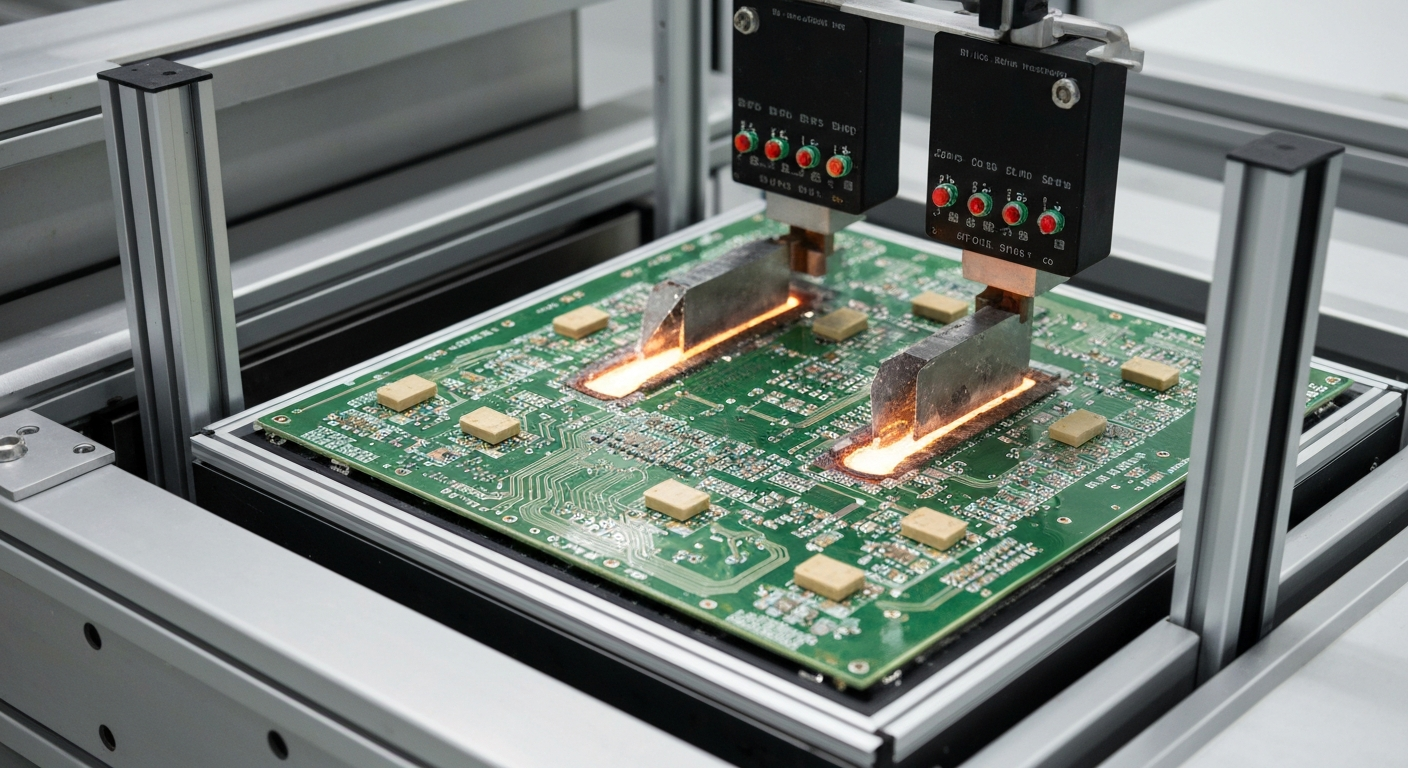
Dip Soldering, Leveling, and Surface Preparation
The PCB enters a solder bath after etching, plating, and cleaning. Flux removes oxides. Molten solder covers exposed copper pads. Hot air knives then remove excess solder, creating a thin metallic coating. The board cools, and the solder solidifies into a solderable finish.
In factory practice, issues arise when pad sizes vary or solder thickness becomes uneven—especially around fine-pitch ICs. Engineering-focused manufacturers fine-tune temperature, airflow, and dwell time to achieve uniform leveling. This improves reflow quality, prevents bridging, and enhances joint strength during SMT placement.
What are the advantages of HASL surface finish?
Choosing the wrong finish increases cost, reduces solderability, or complicates assembly.
HASL offers strong solderability, durability, and low cost.
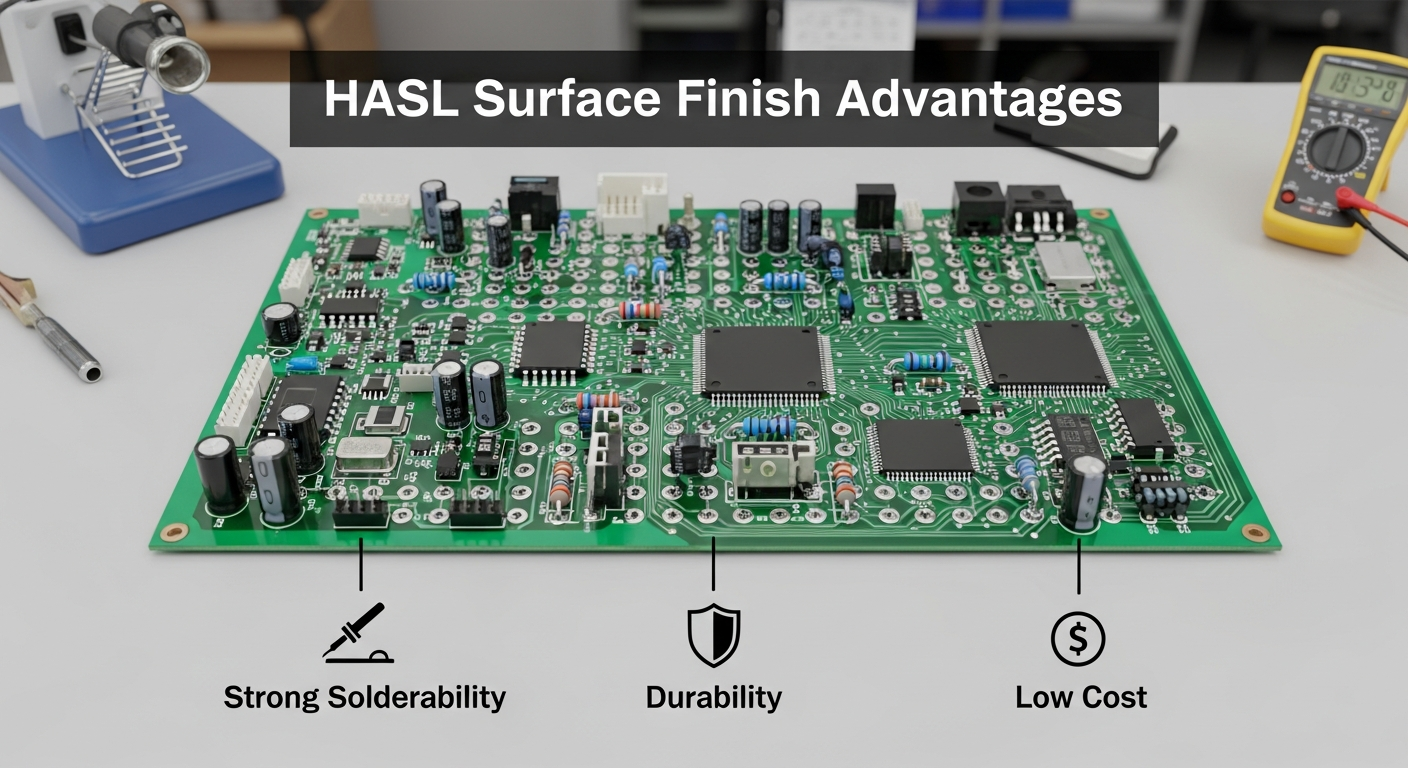
Affordable, Durable, and Widely Compatible
HASL is one of the oldest and most mature PCB finishes. Advantages include:
- Excellent solderability
- Strong mechanical robustness
- Low cost
- Long shelf life
- Compatibility with both SMT and DIP processes
In B2B projects, HASL works well for industrial electronics, power boards, and general-purpose applications. Factories with combined PCB fabrication and assembly ensure pad surfaces remain clean, flat enough for assembly, and reliable across production cycles.
What are the limitations of HASL?
Uneven pad surfaces can cause assembly defects on high-density or fine-pitch components.
HASL may struggle with small pads, BGAs, and high-speed designs.
Surface Flatness, Fine Pitch, and Environmental Considerations
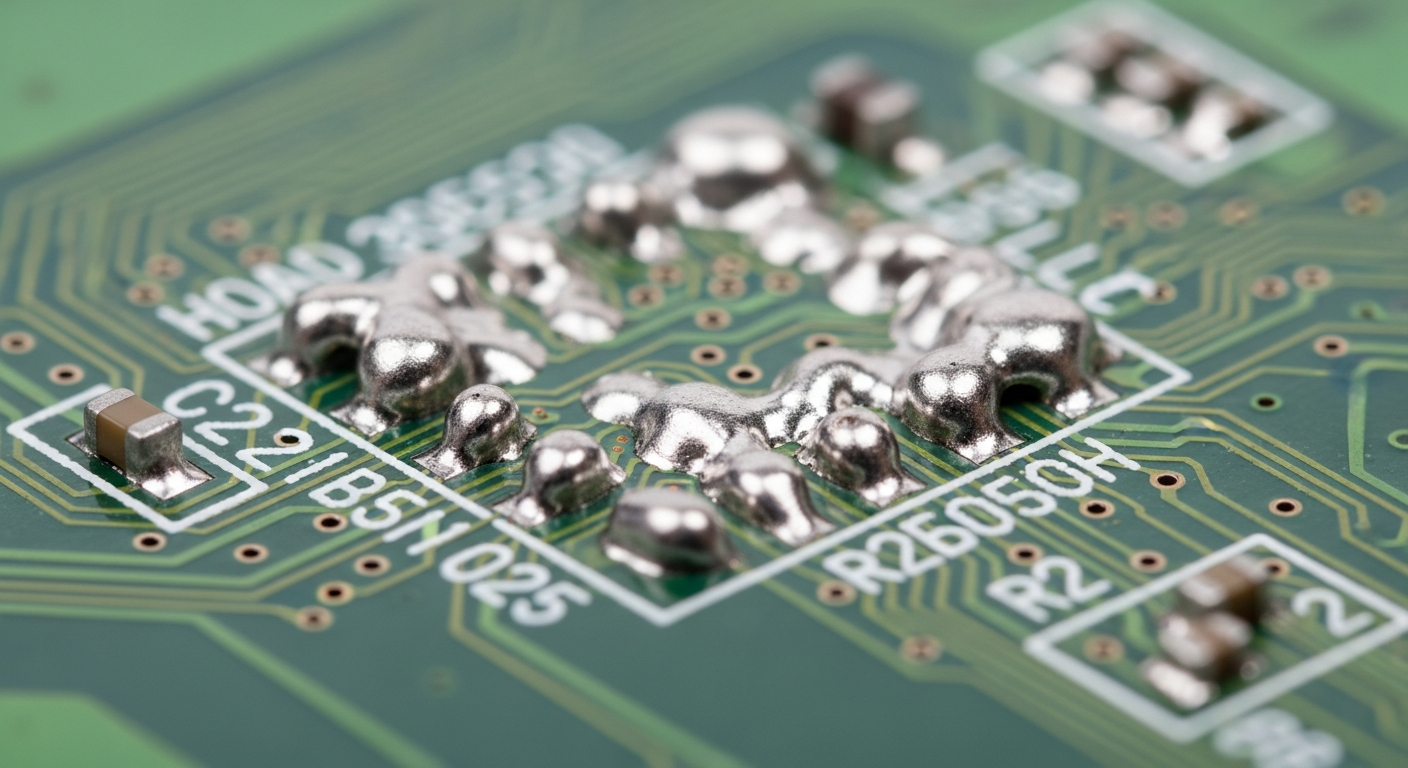
Because HASL uses molten solder, the resulting surface is not perfectly flat. Components such as QFN, BGA, or 0.5 mm-pitch ICs require smoother finishes like ENIG or ENEPIG. Lead-free HASL also introduces higher thermal stress, which may affect extremely thin or high-layer-count boards.
In volume production, uneven surfaces can cause tombstoning, bridging, or misalignment during SMT assembly. Engineering-led factories evaluate pad pitch, density, and thermal behavior to determine whether HASL is suitable—or if a flatter finish is necessary. This prevents costly redesigns and supports cleaner yield results.
Where is HASL commonly used?
Not all applications require high-cost finishes; HASL suits many general-purpose designs.
HASL is used in consumer electronics, power modules, industrial controllers, and IoT devices.

Low-Cost and Mid-Range Electronic Products
HASL is ideal for boards with:
- Medium-density SMT layouts
- Through-hole power components
- Connectors, relays, and mechanical parts
- Cost-sensitive consumer or industrial products
Manufacturers with experience in multi-process PCBA match HASL to product requirements, evaluate pad geometry, and ensure assembly profiles suit the solder finish. This maintains strong solder joints and avoids rework during both prototype and mass-production phases.
Conclusion
HASL surface finish protects copper, improves solderability, and offers a cost-effective option for a wide range of PCBs. While not ideal for fine-pitch or high-speed layouts, it remains a reliable choice for industrial, consumer, and power electronics. When paired with engineering-guided PCB fabrication, SMT assembly, BOM optimization, and thorough testing, HASL boards maintain stable performance across prototypes and full-scale manufacturing. This ensures consistent solder quality, dependable operation, and reduced production risk for global electronics applications.
