
Replacing a Printed Circuit Board (PCB) is often seen as a simple swap, but in real manufacturing environments, the cost of replacement depends on many technical and process-related factors. PCB replacement cost is not limited to the board itself. It also includes manufacturing complexity, testing effort, logistics, and the impact on production flow.
In factory operations, PCB replacement is evaluated carefully against repair, rework, and process optimization. Understanding the real cost structure helps determine when replacement is reasonable and when alternative actions are more efficient. The following sections explain PCB replacement cost from a professional manufacturing and workshop standpoint.
What Is Included in the Cost of Replacing a PCB?
The cost of replacing a PCB includes both direct and indirect elements. Focusing only on board price often leads to underestimating the real expense.
Key cost components include:
- Bare PCB fabrication
- Electronic components and materials
- Assembly and soldering labor
- Testing and inspection
- Handling, logistics, and documentation
In manufacturing workshops, replacing a PCB means restarting several process steps. Even if the board is already designed, fabrication lead time, assembly scheduling, and testing capacity must be considered. Each step adds measurable cost and consumes production resources.
How Does PCB Design Complexity Affect Replacement Cost?
PCB design complexity is one of the strongest cost drivers.
Cost increases with:
- Higher layer count
- Smaller trace width and spacing
- Dense component placement
- Use of advanced packages such as BGA or QFN
- Special materials or surface finishes
Simple single- or double-layer PCBs can be replaced at relatively low cost. In contrast, multilayer boards with controlled impedance, high-speed signals, or power management circuits require advanced fabrication and tighter process control.
In factory workshops, complex boards also demand more precise SMT placement, stricter reflow profiles, and additional inspection steps, all of which increase replacement cost.
How Do Assembly and Workshop Processes Influence Cost?
Assembly cost is not fixed. It varies depending on process requirements and workshop conditions.
Assembly-related cost factors include:
- SMT versus mixed SMT and DIP assembly
- Number of components and placements
- Manual rework or fine-pitch soldering
- Special handling for sensitive components
In manufacturing facilities, replacing a PCB often means allocating production slots, setting up feeders, preparing stencils, and running quality checks. Even small batch replacement can interrupt normal production flow.
If the board requires manual operations or repeated rework, labor cost increases rapidly. Well-controlled processes reduce replacement cost by minimizing errors and rework.
How Does Testing and Quality Control Add to Replacement Cost?
Testing is a mandatory part of PCB replacement and contributes significantly to total cost.
Testing activities include:
- Electrical continuity and isolation testing
- In-circuit testing where applicable
- Functional circuit testing
- Burn-in or stress testing for critical boards
In factory environments, each replacement PCB must pass the same acceptance criteria as original production units. Testing equipment setup, fixture usage, and engineering review all require time and resources.
Boards with higher reliability requirements or complex functions naturally cost more to replace due to extended testing coverage and documentation.
How Does Replacement Compare with Repair Cost?
Manufacturing teams often compare PCB replacement cost with controlled repair or rework.
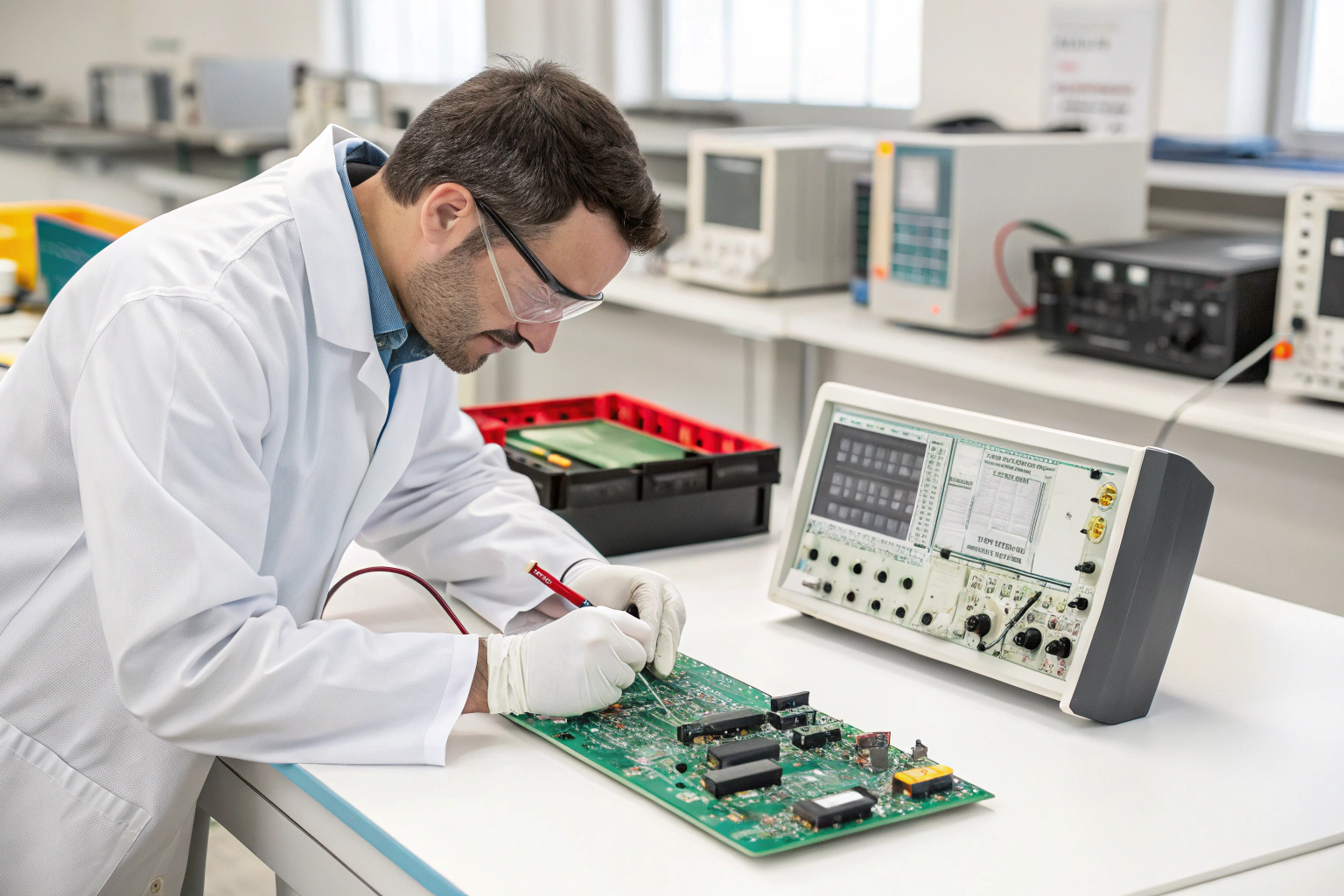
Replacement is often preferred when:
- Structural damage is present
- Inner layers are affected
- Burnt or carbonized material exists
- Reliability requirements are strict
Repair may be more economical for isolated soldering defects or component-level issues. However, repeated repairs increase risk and labor cost. In many production environments, replacement provides more predictable quality and long-term stability.
The decision is not based on unit price alone but on total lifecycle cost and risk.
How Do Production Scale and Timing Affect Replacement Cost?
Replacement cost varies significantly depending on production stage and volume.

Key influencing factors include:
- Prototype or pilot stage versus stable production
- Small batch versus large batch replacement
- Urgency and lead time requirements
- Availability of materials and components
Early-stage replacements are usually more expensive per unit due to low volume and setup cost. In contrast, replacements during mass production benefit from existing process setups and material availability.
Urgent replacement increases cost due to expedited fabrication, overtime labor, and priority testing. Manufacturing planning plays a key role in controlling these expenses.
Conclusion
The cost to replace a PCB board is determined by far more than the price of the board itself. Design complexity, assembly processes, workshop capacity, testing requirements, and production timing all contribute to the final cost. In manufacturing environments, PCB replacement is evaluated as a system-level decision that balances quality, reliability, time, and resource efficiency. While simple boards may be replaced at relatively low cost, complex control boards or high-reliability products require significant manufacturing and testing investment. A structured manufacturing approach focuses not only on replacing defective boards but also on improving processes to reduce failure rates, stabilize production, and control long-term cost.
