
The current divider rule calculates how input current splits between parallel resistors. The formula uses inverse resistance: lower resistance carries more current, higher resistance carries less.**
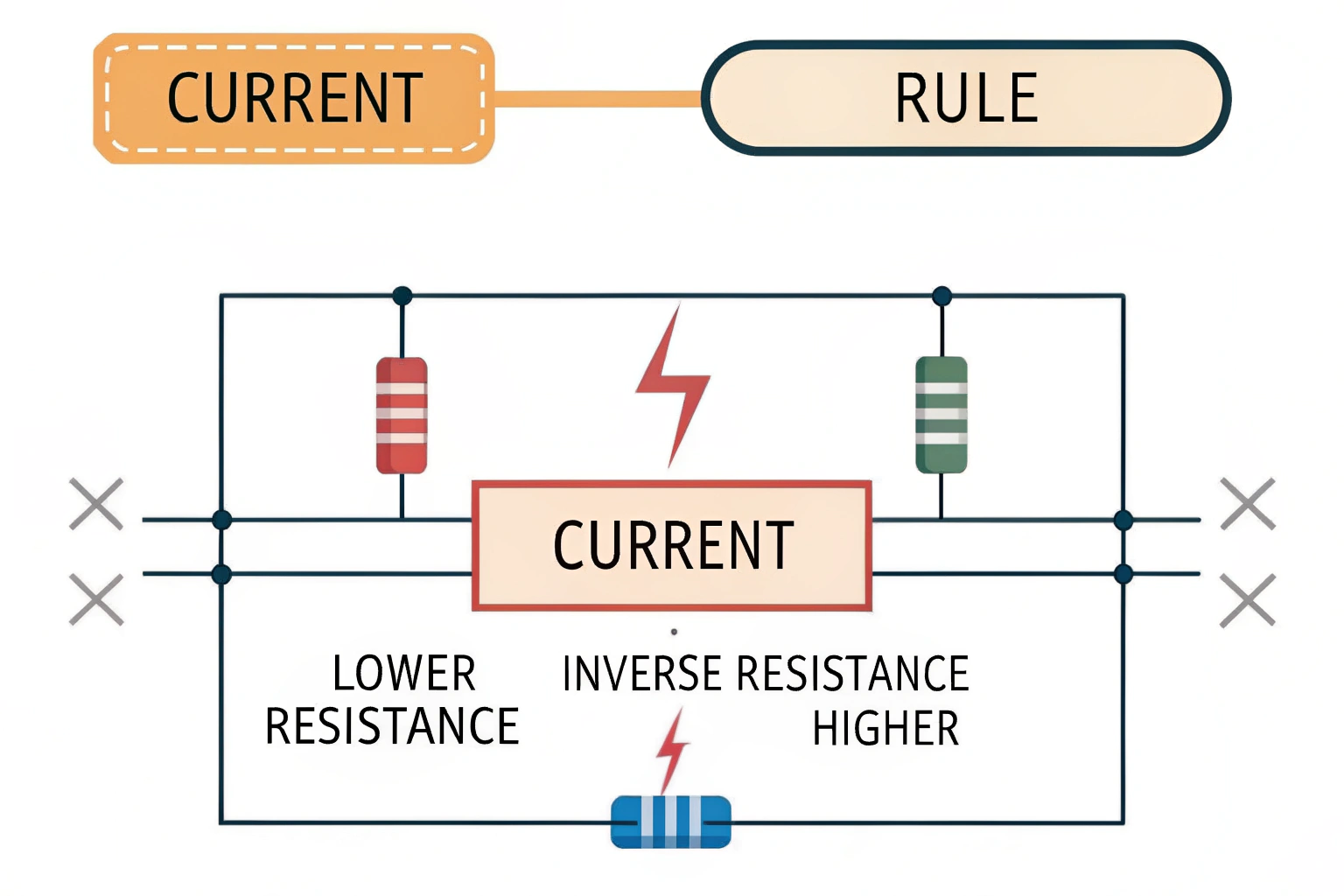
Parallel circuits appear in power systems, sensors, PCB loads, industrial modules, and analog electronics. Predicting how current divides prevents overheating, ensures accurate design, and keeps sensitive components within safe operating limits. The following sections explain the rule, its formula, and how it supports practical engineering work.
What is the current divider rule?
The current divider rule predicts how total current splits between parallel branches.
The current divider rule states that in a parallel network, the current through any branch equals the total current multiplied by the ratio of total parallel resistance to that branch’s resistance.
Parallel circuits maintain equal voltage across each branch. Because current depends on resistance, each branch draws current based on its opposition to flow. Lower resistance draws more current; higher resistance draws less. The rule simplifies analysis of sensor networks, bias circuits, and PCB load balancing.
Why it is important
Parallel paths appear in nearly all electronic systems—power rails, LED arrays, analog measurement circuits, and feedback networks. Predicting current distribution avoids unexpected heating or component failure. PCB designers rely on it to size traces, resistors, and protective components.
How to calculate the current divider rule formula?
The formula uses inverse resistance to determine current distribution.
For two resistors in parallel, the current through R1 is:
I₁ = I_total × (R2 / (R1 + R2))
And the current through R2 is:
I₂ = I_total × (R1 / (R1 + R2))
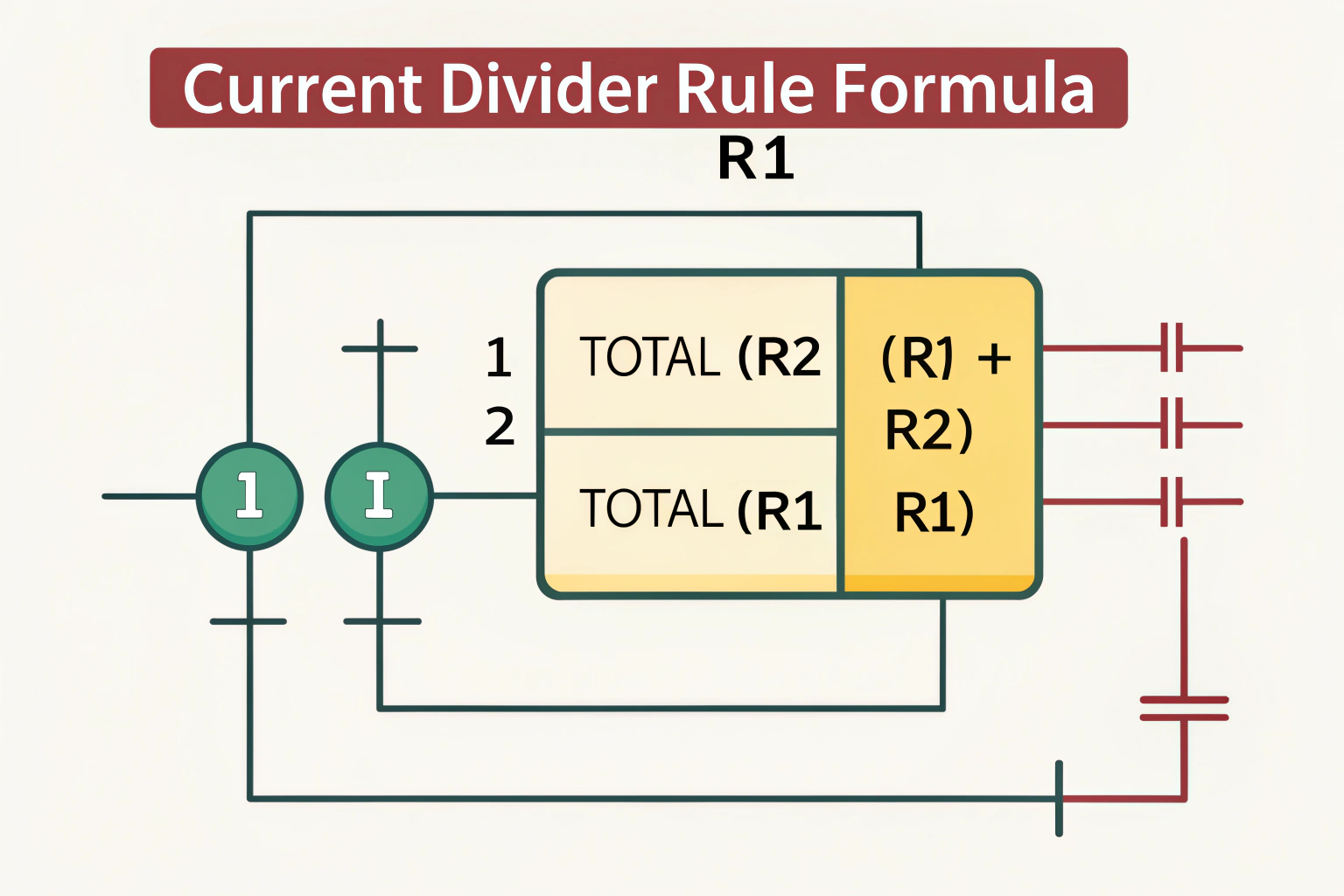
The pattern shows that each branch receives current proportional to the resistance of the opposite branch. This works because lower resistance creates a larger share of total current.
Full formula for multiple branches
For n parallel resistors:
Iₓ = I_total × (R_total / Rₓ)
Where:
R_total = 1 / (1/R1 + 1/R2 + … + 1/Rn)
This general formula supports complex designs where multiple loads share the same source.
Practical example
If a 2 A source feeds two resistors:
- R1 = 10 Ω
- R2 = 5 Ω
Current through R1:
I₁ = 2 A × (5 / (10 + 5)) = 0.67 A
Current through R2:
I₂ = 2 A × (10 / (10 + 5)) = 1.33 A
The lower resistance branch carries more current, as expected.
Why does the current divider rule work?
The rule comes from basic parallel circuit behavior.
Parallel paths share voltage but differ in resistance, so current divides based on each branch’s ability to conduct. Ohm’s Law and the parallel resistance formula combine to produce the current divider rule.
Voltage across each branch remains constant in a parallel network. Current depends on resistance:
I = V / R
Because voltage is the same, each current value depends only on R. This creates the inverse relationship found in current divider formulas.
Key electrical relationships
- Constant voltage across each branch
- Current inversely proportional to resistance
- Total current equals sum of branch currents
The rule provides fast, accurate predictions and supports design validation in both simple and advanced circuits.
Where is the current divider rule used in practical engineering?
Current division appears anywhere multiple loads share a single voltage source.
**Common applications include power distribution networks, sensor circuits, LED arrays, biasing networks, and measurement systems.
Understanding current division ensures stable operation, avoids overload, and maintains correct performance in both low-power and industrial circuits.
Key application areas
Sensor networks
Parallel resistive sensors require predictable current behavior for accurate readings.
LED lighting modules
LED branches share current; imbalance can cause brightness variation or thermal issues.
PCB analog circuits
Dividing current supports biasing of transistors, op-amps, and analog front ends.
Power rails
Parallel protection components must handle current according to design limits.
Testing and measurement
Shunt resistors create predictable current splits for calibration or diagnostics.
Parallel behavior affects temperature, efficiency, and long-term reliability.
How does current divider analysis support PCB design?
Proper current allocation prevents thermal issues, trace overheating, and inconsistent performance.
Current divider calculations help engineers size resistors, confirm trace width, prevent branch overload, and maintain stable operation in high-density circuits.
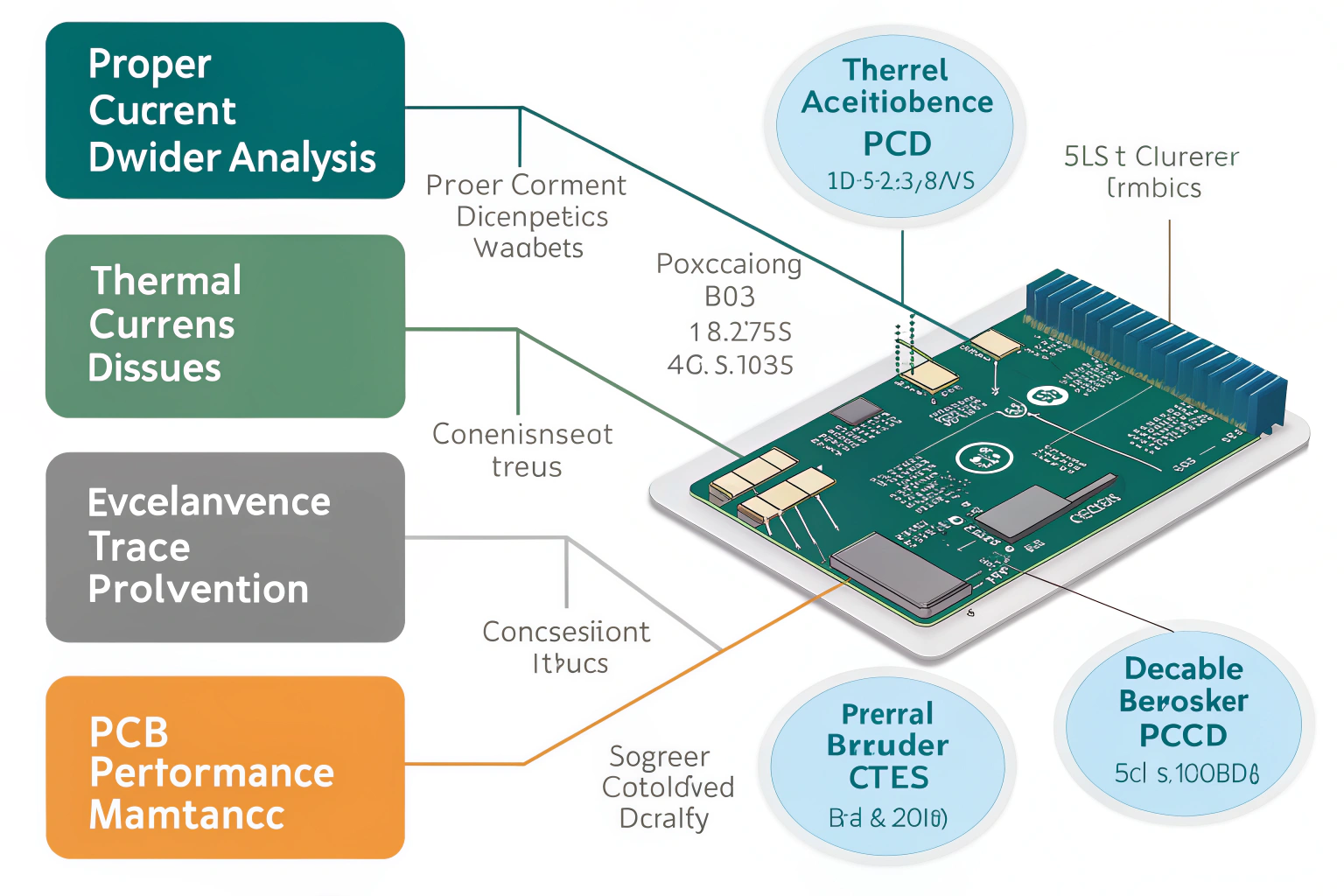
Parallel currents appear naturally in power delivery networks, bypass paths, and multi-load systems. Controlled current flow improves product safety and ensures compliance with design targets.
PCB design considerations
- Parallel resistors require matched tolerances
- Uneven heating can shift resistance and disturb division
- Trace resistance may unintentionally alter current ratios
- Multi-layer routing affects current distribution
- High-power branches need thermal reliefs and copper areas
Accurate prediction during early design avoids costly redesigns or production failures.
What are common mistakes when using the current divider rule?
Incorrect assumptions can lead to major accuracy errors.
Typical mistakes include ignoring tolerances, forgetting shunt resistances, overlooking trace resistance, and applying the rule to non-parallel networks.
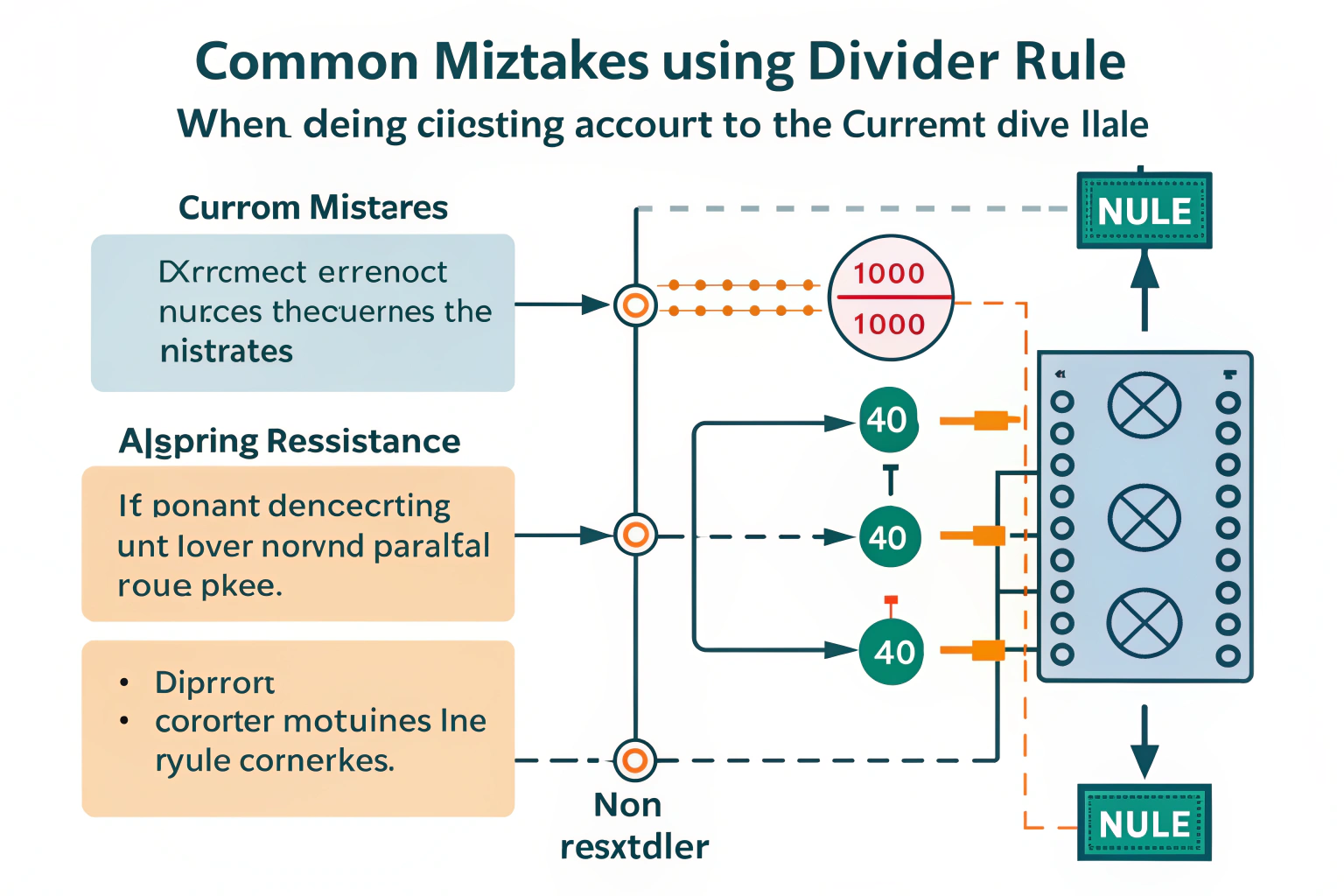
Real circuits include parasitics and manufacturing variations. These shift actual current values compared to ideal calculations.
Frequent issues
- Using nominal values without tolerance analysis
- Assuming perfect parallel structure when trace resistance dominates
- Ignoring temperature effects that change resistance
- Applying the rule to reactive components without considering frequency
- Forgetting that measurement tools can alter current flow
Correct modeling improves reliability across prototypes and mass-produced boards.
Conclusion
The current divider rule is a fundamental tool for predicting current distribution in parallel circuits. Its formula uses inverse resistance to determine how total current splits across each branch, ensuring accurate analysis in sensors, LED networks, analog stages, and power systems. By understanding the underlying principles, proper design practice becomes easier—resistors are selected correctly, traces are sized safely, and loads operate within their rated limits. Careful application of the rule also avoids common pitfalls involving tolerances, temperature, and parasitic effects. When combined with thoughtful PCB layout and validated through testing, current divider calculations support stable, efficient, and reliable performance in both prototype developments and large-scale manufacturing.
