
Repairing a circuit board without solder is possible in limited, non-critical situations, mainly for temporary fixes, testing, or low-stress applications. These methods do not replace proper soldering in manufacturing, but they can restore electrical continuity or mechanical stability when soldering is unavailable or not allowed.
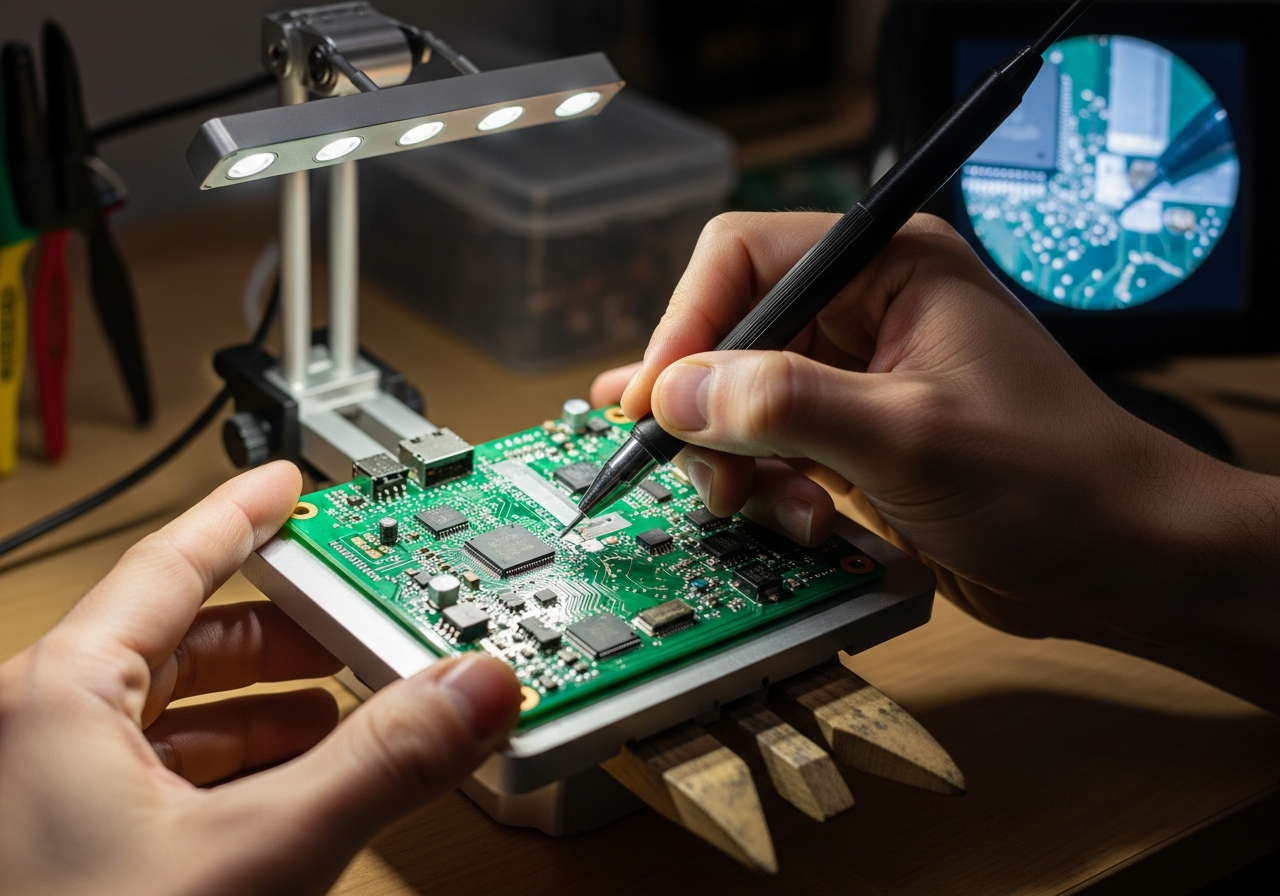
In professional electronics manufacturing, solderless repair is considered exception handling, not a standard process. Understanding its limits is essential to avoid hidden reliability risks.
Solderless repair focuses on restoring connectivity or stabilization, not rebuilding full manufacturing-grade joints.
Use Conductive Adhesive for Electrical Repair
Conductive adhesive is the closest solder alternative.
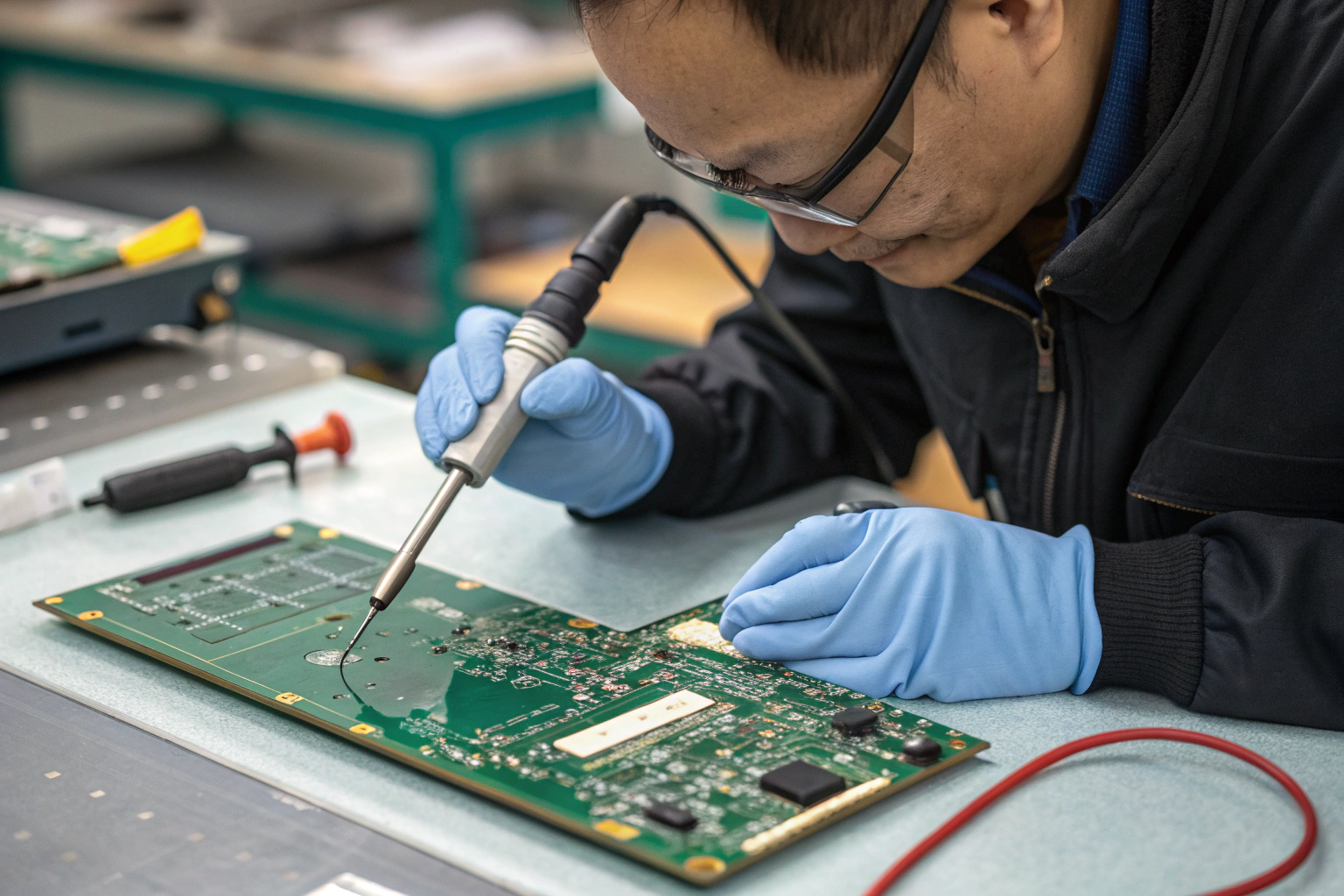
It restores conductivity, not metallurgical bonding.
Conductive adhesives contain silver or carbon particles suspended in resin. They can bridge broken traces, reconnect pads, or attach small components.
Typical use cases include:
- Repairing broken or scratched traces
- Reattaching lifted pads for signal lines
- Temporary fixes during debugging
Advantages:
- No heat required
- Safe for heat-sensitive components
- Easy to apply in small areas
Limitations:
- Higher resistance than solder
- Weak mechanical strength
- Aging and cracking under thermal cycling
In factory environments, conductive adhesive is used only when soldering would cause more damage. After application, resistance is measured and documented.
This method is never used for high-current paths, power rails, or long-term products.
Bridge Broken Traces with Jumper Wires
Jumper wiring restores electrical paths mechanically.
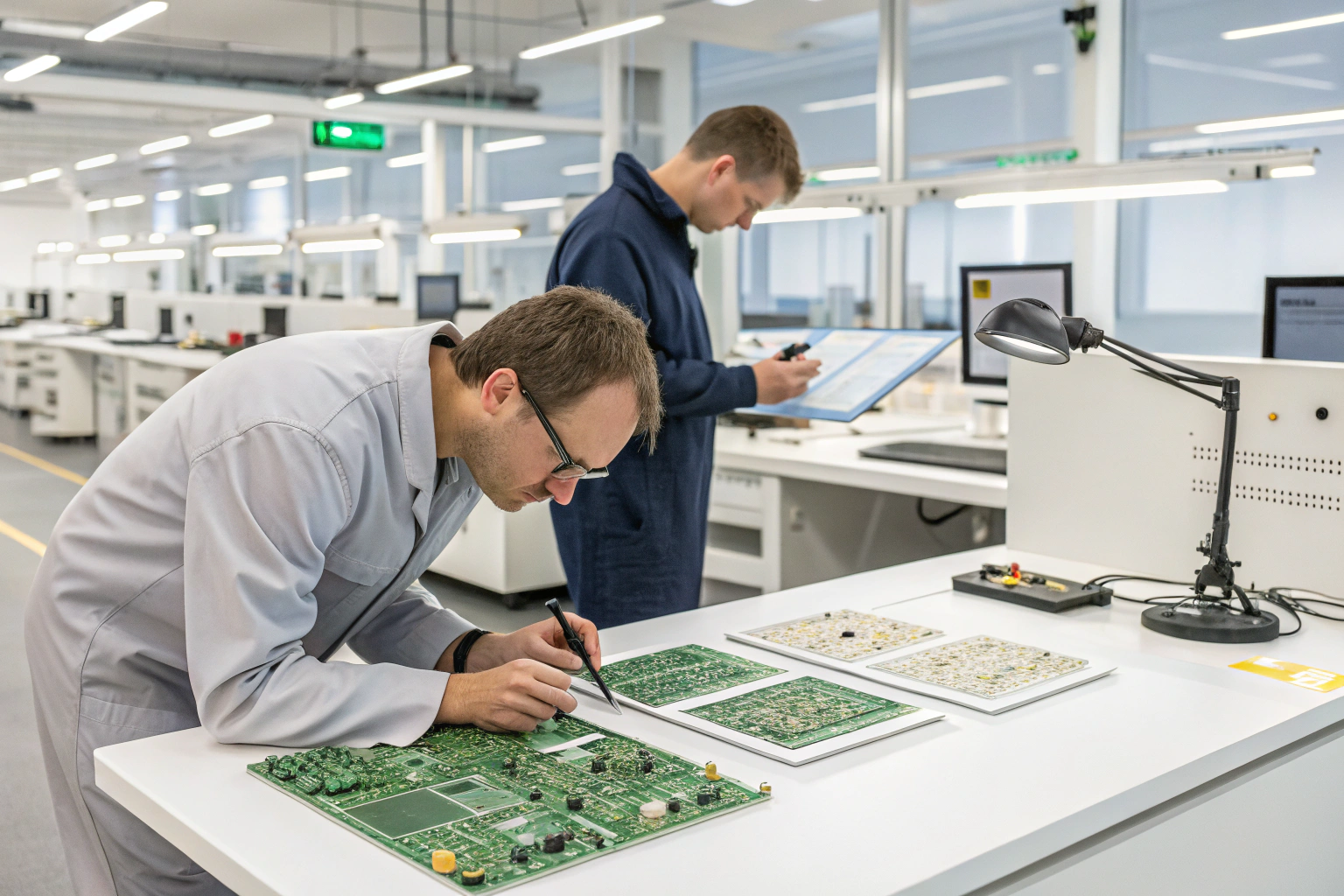
It bypasses damaged copper.
A thin insulated wire can be used to reconnect two points electrically without solder by:
- Wrapping wire around exposed copper
- Securing with conductive adhesive
- Fixing mechanically with epoxy or tape
This method is common during prototype validation or fault isolation.
Key considerations:
- Wire must be strain-relieved
- Electrical path length must be controlled
- Adjacent traces must remain isolated
In professional workshops, jumper repairs are clearly marked and limited in quantity. Excessive jumper wiring is a sign that board replacement is required.
Use Mechanical Pressure Contacts
Pressure-based connections avoid permanent bonding.
They rely on physical contact.
Mechanical contact methods include:
- Spring clips
- Test probes
- Compression connectors
These are mainly used for:
- Temporary testing
- Signal probing
- Debugging during development
Advantages:
- No chemical or thermal stress
- Fully reversible
- Fast setup
Disadvantages:
- Highly sensitive to vibration
- Not suitable for permanent repair
- Contact resistance varies
Manufacturing uses pressure contacts only in test fixtures, never in shipped products.
Repair Mechanical Damage Without Electrical Bonding
Not all PCB repairs are electrical.
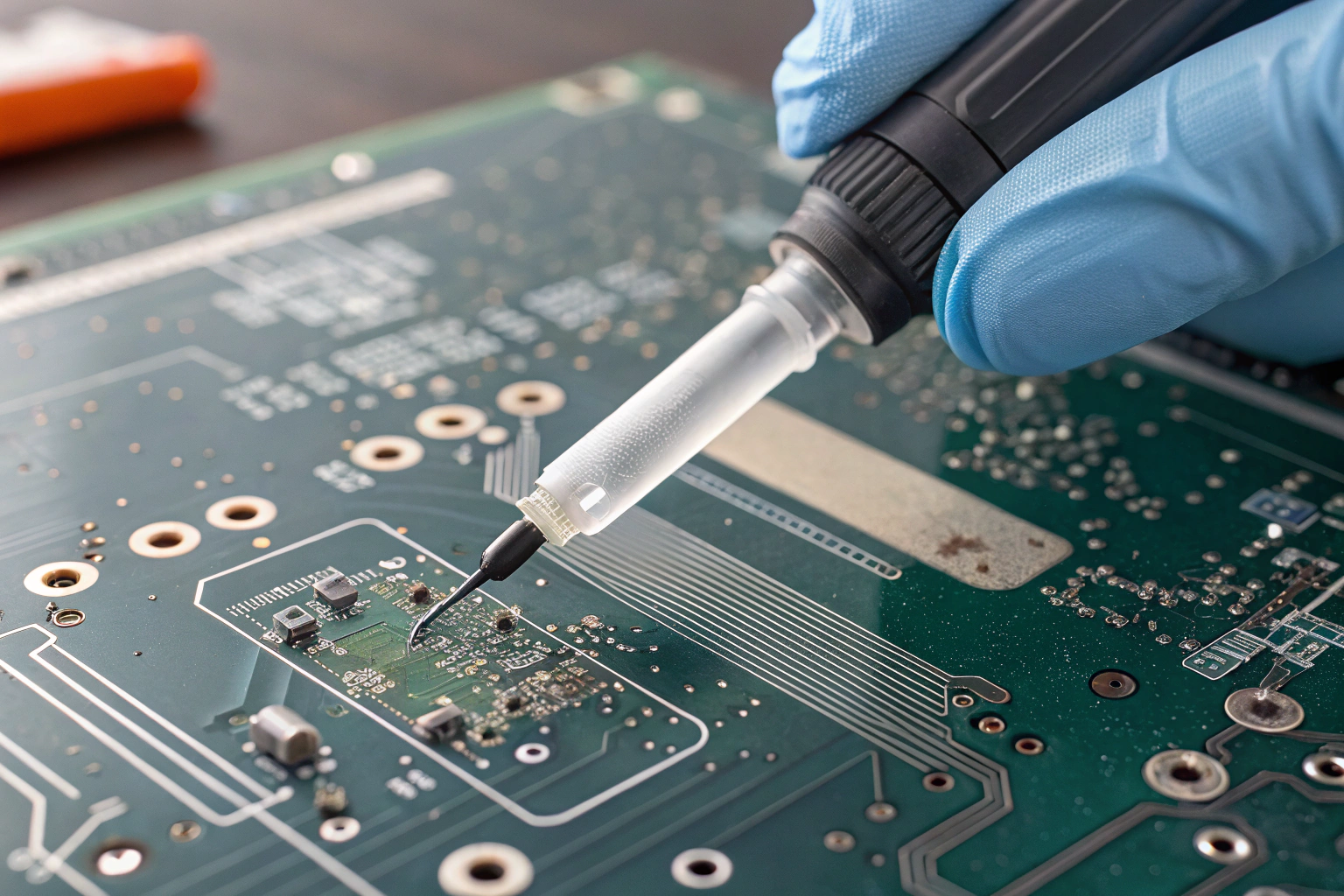
Some repairs are structural only.
For cracked boards, loose connectors, or broken mounting areas, non-solder repair may involve:
- Electronics-grade epoxy
- Silicone adhesive
- Reinforcement brackets
These methods:
- Restore mechanical stability
- Reduce stress on solder joints
- Prevent further cracking
They must never replace electrical connections. Adhesives are applied away from pads, traces, and test points.
In factory workshops, adhesive type, cure time, and location are strictly controlled to avoid contamination.
Clean and Re-seat Components Instead of Reconnecting
Some failures are contact-related.
Cleaning may restore function.
Oxidation, dust, or residue can interrupt electrical contact, especially in:
- Edge connectors
- Socketed components
- Test pads
Electronics-grade cleaning using IPA or contact cleaner can restore continuity without soldering.
This method is effective only when:
- No physical damage exists
- Pads and contacts remain intact
- Failure is intermittent
In manufacturing, cleaning is always followed by electrical testing to confirm stability.
Why Solderless Repair Is Not Used in Manufacturing
Solderless methods lack long-term reliability.
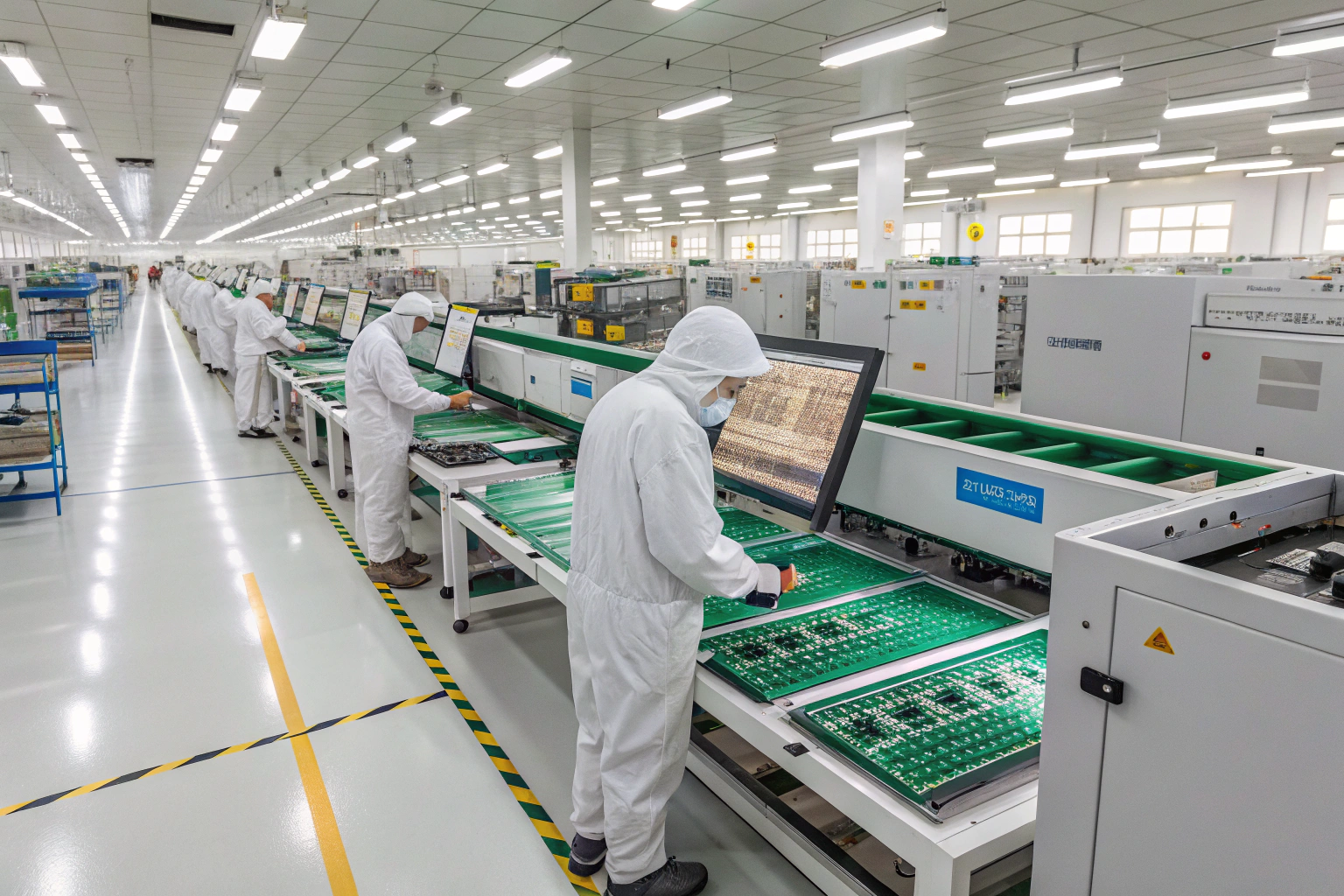
Process control cannot guarantee stability.
In professional manufacturing workshops:
- Electrical joints must be metallurgically bonded
- Mechanical strength must be predictable
- Aging behavior must be validated
Solderless repairs introduce uncertainty:
- Resistance drift over time
- Adhesive aging and cracking
- Sensitivity to temperature and vibration
Because of this, solderless repair is limited to:
- Prototypes
- Engineering validation
- Temporary recovery
Production boards that require solderless repair are usually scrapped or redesigned.
When Solderless Repair Is Acceptable — and When It Is Not
Context defines acceptability.
Risk tolerance matters.
Solderless repair may be acceptable when:
- The board is a prototype
- The repair is temporary
- Electrical load is low
- Failure does not create safety risk
It is not acceptable when:
- Power or safety circuits are involved
- Long-term reliability is required
- The product will be shipped or certified
- Environmental stress is expected
Manufacturing decisions always prioritize predictable reliability over short-term recovery.
Conclusion
Repairing a circuit board without solder is not a shortcut solution but a structured engineering practice. Methods such as conductive adhesive, copper tape, mechanical fastening, wire bonding, and temporary test connections each serve a specific purpose depending on electrical requirements and reliability goals.
When these techniques are applied inside a controlled manufacturing environment, they help reduce scrap, protect sensitive components, and support fast engineering validation. Clear process documentation, inspection standards, and testing discipline are essential to ensure consistent results. Solderless repair plays an important role during development, troubleshooting, and specialized applications, and when managed correctly, it becomes a valuable part of modern electronics manufacturing workflows.
