
A Printed Circuit Board (PCB) is considered bad when it fails to meet electrical, functional, or reliability requirements at any stage of production or use. A bad PCB may appear completely dead, partially functional, or unstable under specific conditions. In manufacturing environments, identifying a bad PCB is a structured engineering activity that combines inspection, testing, and process analysis rather than guesswork.
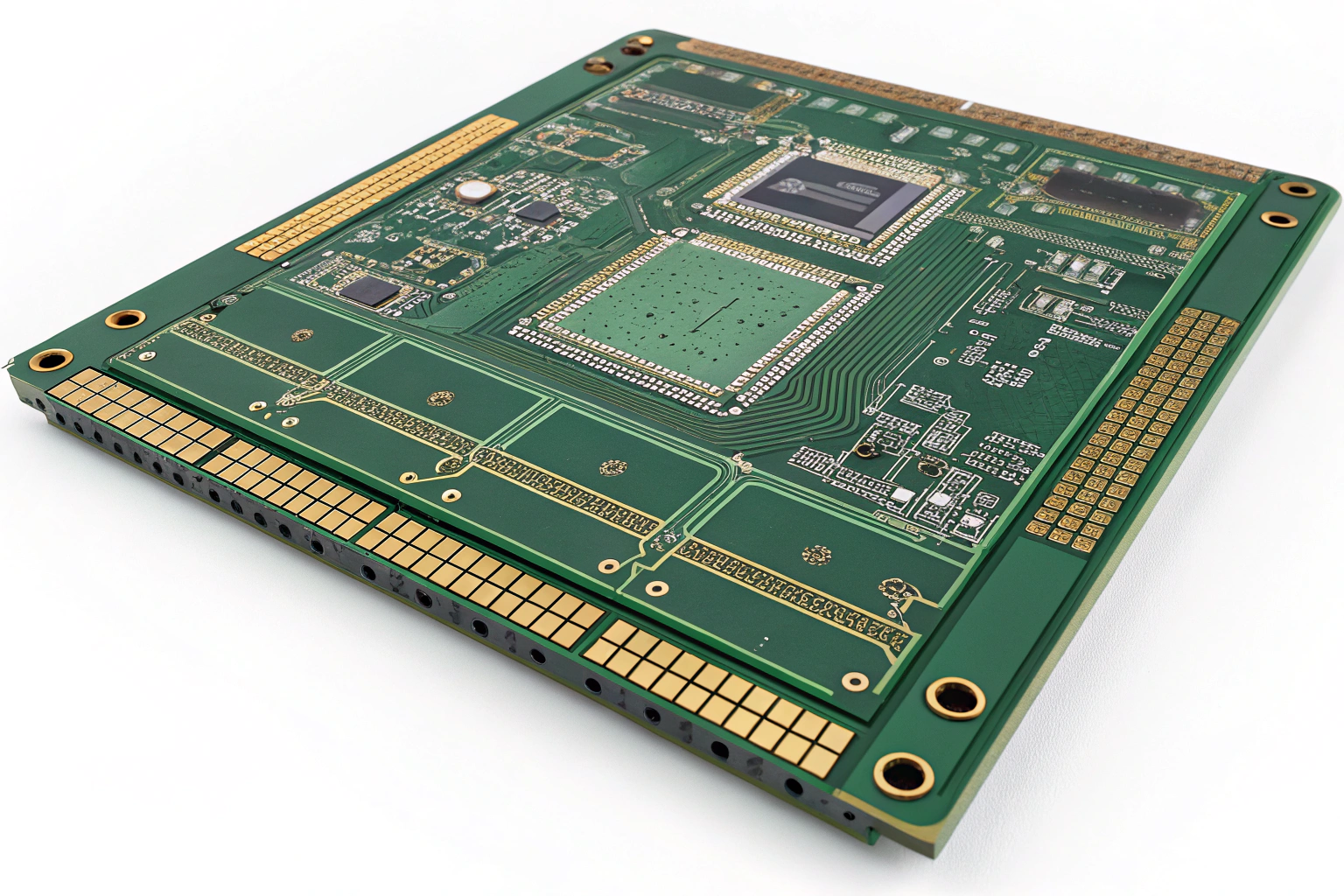
A PCB can look normal on the surface and still be defective internally. For this reason, professional factories rely on layered evaluation methods inside controlled workshops. The following sections explain how a bad PCB is identified from visual signs to advanced testing and process review.
What Are the Common Signs of a Bad PCB?
The first indication of a bad PCB usually comes from abnormal behavior rather than obvious physical damage.
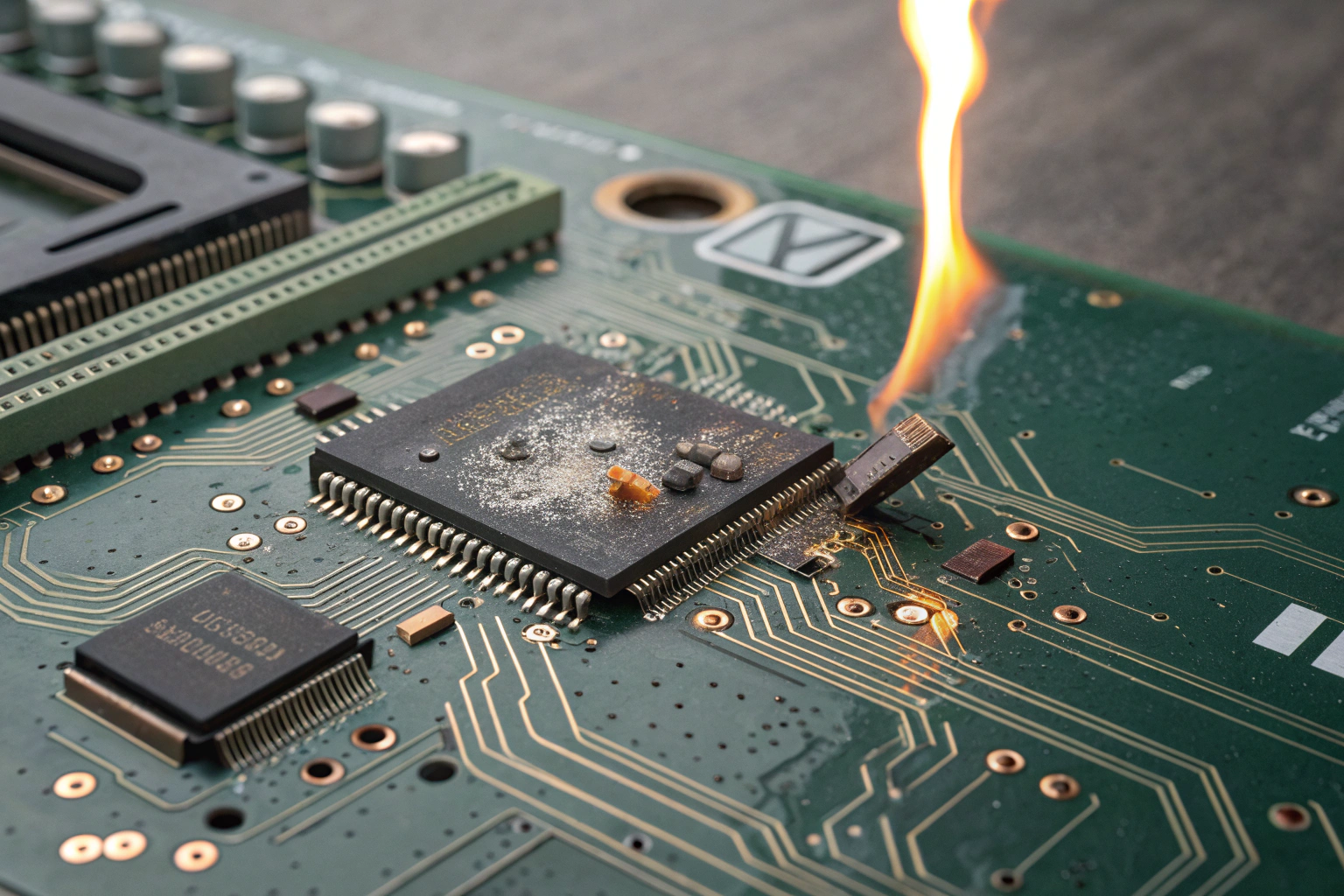
Typical signs include:
- No power-up or incomplete startup
- Random resets or unstable operation
- No response from inputs or outputs
- Communication failure with other modules
- Localized overheating or abnormal smell
In factory testing stages, these symptoms are often detected during power-on checks or functional testing. A PCB that powers on but fails to control loads or communicate reliably is still classified as bad. Symptom grouping helps engineers narrow down whether the issue is related to power, logic, signal integrity, or assembly quality.
How Does Visual Inspection Help Identify a Bad PCB?
Visual inspection is the first formal step used to determine PCB condition before electrical testing.
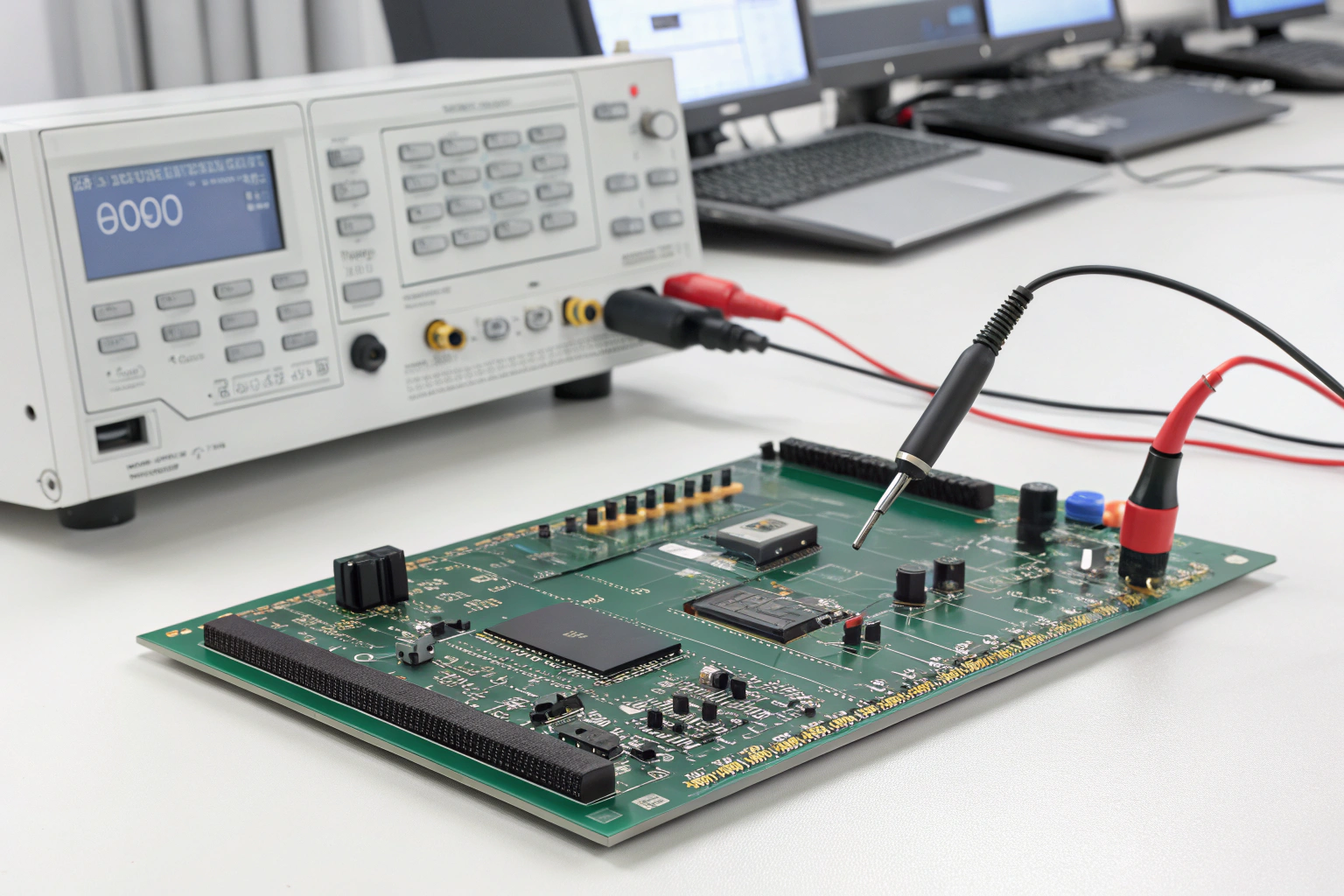
Inspection focuses on:
- Solder joint shape and consistency
- Missing, misaligned, or reversed components
- Burn marks, discoloration, or residue
- Lifted pads, cracked parts, or PCB warpage
In manufacturing workshops, visual inspection is supported by magnification tools and Automated Optical Inspection (AOI) systems. AOI compares each board against reference data to detect solder bridges, insufficient solder, and placement deviations.
Although visual inspection cannot detect all faults, it filters out obvious defects early and prevents damaged boards from entering electrical testing, reducing further risk and analysis time.
How Is Electrical Testing Used to Confirm a Bad PCB?
Electrical testing provides objective evidence of whether a PCB meets basic circuit requirements.
Key electrical checks include:
- Continuity testing for open circuits
- Short-circuit testing between power and ground
- Resistance and voltage measurements
- Power-on current consumption monitoring
In factory environments, current-limited power supplies are used during initial power-up to protect the board. Abnormal current draw often indicates short circuits, damaged components, or incorrect assembly.
Flying probe testers or In-Circuit Test (ICT) systems are commonly used to measure thousands of nodes on complex boards. Any PCB showing abnormal electrical values outside defined limits is classified as bad, even if partial functionality is present.
How Does Functional Testing Reveal Hidden PCB Problems?
Functional testing verifies whether the PCB performs its intended tasks under real operating conditions.
Functional testing may include:
- Input and output response validation
- Timing and logic sequence checks
- Communication interface verification
- Load and stress simulation
In manufacturing workshops, Functional Circuit Test (FCT) stations simulate actual application environments using dedicated fixtures and software. This stage often reveals issues such as timing errors, unstable signals, or firmware-related problems that electrical tests cannot detect.
A PCB that passes continuity and ICT tests but fails functional requirements is still considered bad. Functional testing ensures that electrical correctness translates into real-world performance.
How Do Factory Processes Influence Whether a PCB Is Bad?
Manufacturing process quality has a direct impact on PCB health and failure rates.

Critical process factors include:
- SMT placement accuracy
- Solder paste printing consistency
- Reflow temperature profile control
- ESD protection and handling discipline
In professional workshops, machines are calibrated regularly and process parameters are monitored continuously. When bad PCBs appear repeatedly, engineers analyze AOI results, test yield data, and process logs to identify root causes.
Many bad PCBs are not caused by design errors but by subtle process drift. Strong process control significantly reduces these risks.
How Is Final Fault Confirmation and Analysis Performed?
Once a PCB is suspected to be bad, it enters a structured fault confirmation process.
Typical steps include:
- Failure documentation and symptom recording
- Root cause analysis by engineering teams
- Controlled rework or component replacement
- Full electrical and functional retesting
- Corrective action for process improvement
Rework is performed in dedicated areas using ESD-safe tools and temperature-controlled equipment. Random fixes are avoided. Each repaired PCB must pass the same acceptance criteria as a new board.
Fault data is collected and reviewed to prevent recurrence and improve long-term production stability.
Conclusion
A PCB is considered bad when it fails to meet defined electrical, functional, or reliability standards, even if it appears visually normal. In manufacturing environments, identifying a bad PCB relies on a layered approach that includes visual inspection, electrical testing, functional validation, and process analysis. A bad PCB is not just a defective unit but a signal of potential weaknesses in design execution, material handling, or workshop control. Through disciplined manufacturing processes, structured testing systems, and continuous improvement, bad PCBs can be identified early, reduced significantly, and prevented from impacting overall product reliability and production efficiency.
