
PCB X-ray inspection uses high-energy imaging to reveal hidden solder joints, internal structures, and assembly defects that cannot be seen through visual or AOI inspection.
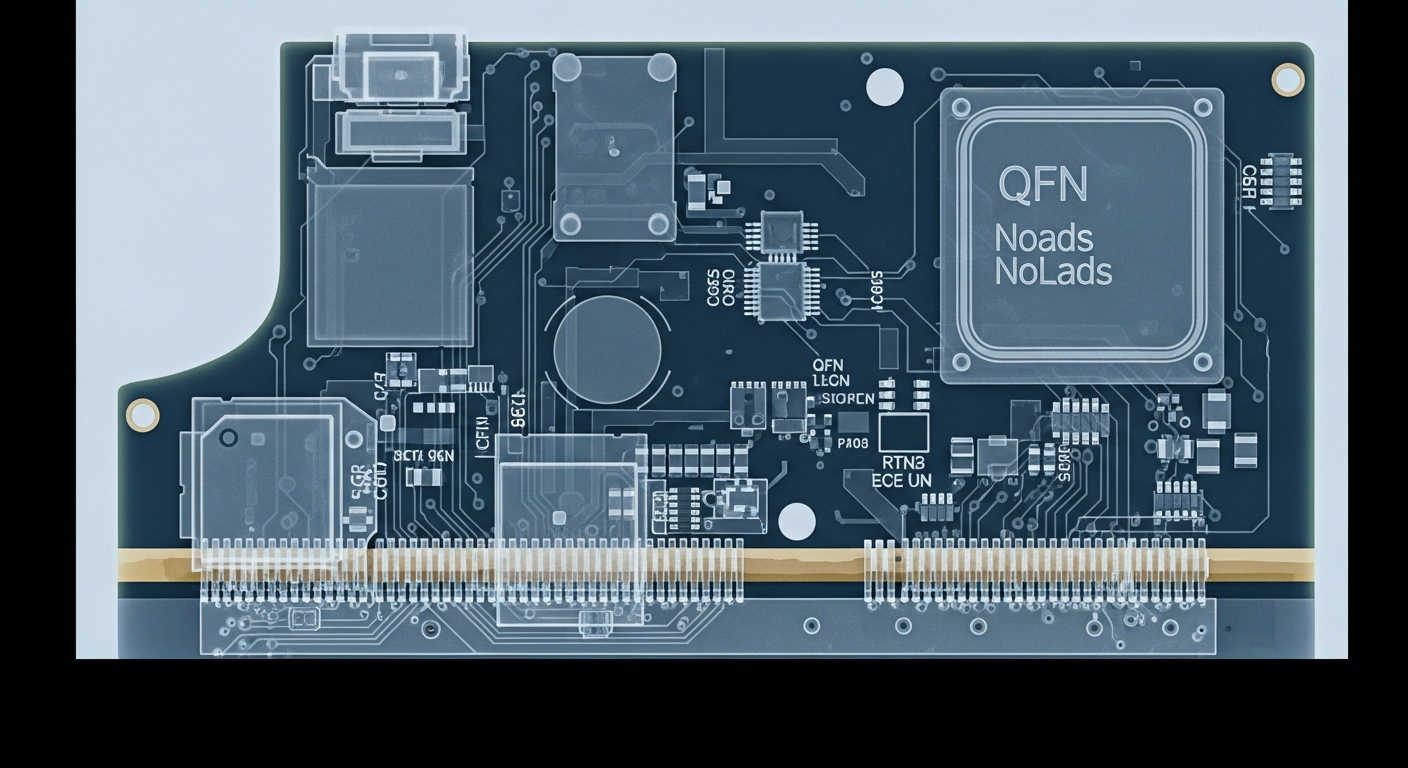
A clear understanding of X-ray analysis helps engineering teams detect hidden issues early, improve yields, and ensure stable performance from prototype to mass production.
Why is X-ray inspection important in PCB assembly?
Hidden solder joints—especially under BGAs and QFNs—often develop defects that visual inspection cannot detect.
X-ray inspection reveals internal solder quality, detects voids, and identifies hidden bridging or opens.
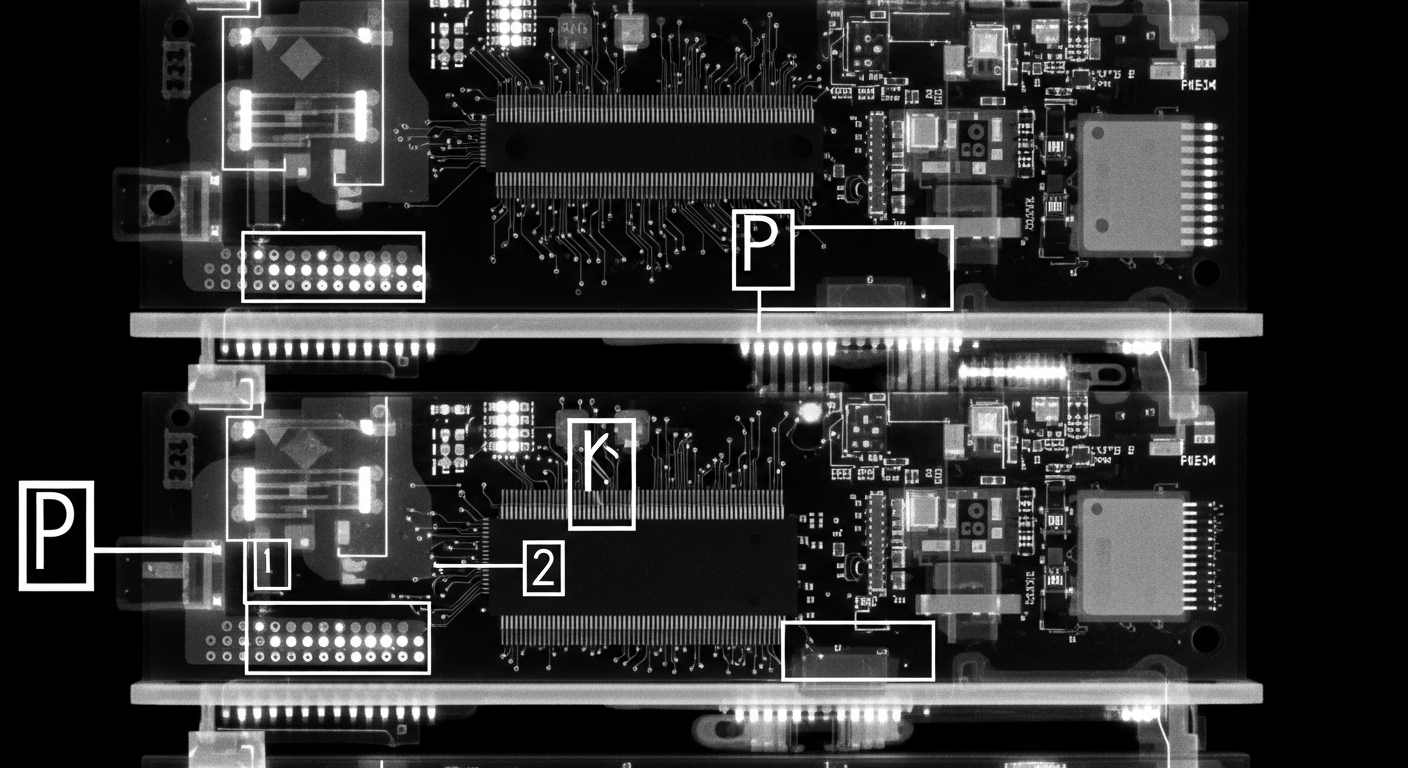
Hidden Joints, Micro-Defects, and Electrical Reliability
X-ray machines penetrate the PCB and show internal structures such as BGA balls, plated-through holes, and solder barrels. The images expose solder bridges, insufficient solder, head-in-pillow defects, or voiding patterns. This is vital in dense electronics where components block direct optical access.
Engineering-focused factories use X-ray as part of first-article inspection and batch sampling. Combined with SMT profile analysis, stencil optimization, and design-for-manufacturing checks, X-ray results guide process tuning and reduce failure rates in both prototype and mass production.
What defects can be detected by PCB X-ray inspection?
Many dangerous faults remain invisible until systems fail under thermal or mechanical stress.
X-ray inspection detects voids, bridges, cracks, insufficient solder, and misaligned internal structures.
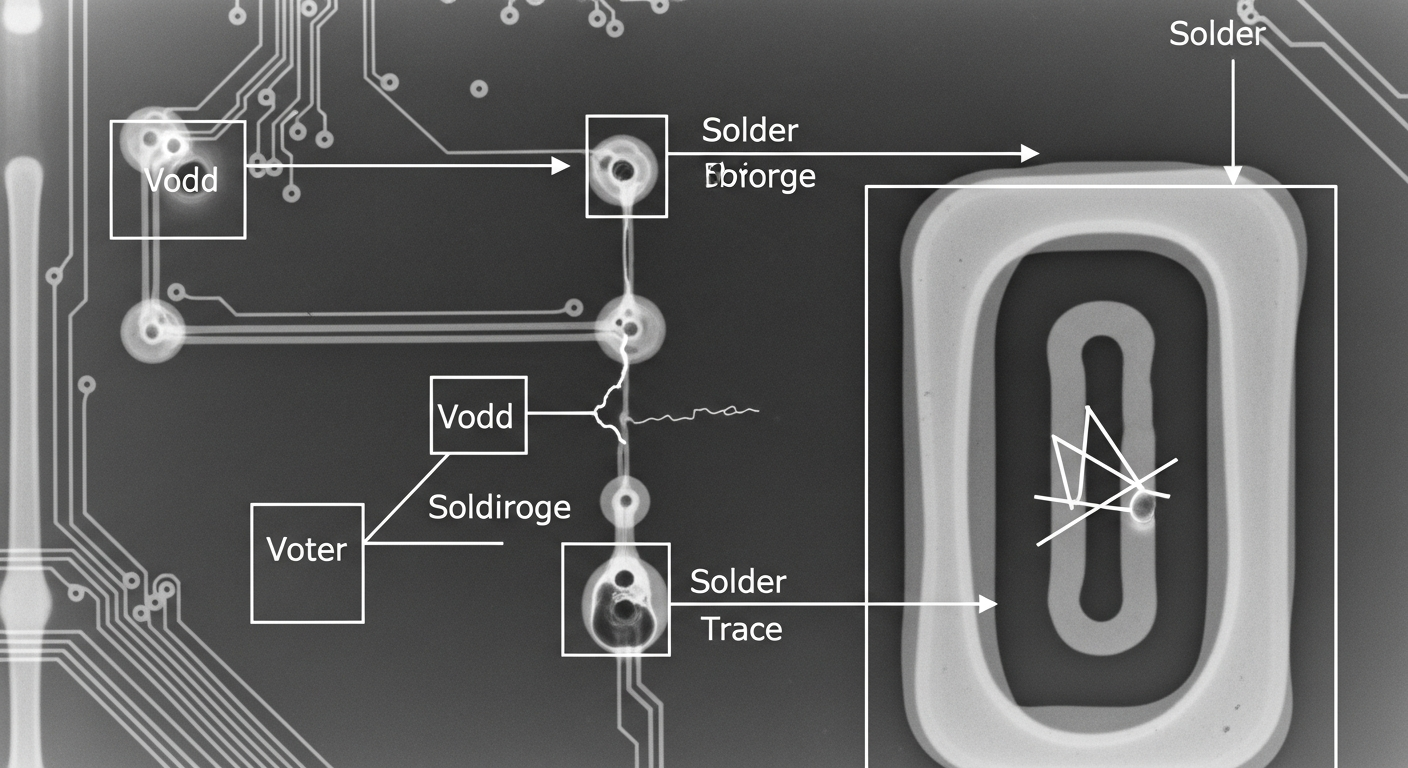
BGA Voids, Barrel Cracks, and Hidden Bridges
Key defects identified include:
- Voids under BGA balls or large pads
- Head-in-pillow defects from poor wetting
- Solder bridges hidden under leadless packages
- Cold joints indicating incomplete reflow
- Cracked plated-through holes from mechanical stress
- Component tilt or misalignment beneath the package
In real manufacturing, these issues often result from incorrect pad design, uneven heating, or stencil thickness mismatch. Factories with integrated PCB fabrication and SMT assembly adjust thermal profiles, paste formulas, and solder mask opening sizes based on X-ray findings, strengthening overall assembly performance.
How does X-ray inspection work in a PCBA workflow?
Incomplete integration leads to slow feedback loops and repeated defects.
X-ray inspection fits into incoming inspection, first-article approval, and end-of-line validation.
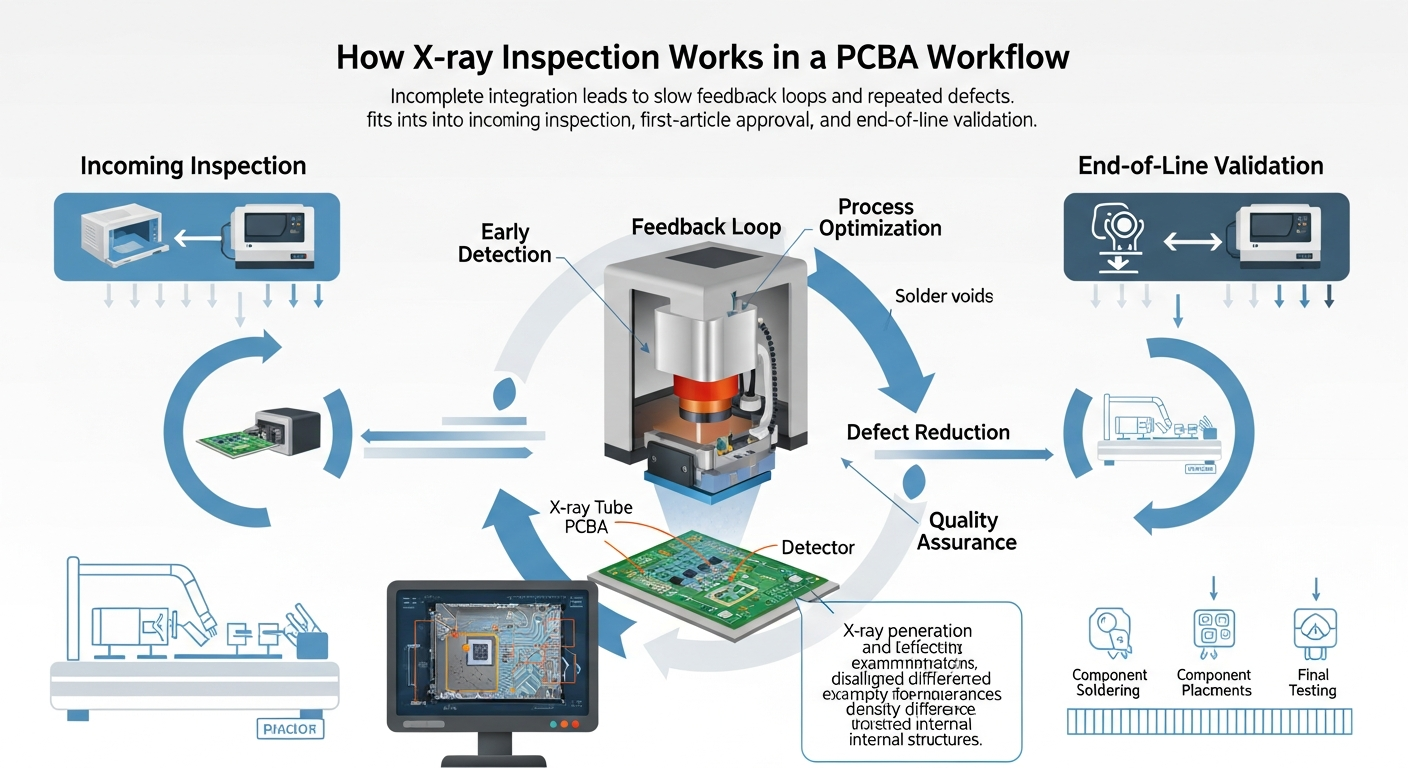
Process Flow, Imaging Techniques, and Automated Analysis
The X-ray unit sends controlled radiation through the board. Dense materials like solder show brighter regions, while pads or voids appear as different shades. Operators review cross-sections or angled views to analyze internal structure. Advanced systems use automated detection algorithms to flag anomalies.
Engineering-aligned factories combine AOI, SPI, and X-ray data to tune process parameters. This creates a continuous improvement loop where defects detected in early samples are eliminated before full-scale production, keeping yields high and rework low.
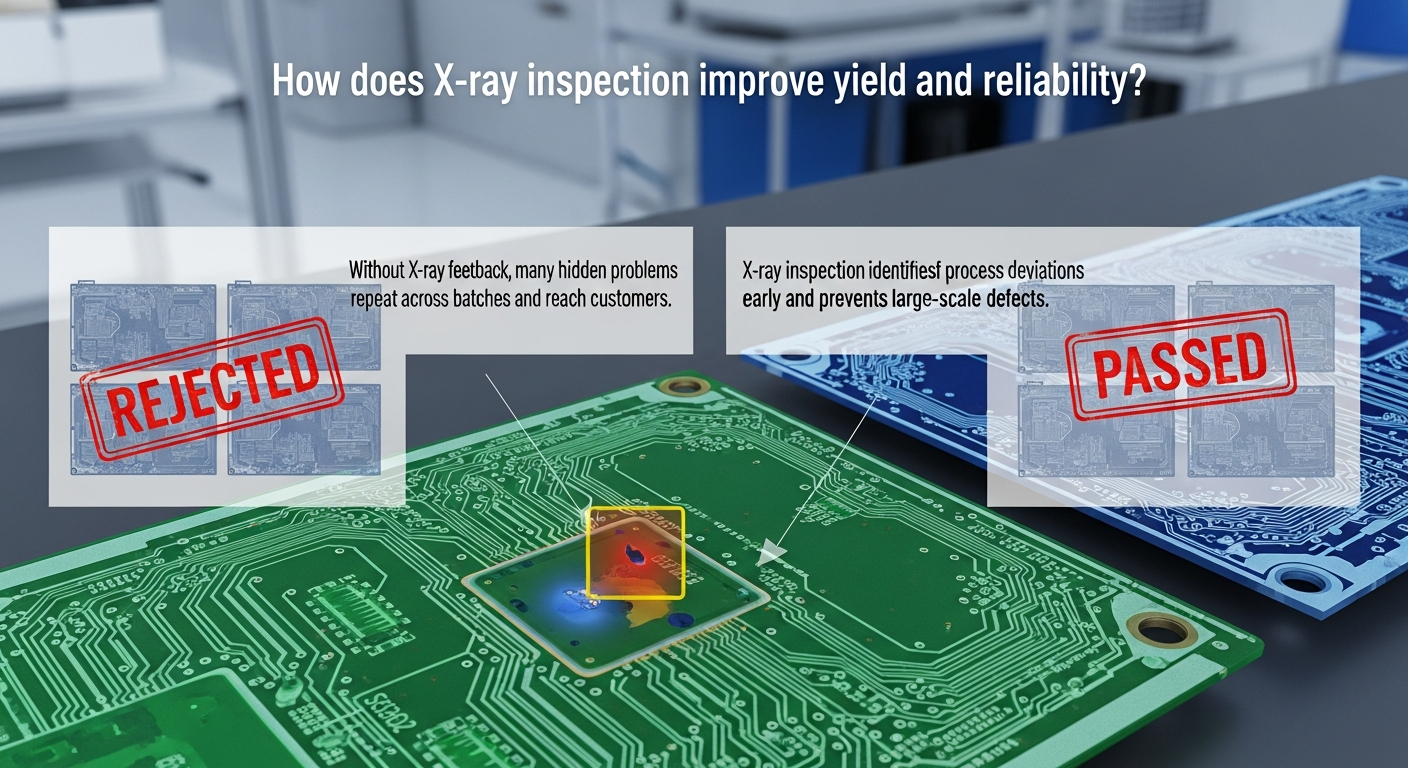
How does X-ray inspection improve yield and reliability?
Without X-ray feedback, many hidden problems repeat across batches and reach customers.
X-ray inspection identifies process deviations early and prevents large-scale defects.
Process Control, Thermal Optimization, and Material Stability
X-ray insights reveal whether voids exceed recommended standards, whether BGAs are collapsing properly, and whether thermal imbalance is affecting reflow consistency. These findings guide improvements such as adjusting reflow curves, refining panel design, or modifying stencil apertures.
Manufacturing partners with complete testing lines use X-ray results to validate solder joint integrity before boards reach ICT or FCT stages. This avoids downstream failures and protects long-term device reliability—especially in industrial, automotive, and IoT applications.
What types of assemblies require X-ray inspection the most?
Packages with hidden pads or multi-layer vias rely heavily on X-ray verification.
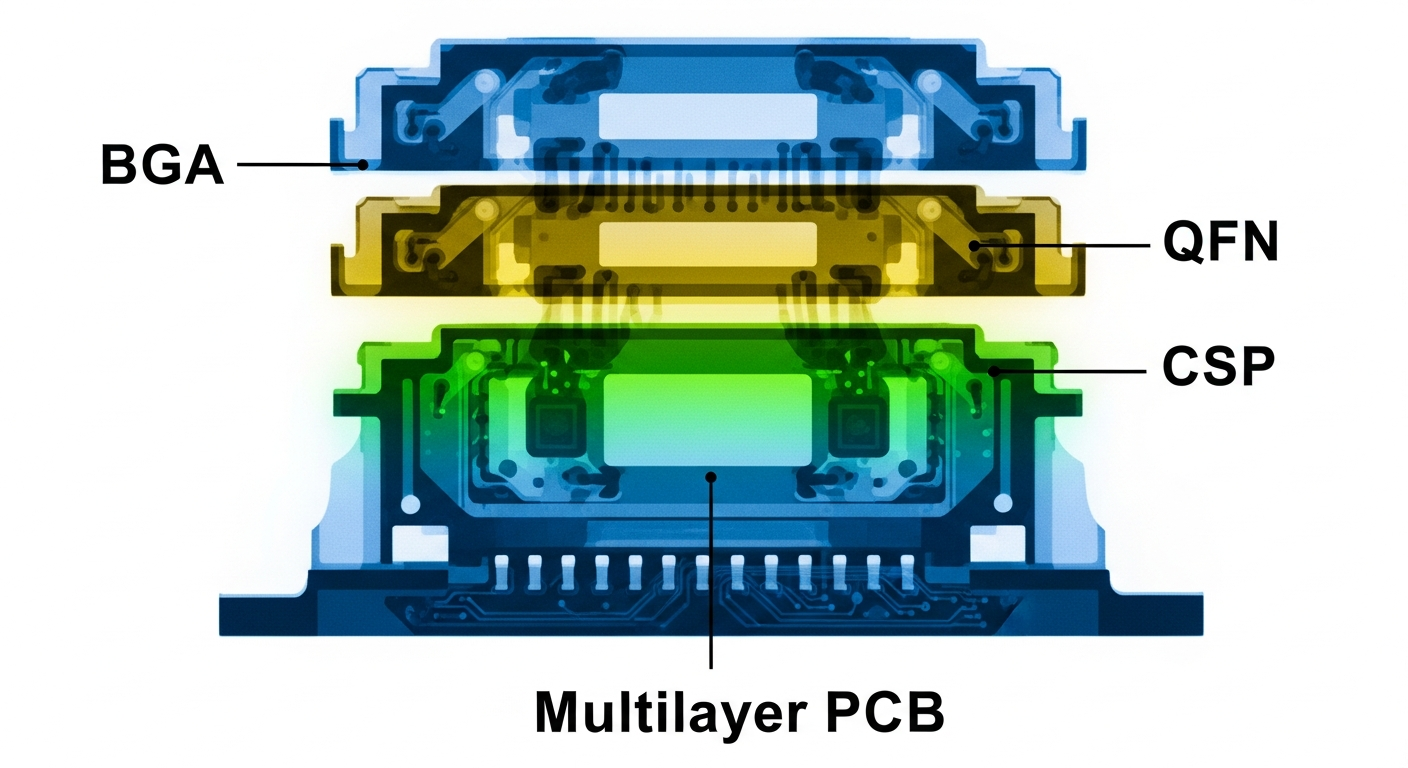
X-ray inspection is essential for BGAs, QFNs, CSPs, and high-density multilayer PCBs.
Fine-Pitch Components, High-Current Paths, and Complex Structures
Applications that rely on X-ray include:
- BGA processors, memory chips, and AI modules
- QFN and LGA packages with underside pads
- Automotive and industrial power modules
- Multilayer boards with buried or blind vias
- High-current barrels and plated-through holes
Factories with strong PCBA capability integrate X-ray with AOI, ICT, and functional testing to ensure consistent assembly quality across different technologies and density levels.
Conclusion
PCB X-ray inspection is a vital quality-control step that uncovers hidden solder defects, validates internal structures, and ensures long-term reliability. Its ability to reveal issues beneath BGAs, QFNs, and through-hole barrels makes it indispensable for modern electronics. When paired with engineering-guided PCB fabrication, SMT assembly, stencil optimization, and thorough electrical testing, X-ray analysis strengthens product stability from prototypes through mass production. This delivers higher yields, reduced field failures, and reliable performance for industrial, automotive, consumer, and IoT applications.
