
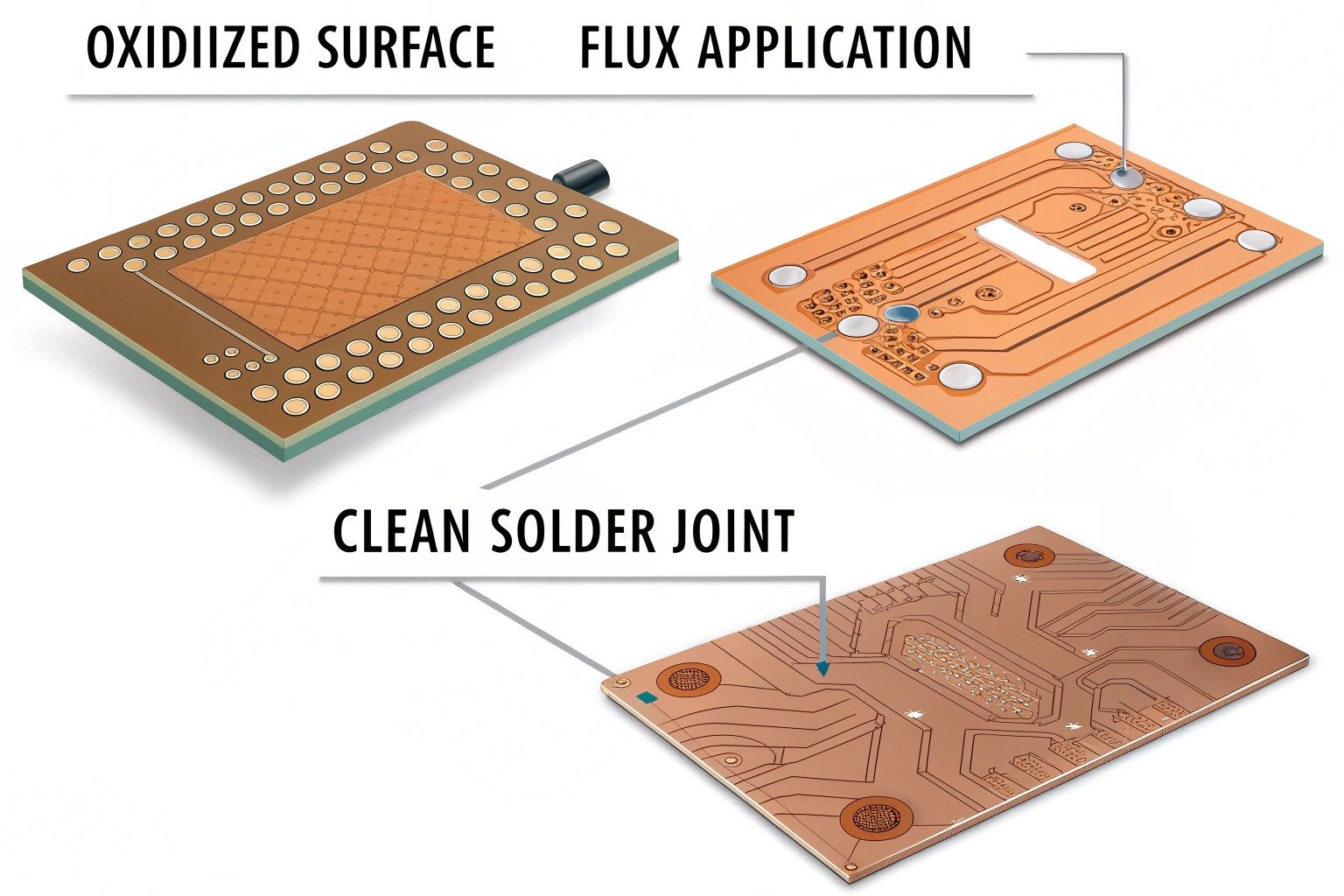
What is solder flux, and why is it essential in electronics soldering? Often overlooked, solder flux plays a critical role in ensuring strong, reliable solder joints by removing oxidation and improving metal bonding.
Solder flux is a chemical agent used during soldering to clean metal surfaces, prevent oxidation, and improve solder flow. It ensures strong, reliable electrical connections in PCB assembly.
Whether you’re hand-soldering a simple wire or operating an automated SMT line, flux plays a critical role in ensuring that every solder joint is electrically sound and mechanically secure. Without it, soldering becomes inconsistent, and corrosion and cold joints become far more likely.
This guide explains everything you need to know about solder flux—its types, how it works, when to use it, and what happens when it’s ignored.
What Is Solder Flux in PCB Assembly?

Solder flux is a chemical cleaning agent applied during soldering to help remove oxides and contaminants from metal surfaces. It ensures that the molten solder properly adheres to copper pads and component leads.
Flux isn’t just a convenience—it’s a critical part of every soldering process, especially in high-precision environments like PCB manufacturing, SMT reflow, or BGA rework.
The presence of oxides on metal surfaces makes it harder for solder to flow and bond properly. Flux breaks down those oxides and forms a protective layer to prevent new oxidation during the soldering process.
How Does Solder Flux Work?
Flux works in three primary ways:
- Cleans the surface by dissolving metal oxides.
- Protects from re-oxidation by forming a barrier layer during heating.
- Improves wetting by reducing surface tension, allowing solder to flow smoothly and evenly.
In automated SMT assembly, flux is usually pre-applied within solder paste and activated during reflow. In hand-soldering or rework, flux pens or paste are often used to touch up dry areas or tricky pins.
According to DigiKey’s solder flux guide, using the right type of flux can significantly increase yield and reduce rework in both prototype and production environments.
Types of Solder Flux Used in Electronics
There are several types of solder flux, each suited for different applications. While some are “no-clean,” others require full washing after use.
1. Rosin-Based Flux (RMA or RA)
Derived from pine resin, rosin flux is common in traditional electronics soldering. RA is stronger and requires cleaning, while RMA (Rosin Mildly Activated) offers a balance and is partially self-cleaning.
2. No-Clean Flux
Leaves minimal residue and is safe to leave on the board in most cases. Preferred in high-volume SMT production due to low maintenance.
3. Water-Soluble Flux
Highly active and effective at removing oxides but requires thorough cleaning after use to avoid corrosion.
Each flux type can come in various forms:
- Paste (used in solder paste)
- Liquid (for wave soldering or dipping)
- Pen (for hand-soldering and spot repair)
Choosing the right flux depends on your process, cleaning capability, and required joint quality.
When and How to Use Solder Flux
You should use solder flux whenever you’re creating or reworking solder joints—especially if the components or pads are oxidized, old, or difficult to solder.
In manual soldering, applying a small amount of flux with a pen or brush can drastically improve joint appearance and reliability. For example, when soldering fine-pitch ICs or drag-soldering headers, flux helps solder wick properly across all pins without bridging.
In rework or desoldering, flux also helps:
- Loosen stubborn joints
- Minimize pad lifting
- Improve heat transfer
- Prevent re-oxidation during repair
Be careful not to over-apply flux, especially with water-soluble or RA types. Excess residue can attract moisture and cause long-term corrosion.
Cleaning and Safety Considerations
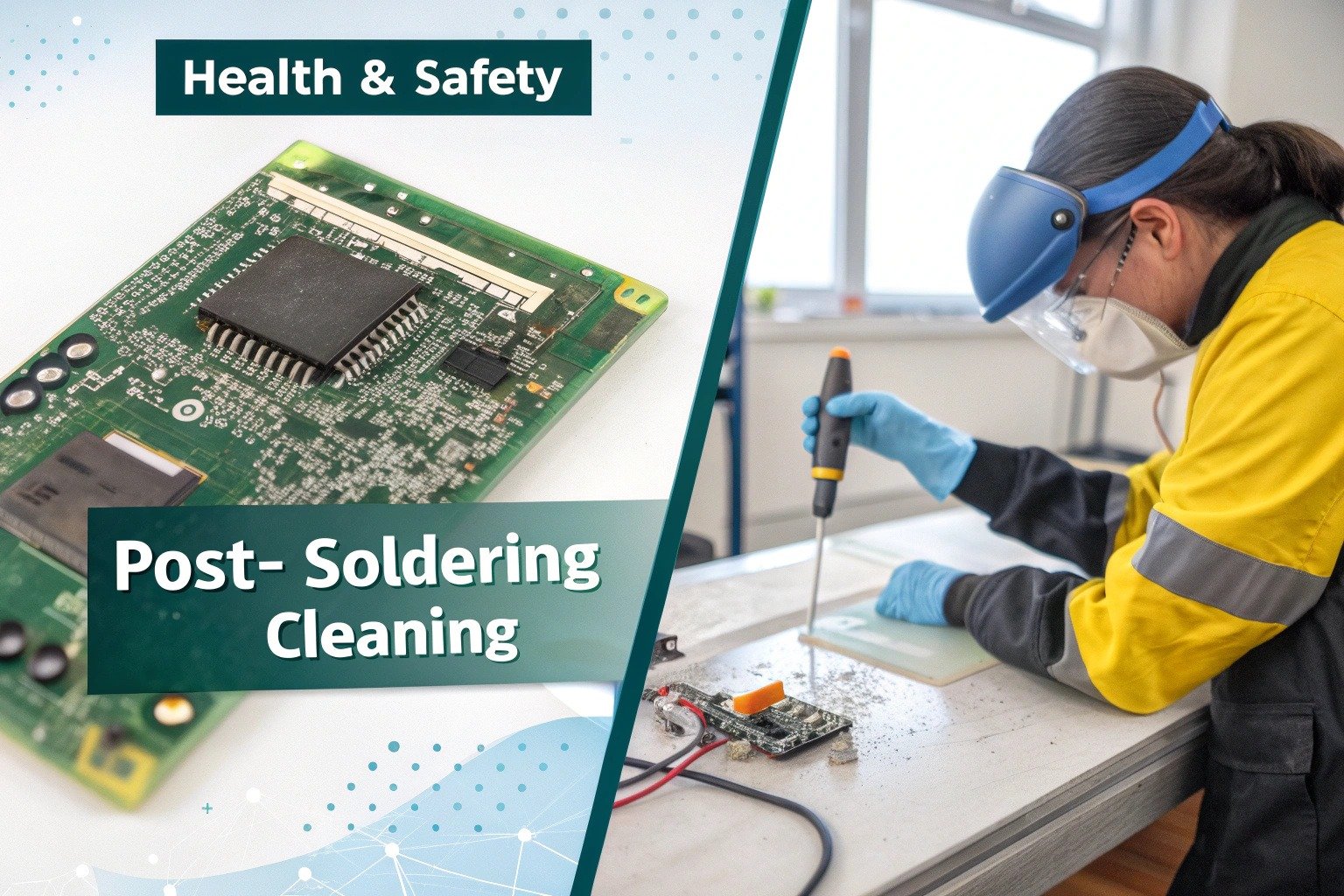
While some fluxes are “no-clean,” not all are safe to leave on the board long term—especially in high-impedance circuits or harsh environments.
Always check the manufacturer’s datasheet to know if post-cleaning is needed. If so, use:
- Isopropyl alcohol (IPA) and a brush
- Ultrasonic cleaner for dense PCBs
- DI water rinse for water-soluble fluxes
Also, flux fumes—especially from rosin-based flux—can irritate lungs and skin. Always solder in a well-ventilated area, and consider using a fume extractor during extended sessions.
Conclusion
Solder flux may seem like a minor part of the PCB assembly process, but it plays a massive role in joint quality, board reliability, and manufacturing yield. By breaking down oxidation and improving solder flow, flux ensures strong electrical connections that last.
Whether you’re building a single prototype or running a full SMT production line, the right flux, applied correctly, makes all the difference.
Need more guidance on flux types or application techniques? Read this DigiKey solder flux tutorial for a deep technical breakdown.
