
The 5 ball rule for solder means that no more than five visible solder balls are allowed on a PCB after soldering. If more than five solder balls appear, the process is considered unstable and requires immediate correction.
This rule is widely used in electronics manufacturing as a process control guideline, not just a cosmetic standard. Excess solder balls indicate issues with solder paste printing, reflow profile, flux activity, or workshop environment.
Solder balls may look small, but in dense electronic assemblies, they can cause short circuits, reliability risks, and hidden failures. That is why the 5 ball rule is treated seriously on professional production lines.
Why Are Solder Balls a Serious Manufacturing Defect?
Solder balls are not harmless leftovers.
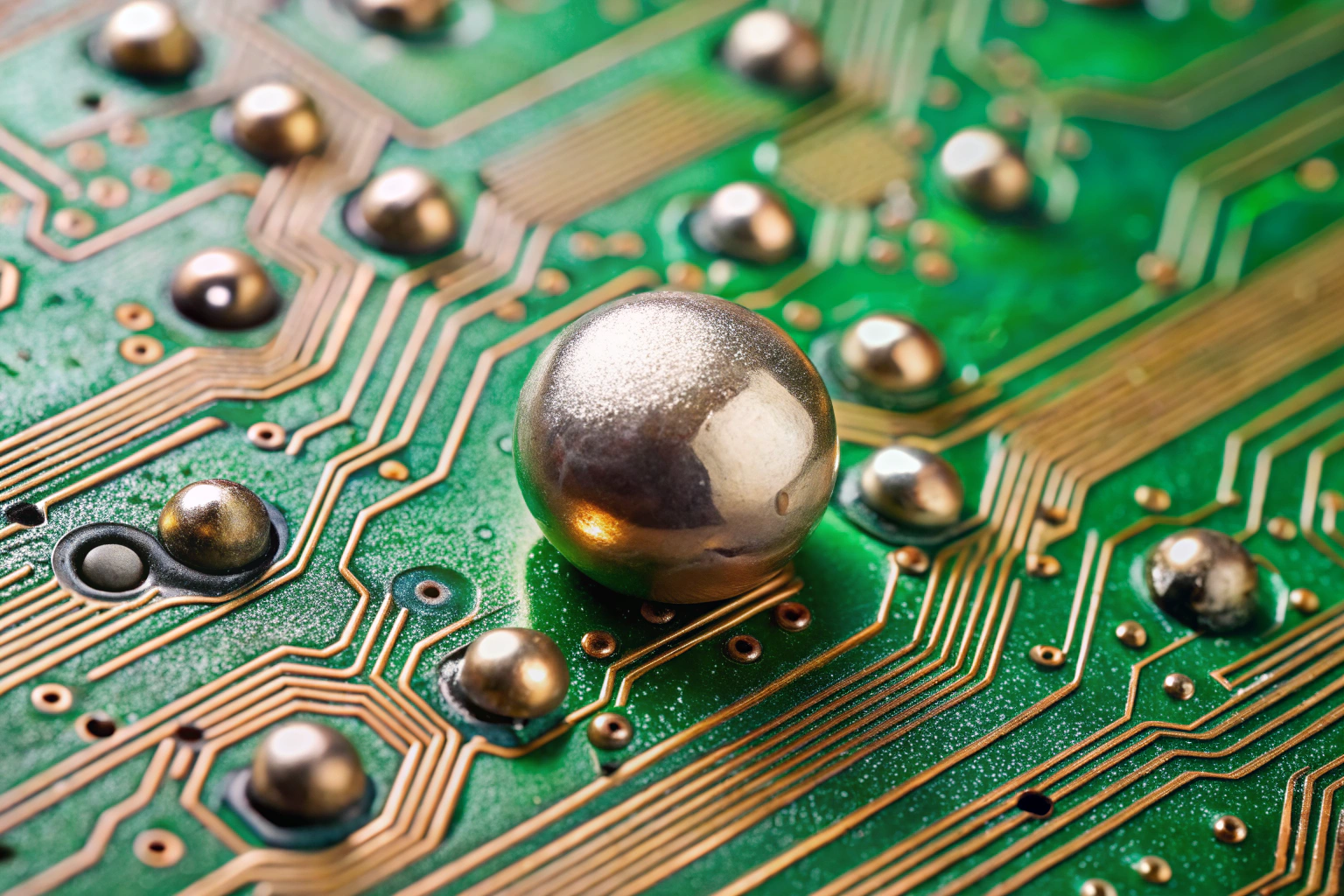
They signal deeper process problems.
Solder balls are small spheres of solder that separate from the main joint during reflow. They often remain on the PCB surface, trapped between pads or under components.
In controlled manufacturing, solder balls are classified as a defect because they can:
- Create electrical shorts over time
- Move under vibration or thermal cycling
- Interfere with conformal coating
- Reduce long-term product reliability
The 5 ball rule sets a clear threshold. Fewer than five isolated solder balls may be acceptable depending on product class. More than five indicates that the soldering process is out of control.
Factories use this rule to quickly judge line health. When violations occur, production pauses and root cause analysis begins.
How Do Solder Balls Form During Reflow Soldering?
Solder balls form due to unstable solder behavior.
They are a symptom, not the root cause.
During reflow, solder paste should melt, wet the pads, and merge into a smooth joint. Solder balls appear when part of the paste separates before proper wetting occurs.
Common causes include:
- Excess solder paste volume
- Poor stencil design or damage
- Rapid temperature ramp-up
- Inadequate flux activation
- Moisture in solder paste or components
If the paste heats too fast, solvents boil violently and eject solder particles. If flux activity is insufficient, solder cannot wet properly and breaks away.
In high-density designs, small pad spacing increases the risk. That is why process tuning becomes more critical as component sizes shrink.
How the 5 Ball Rule Is Applied in Factory Inspection?
The 5 ball rule is applied visually and systematically.
It supports fast decision-making on the line.
After reflow soldering, boards pass through AOI inspection. The system scans the PCB surface and flags solder ball clusters. Trained inspectors confirm findings based on defined criteria.
The rule focuses on:
- Quantity of solder balls
- Distribution across the PCB
- Proximity to pads and traces
- Risk of electrical short
If more than five solder balls are found on one board or in a defined area, the lot is flagged. Engineering teams review solder paste data, reflow profiles, and environmental records.
This rule allows factories to act early. Instead of waiting for functional failures, visual indicators stop problems before shipment.
How Workshop Process Control Prevents Solder Ball Issues?
Solder ball control starts before soldering.
Workshop discipline makes the difference.

In professional manufacturing workshops, solder ball prevention is built into daily operations.
Key controls include:
- Solder paste storage at controlled temperature
- Paste warm-up and mixing procedures
- Strict stencil cleaning cycles
- SPI inspection for paste volume accuracy
Reflow ovens are profiled regularly. Preheat zones are adjusted to allow solvents to evaporate gently. Soak times ensure even temperature across the PCB before peak reflow.
Humidity control inside the workshop is equally important. Excess moisture increases solder ball formation. Dry cabinets and baking processes protect sensitive materials.
Operators follow standard work instructions. Deviations trigger immediate review. This disciplined environment ensures the 5 ball rule is met consistently, not by chance.
Why the 5 Ball Rule Matters More in Modern Electronics?
Smaller components increase risk.
Tolerance for defects keeps shrinking.
Modern PCBs use fine-pitch components, BGAs, and high-density layouts. In these designs, even a single solder ball can bridge traces or migrate under components.
The 5 ball rule provides a practical boundary. It balances inspection efficiency with real-world reliability needs. For high-reliability products, internal standards may be even stricter.
This rule also protects downstream processes. Solder balls interfere with coating, assembly, and final testing. Removing them later increases rework cost and thermal stress.
By enforcing this rule at the soldering stage, factories maintain yield, reduce hidden risks, and ensure consistent quality across batches.
Conclusion
The 5 ball rule for solder is a practical quality control standard that limits solder ball defects to no more than five per PCB. It acts as an early warning system for solder paste instability, reflow profile issues, and workshop process gaps. In professional electronics manufacturing, this rule supports fast inspection, disciplined process control, and long-term product reliability. As PCB designs become denser and more complex, controlling solder balls is no longer optional. It is a core requirement for stable production, reduced rework, and dependable electronic performance in real-world applications.
