
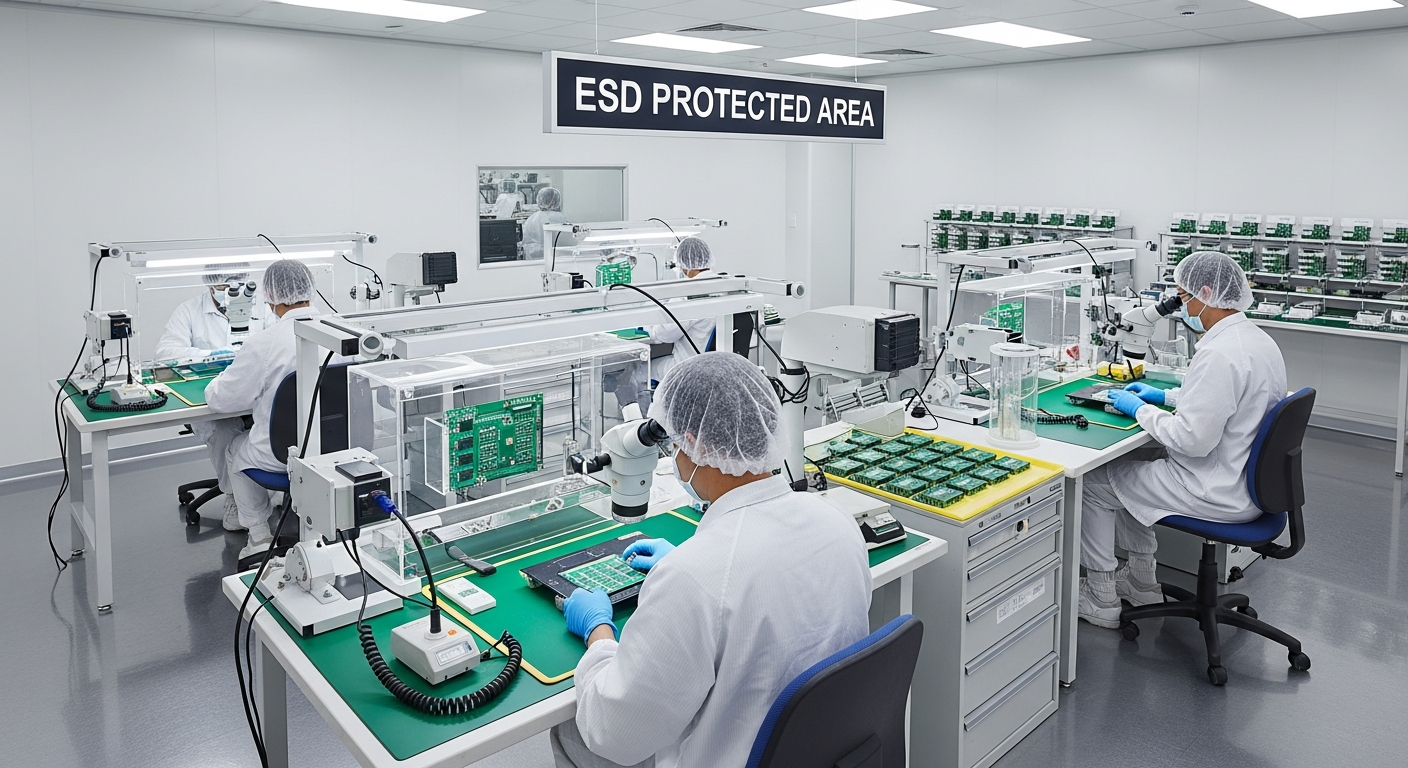
An ESD-safe production environment is a controlled workspace designed to prevent electrostatic discharge from damaging sensitive electronic components. It uses grounding, antistatic materials, humidity control, and strict handling procedures to keep assemblies protected during manufacturing.
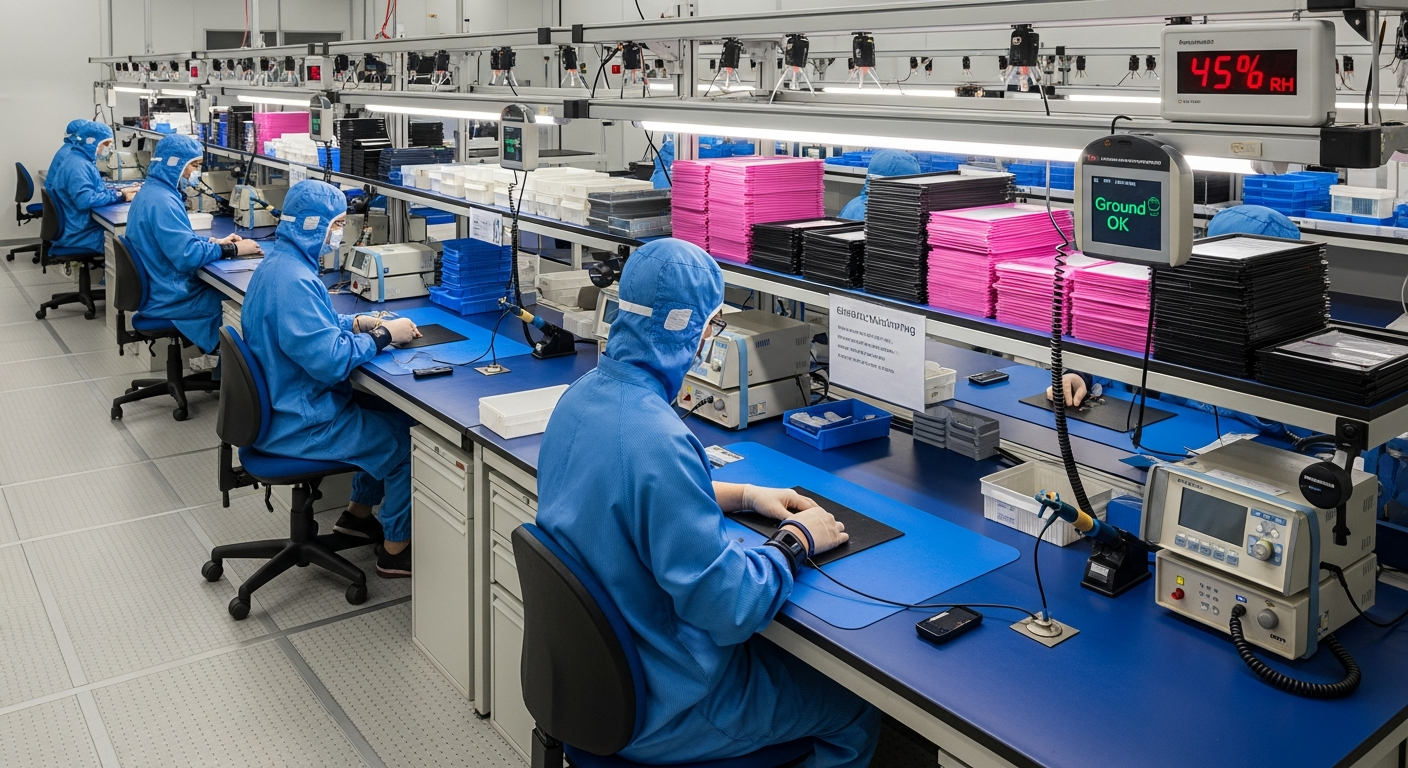
An ESD-safe environment builds trust across the entire manufacturing chain. With controlled processes, clear labeling, and stable conditions, production teams reduce risk, improve yield, and protect long-term reliability for every PCB and assembled device.
Why is an ESD-safe production environment important?
Electrostatic discharge can destroy components before they are even powered. Many failures are invisible, unpredictable, and costly to trace.
An ESD-safe environment matters because it prevents hidden damage, protects sensitive ICs, and ensures stable quality during both prototype builds and mass production.
Deeper Insight
Electrostatic discharge often occurs from clothing, tools, or even simple movement across the workshop floor. These events may reach thousands of volts—far beyond what ICs, RF modules, microcontrollers, or power chips can tolerate. Some failures happen instantly. Others weaken components silently, leading to field failures weeks later.
An ESD-safe production line applies strict grounding rules, conductive floors, antistatic garments, wrist straps, and humidity monitoring to reduce charge buildup. Each workstation links to a central grounding network. Storage shelves, carts, and packaging follow ESD standards such as ANSI/ESD S20.20.
For B2B buyers producing IoT modules, industrial controllers, or sensor boards, hidden ESD damage is a major reliability threat. A controlled environment lowers RMA rates, reduces debugging time, and ensures consistent performance across batches.
Factories with integrated SMT, DIP, and testing lines benefit from ESD-safe workflows because every stage—loading, placement, soldering, testing, packaging—remains protected under the same quality system.
What are the key elements of an ESD-safe workspace?
An ESD-safe production area uses many protective layers. Each one reduces the chance of harmful discharge.
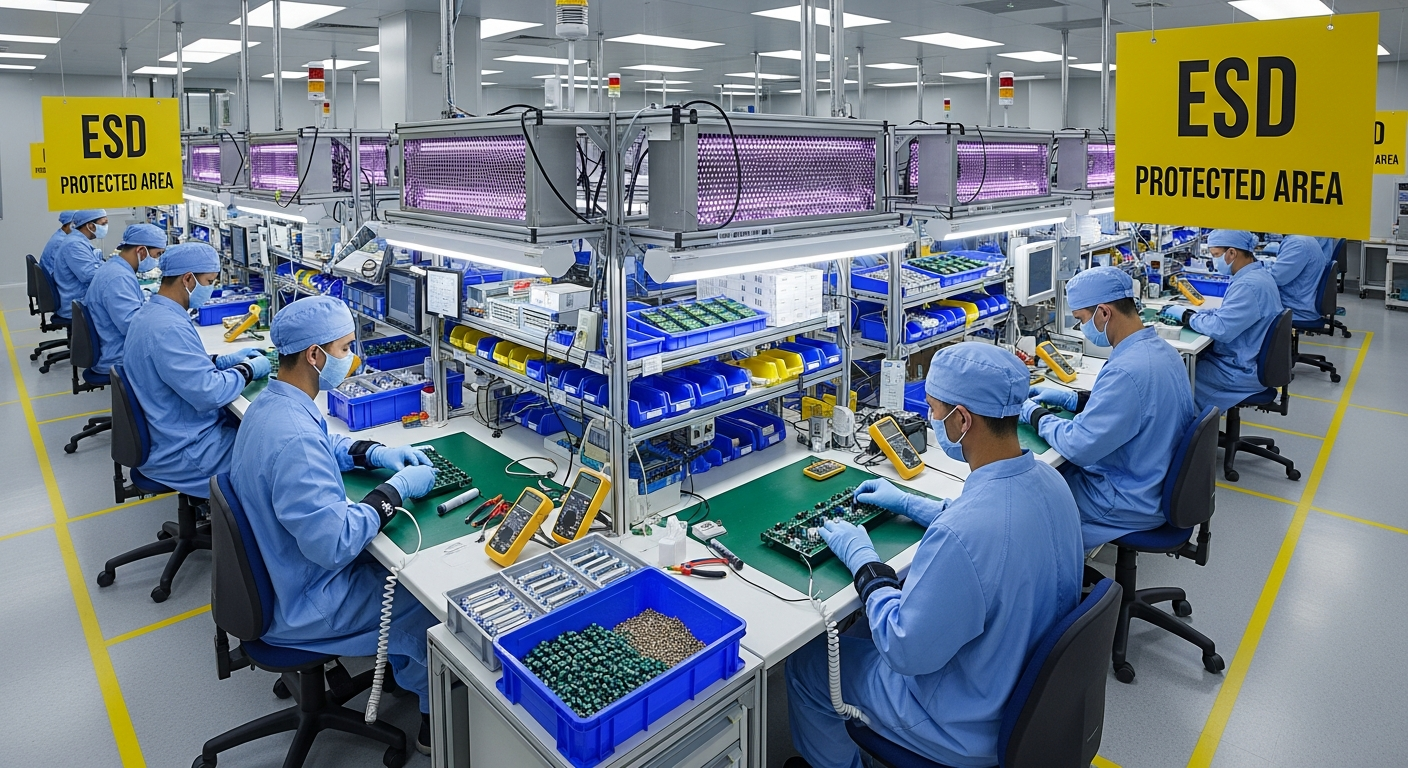
Key elements include grounding systems, antistatic flooring, ESD tables, wrist straps, ionizers, controlled humidity, antistatic packaging, and continuous monitoring devices.
Deeper Insight
A compliant workspace uses a combination of materials and processes:
Grounding Network:
All benches, mats, and floors connect to a verified ground point, creating a safe path for charge dissipation.
ESD Table Mats:
These mats create a conductive surface that prevents charge accumulation. Their resistance falls within a controlled range to allow slow, safe discharge.
ESD Flooring:
Conductive or static-dissipative floors prevent workers from generating high voltages while walking. Foot straps or antistatic shoes complete the grounding path.
Ionizers:
For areas with low humidity or floating insulators, ionizers neutralize charges in the air and on surfaces.
Packaging Controls:
Trays, bags, reels, and boxes use antistatic materials. ESD symbols prevent accidental mixing with non-protected storage.
Production teams benefit from a stable ESD system because it reduces out-of-spec variability. B2B clients working with fine-pitch ICs, BGA packages, or RF components require predictable handling to avoid costly rework. Factories with strong engineering control enforce daily audits, resistance testing, and continuous grounding alerts to maintain consistent protection.
How does ESD control protect SMT and DIP assembly?
During assembly, components face direct contact with machinery, tools, and operators—moments where ESD risk is highest.
ESD control ensures that placement heads, feeders, wave solder fixtures, and testing stations handle components without creating damaging static discharge.
Deeper Insight
SMT assembly uses high-speed equipment. Every interaction—tape feeding, nozzle picking, PCB transfer—creates friction and potential static buildup. DIP assembly faces similar challenges during manual insertion and wave soldering.
Key controls include:
Feeder Grounding:
Feeders often generate static as tapes peel. Grounded feeder racks reduce charge instantly.
Nozzle Protection:
Placement heads and vacuum nozzles stay grounded through conductive paths designed into the machine.
PCB Conveyors:
Conveyors use static-dissipative materials, preventing charge from collecting under the board.
Wave Solder Fixtures:
Palettes made from ESD-safe materials keep through-hole assemblies protected during high-temperature processes.
Maintaining ESD control throughout assembly protects delicate microcontrollers, MEMS sensors, power chips, and communication modules. For B2B customers seeking stable yield, ESD-safe assembly reduces intermittent failures and lowers long-term warranty risk. Factories with integrated testing systems (AOI, ICT, FCT) add another protection layer, ensuring no hidden ESD damage leaves the line untested.
What monitoring and auditing systems support an ESD-safe factory?
Protection only works if it stays consistent every hour. Continuous verification ensures long-term compliance.
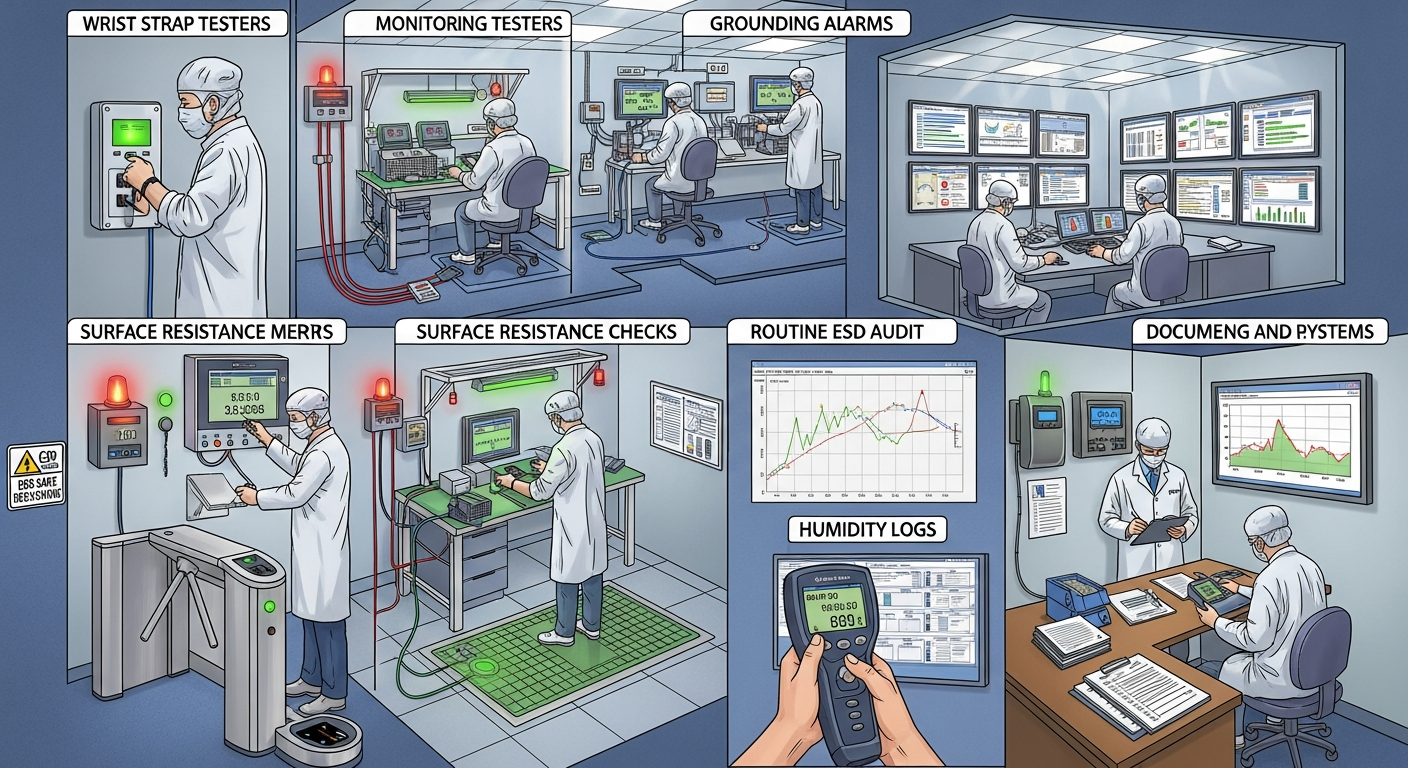
Monitoring systems include wrist-strap testers, grounding alarms, surface resistance checks, humidity logs, and routine ESD audits.
Deeper Insight
A high-quality ESD control program uses measurable data:
Daily Wrist-Strap Tests:
Operators test wrist straps at the start of each shift. Automated stations store test results for traceability.
Continuous Ground Monitoring:
Critical workstations use real-time grounding alarms that detect broken connections instantly.
Surface Resistance Measurements:
Table mats, floors, and conductive tools undergo periodic resistance testing to verify they stay within specification.
Humidity and Environmental Logs:
Proper humidity reduces charge buildup. Automated sensors help stabilize production conditions.
Internal and External Audits:
Regular audits ensure compliance with ANSI/ESD S20.20, IEC 61340, and internal factory standards.
These systems protect production consistency. For B2B customers who require detailed quality reporting, monitoring logs demonstrate transparent control over the entire manufacturing environment. Factories with strong OEM/ODM capabilities also integrate ESD audit results into long-term quality management, protecting future projects with the same standards.
Deeper Insight
ESD damage comes in two forms:
Catastrophic failure (immediate malfunction) and latent failure (hidden weakness that appears later). Latent failures are especially dangerous because they pass initial testing but fail in the field.
Preventing these issues requires:
- Controlled component handling
- Stable grounding during SMT and DIP operations
- Protected storage and packaging
- Ionized environments for sensitive devices
- Documentation that defines consistent procedures
For industries like smart home systems, industrial automation, medical devices, and energy control systems, reliability is essential. An ESD-safe environment protects micro-power circuits, wireless modules, analog front-ends, and sensors from electrical stress. Factories with engineering-driven quality control ensure that every product—from early samples to mass production—receives the same level of protection.
This consistency builds confidence for long-term cooperation and reduces total cost of ownership for B2B customers.
Conclusion
An ESD-safe production environment protects sensitive electronics from invisible damage and ensures stable performance across every manufacturing stage. With grounding, antistatic materials, monitoring systems, and strict procedures, production becomes safer and more reliable. This level of control strengthens product durability, reduces field failures, and supports long-term, high-quality manufacturing partnerships. An environment built on proper ESD protection ensures every PCB and assembled device reaches customers with full performance, consistent quality, and dependable reliability.
